
|
EN
Subscribe to our Newsletter
This article explores the work of Tessa El Sakhi El Maalouli, focusing on her approach to architecture as a sensory and lived experience. Through her projects, she redefines space as something to be felt, inhabited, and remembered, engaging the body, material, and memory beyond the purely visual.
By Zara Saberi
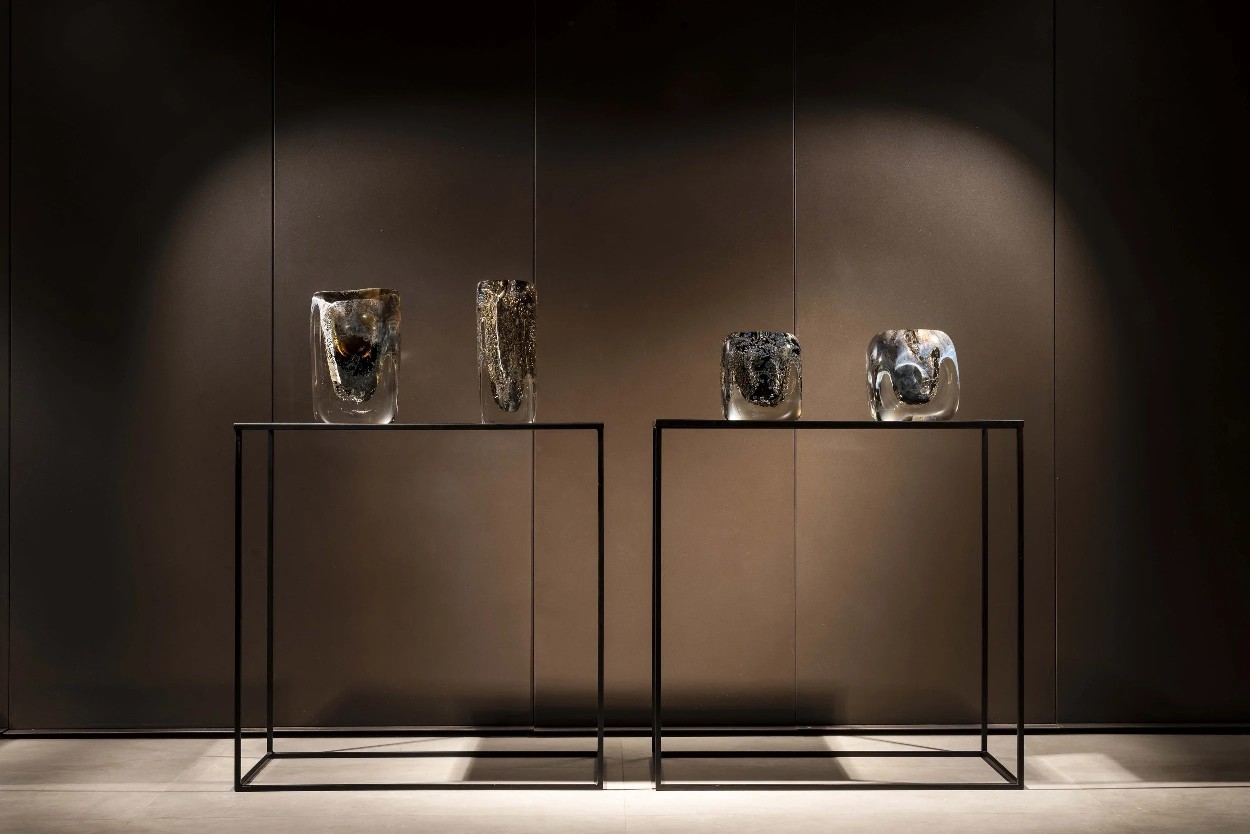
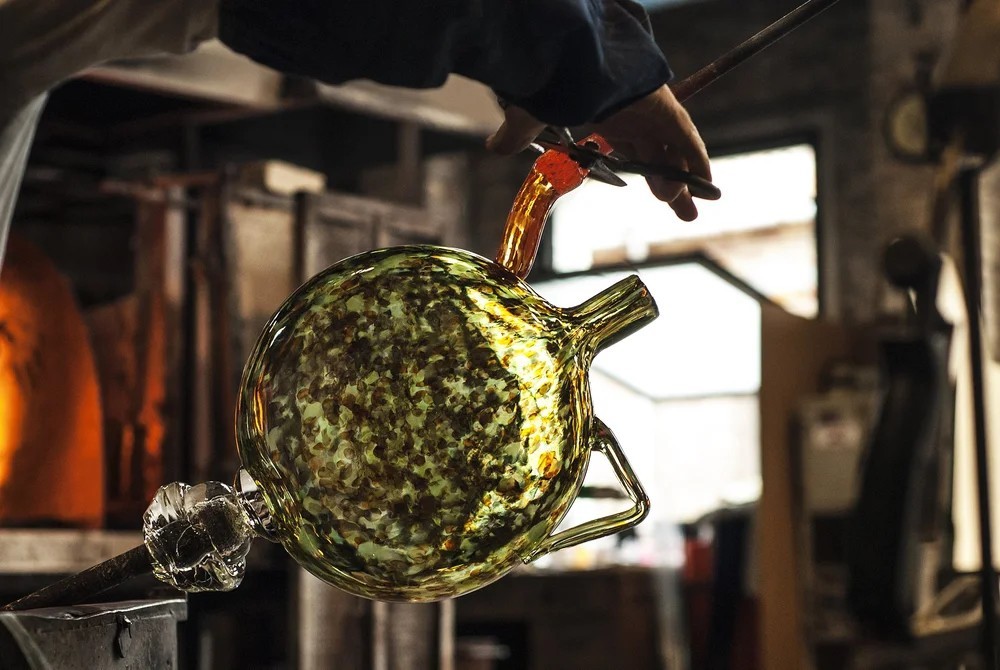
Celestial Bodies, Murano Block Sculptures
Material : Murano Glass, Recycled Metal Waste
Photo: Lorenzo Basadonna Scarpa, Mattero Lossurdo, Courtesy of Tessa El Sakhi
In contemporary architectural discourse, images have emerged as the dominant tool for representing space, polished, precise, and often stripped of the complexities of lived experience. While visually striking, these images frequently remain superficial, incapable of conveying the depth of human experience within a space. In this context, the work of Tessa El Sakhi El Maalouli presents a distinct and thought-provoking approach: one in which architecture is defined not as a visual object, but as a perceptual, sensory, and lived phenomenon.
Her work cannot be fully understood through images alone. It demands presence, the movement through space, the touch of materials, the gradual unfolding of light, and the perception of sound and stillness. This emphasis on “living the space” positions her within a tradition that views architecture not as form, but as a phenomenological experience, one that simultaneously engages the body, memory, and mind.
Her professional practice across Beirut and Venice enriches this experience in a unique way. Beirut, with its dense layers of memory, crisis, and reconstruction, and Venice, with its historical refinement, light, water, and poetic stillness, serve as two distinct yet complementary poles shaping her mental landscape. She emphasizes that living between these two geographies is not merely a choice, but part of her design identity, a life suspended between memory and discovery, between roots and possibilities.
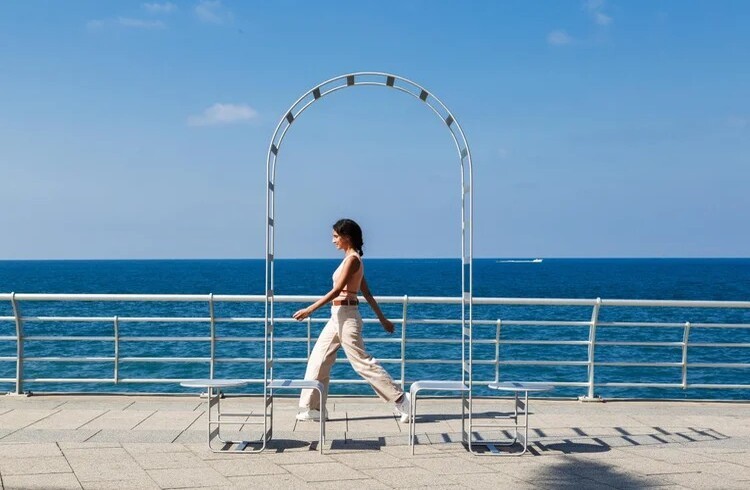
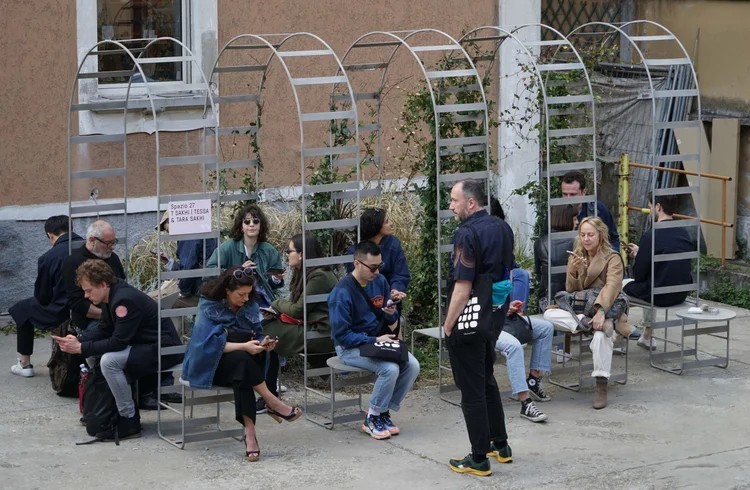
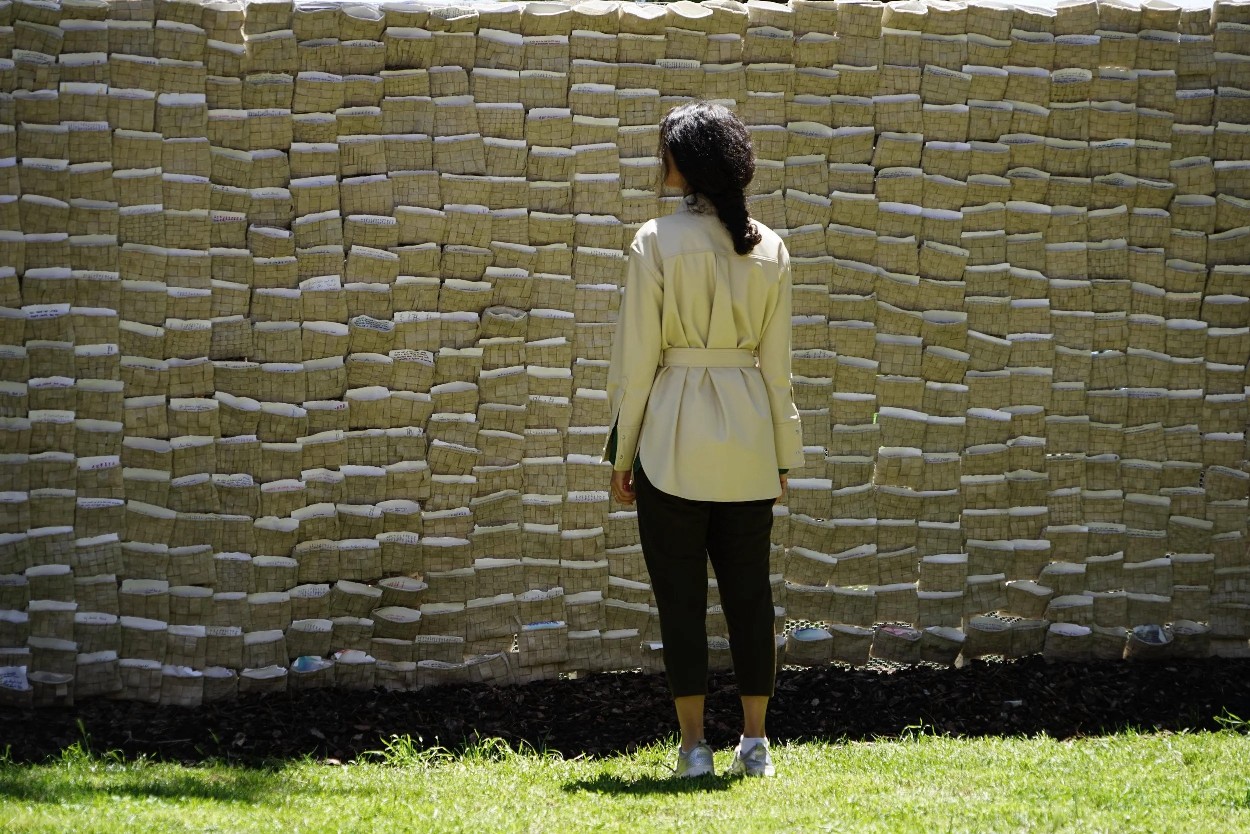
Lost In Transition , Urban Seating, Exhibitors: Alcova Milan, Beirut Streets
Collaborator: Tara Sakhi
Watch the film: “Lost in Transition”, directed by Ely Dagher.
Photo: Tony Elieh, Tessa Sakhi
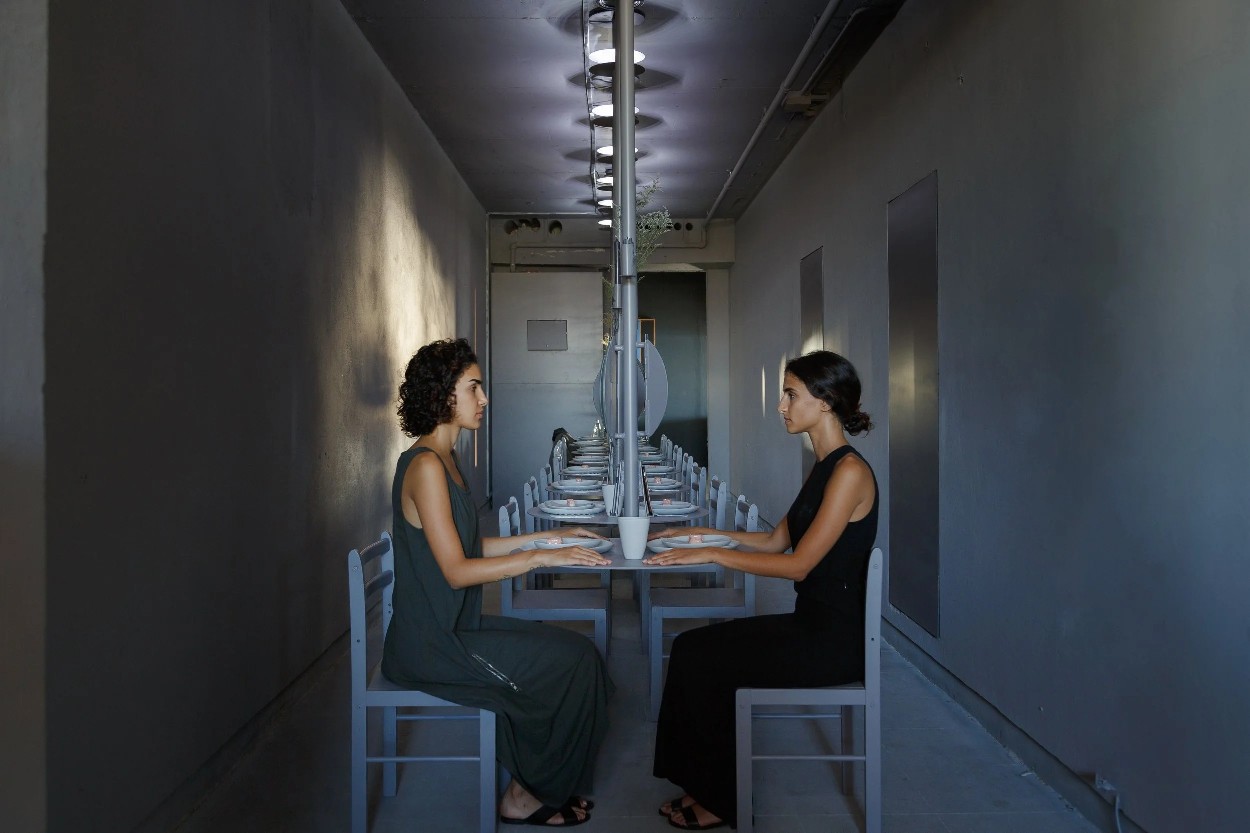
Architectural Digest - Dinung Popup, Silent Echoes, Beirut, Lebanon, 2018
Photo: Tony Elieh, Pulse, Plastik
Letters From Beirut, Public Installation
The European Cultural Center, The Venice Architecture Biennale 2021 Venice, Italy
Photo: Tessa Sakhi, Tara Sakhi
Photo: Courtesy of Tessa El Sakhi
Tessa was born in Lebanon, the “Land of Cedars,” and grew up in a multicultural family, her father of Lebanese-Syrian descent and her mother Polish. This cultural combination instilled in her from an early age a cross-cultural perspective, one that neither views the East nor the West in isolation, but seeks a dialogue between the two.
She notes that this “in-between” cultural positioning manifests directly in her work, a blend of Eastern sensitivity to material and memory, with Western analytical and structural approaches. This perspective makes her projects not merely designs, but cultural narratives.
Her formal architectural education began in 2009 at ALBA and culminated in 2015 with distinction from AUB. Yet what influenced her development more than formal training were her field and social experiences, working with diverse communities, teaching art to underprivileged children, and confronting social realities across different countries.
She asserts that in many societies, even in a relatively open cultural space like Lebanon, women must exert extraordinary effort to achieve their goals. For her, success is entirely individual, but social conditions, particularly for an Arab woman, often demand an elevated level of determination and perseverance.
In her personal narrative, Beirut always maintains an emotional and foundational presence, but the relationship is complex. She recounts her lived experience in a country long marked by crisis, war, and instability, a trajectory that ultimately brought her to a point she describes as “losing hope.”
Yet this rupture never meant severing ties. She emphasizes that her Lebanese roots remain ever-present in her work, expressed through material choices, collaborations with artisans, and a culturally informed approach to design. For her, Lebanon is a place rich in art and design, and working with its artists remains an inseparable part of her practice.
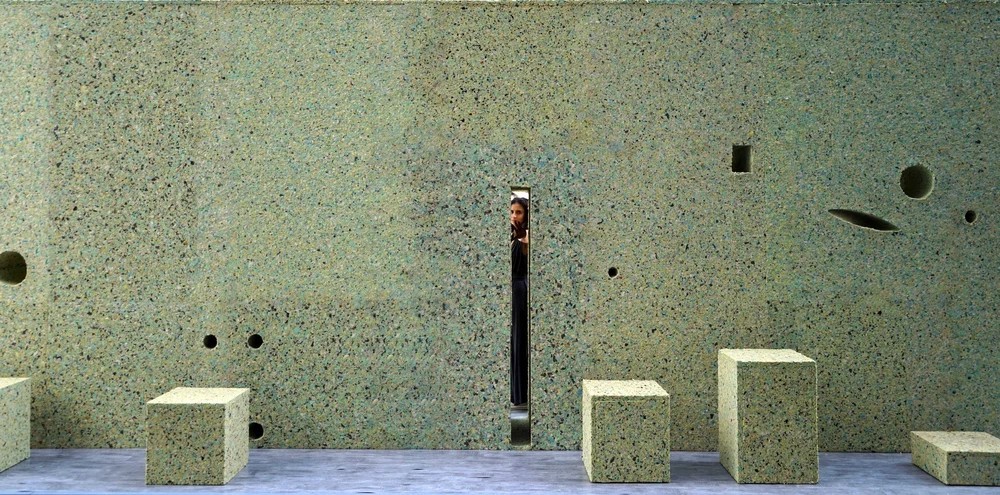
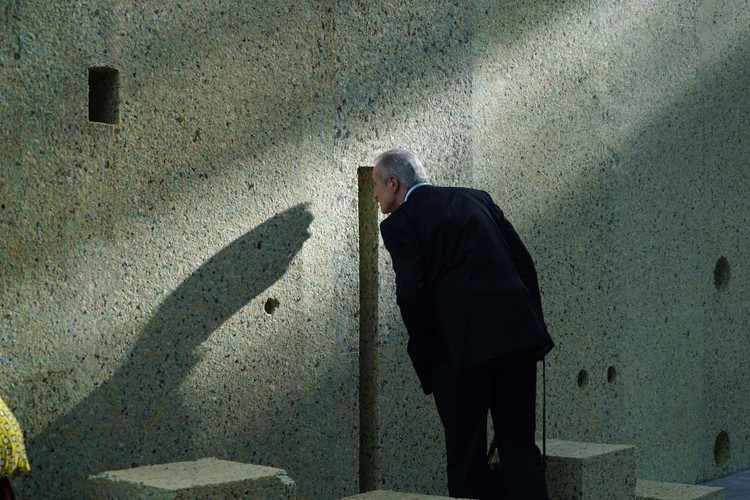
WAL(L)TZ, Lebanon Pavilion, Dubai Design Week 2019
Photo: Tessa Sakhi, Tara Sakhi
In contrast, Venice represents a form of “acceptance”, a city she experiences as a home that embraces her. However, entering this space was not without challenge. She was neither Italian nor Venetian, and even in Murano, the center of glassmaking, she was recognized as an “outsider.”
The challenge became more pronounced when she sought to introduce an experimental and innovative approach into a deeply traditional craft. Artisans, accustomed to generations of established practice, initially resisted. Through persistence, continual presence, and building trust, she gradually cultivated a collaborative relationship, one grounded in dialogue, respect, and shared experience.
Design Philosophy: Architecture as Human Experience
At the core of Tessa El Sakhi El Maalouli’s design thinking lies a profound belief: architecture is not merely the construction of space, but a powerful tool to influence human psyche, behavior, and experience. This philosophy is rooted in her longstanding interest in psychology, sociology, and understanding lived experience, a curiosity that has accompanied her since childhood, observing how humans interact with their environment.
She views space as a platform for human relationships, social interaction, and individual discovery. Architects, she asserts, are not merely form-givers but caretakers of spaces that nourish both mind and body. This human-centered approach to space deepened during the global COVID-19 pandemic, when individuals were confined to limited environments and the importance of spatial quality, natural light, access to nature, and a sense of safety and calm became vividly apparent. For Tessa, this experience confirmed the tangible role of architecture in mental health and daily human experience.
Within her framework, design is never confined to form or superficial beauty; it is a multi-layered process that engages all human senses. The experience is not only seen but touched, sensed, smelled, and lived through movement and presence. Every choice of material, light, color, texture, and form contributes to a phenomenological and human-centered experience.
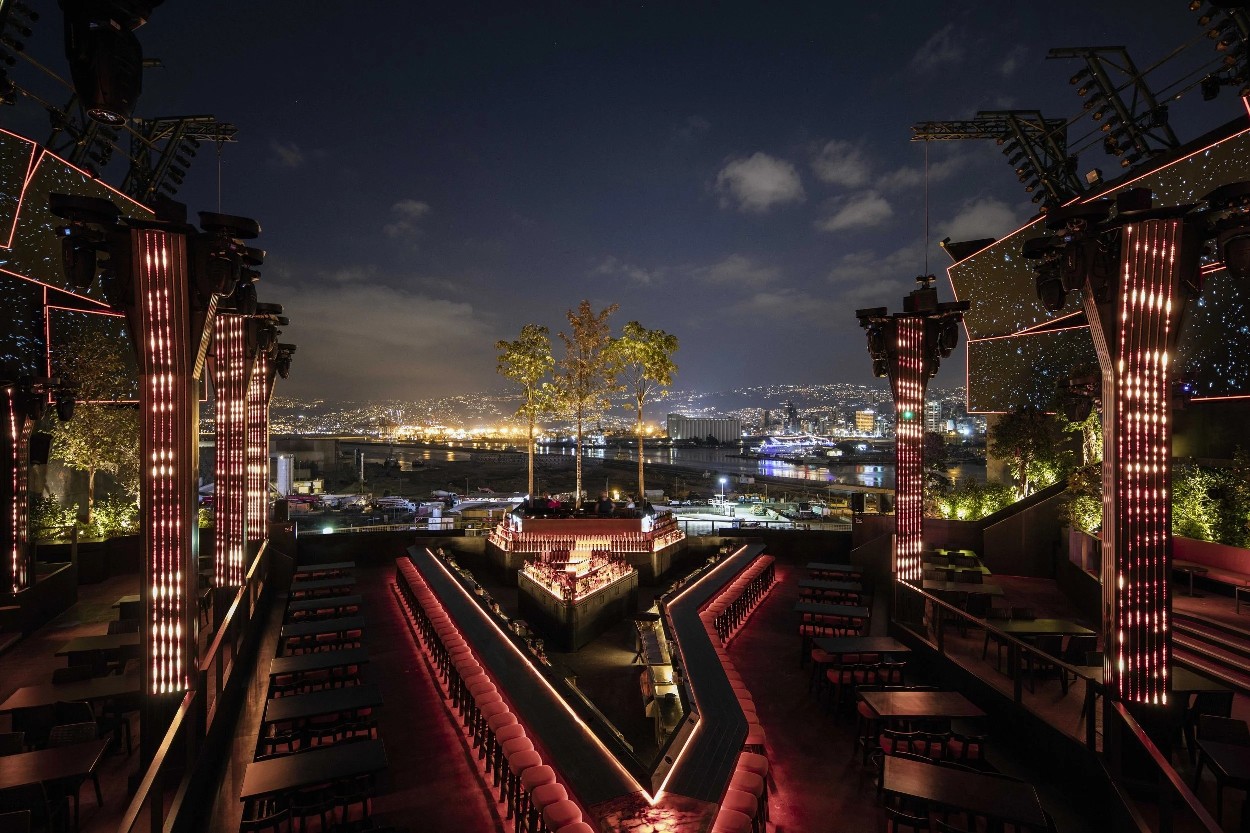
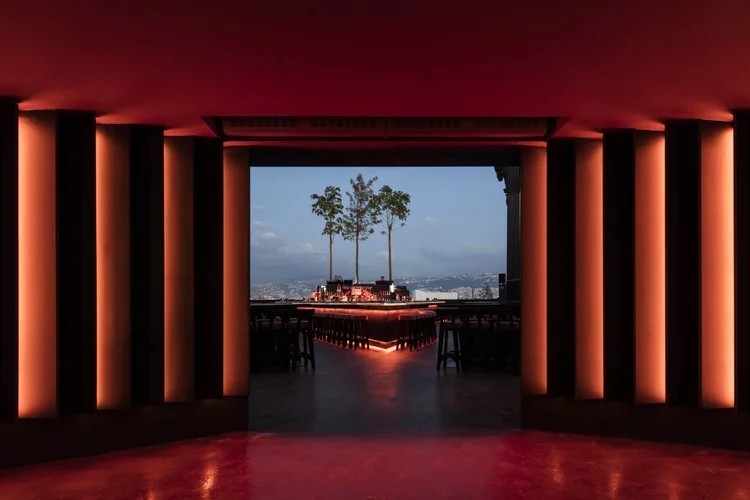
Red Manera, Skybar, a nightclub and rooftop bar
Sky Waterfront, Beirut, Lebanon, August 2017
Photo: Ieva Saudargaite, Courtesy of Tessa El Sakhi
She also believes architecture must facilitate interaction between past, present, and future. Spaces should preserve cultural and historical memory while responding to modern and individual human needs. In this view, architecture becomes a tool for reflection, remembrance, and human growth, a process inviting occupants to experience, think, and connect.
She states:
"Architecture attains its true meaning when humans can inhabit it, feel it, and become part of it. A space without people is empty and lifeless; beauty and meaning emerge only when human experience is intertwined with it."
This philosophy guides her decisions across all projects, from residential spaces to public areas and temporary urban installations. Every project, from Beirut to Venice, reflects an effort to create spaces that are simultaneously ecological, human-centered, and multisensory. This approach not only enhances individual experience but also cultivates social, empathetic, and humanistic environments that invite interaction, learning, and discovery.
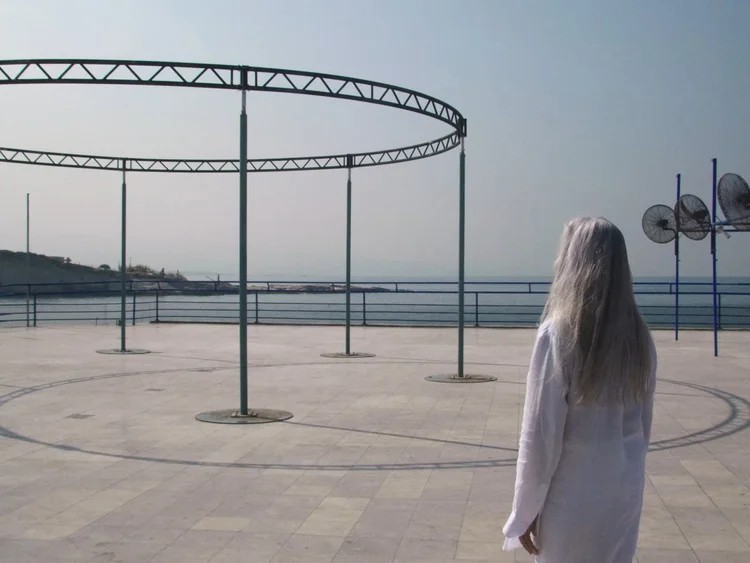
DECKS - Transportable Disco Bar, Fleeting Hearts, Beirut, Lebanon, May 2018
Photo: Tony Elieh, Courtesy of Tessa El Sakhi
A central theme in Tessa’s work is how humans interact with space and objects. Beyond form and aesthetics, she investigates how the human body, senses, and mind connect with the environment. This approach is particularly evident in her urban installations and temporary spaces, where she carefully observes how people, and especially children, engage with space and objects.
Tessa believes children retain an untouched realm of perception, one that adults gradually lose. Children interact with their environment freely, sincerely, and without preconception; they touch, move, explore sound and light, and even connect through smell. This view of childhood serves as inspiration to craft spaces where adults can rediscover that initial sense of discovery and sensory engagement.
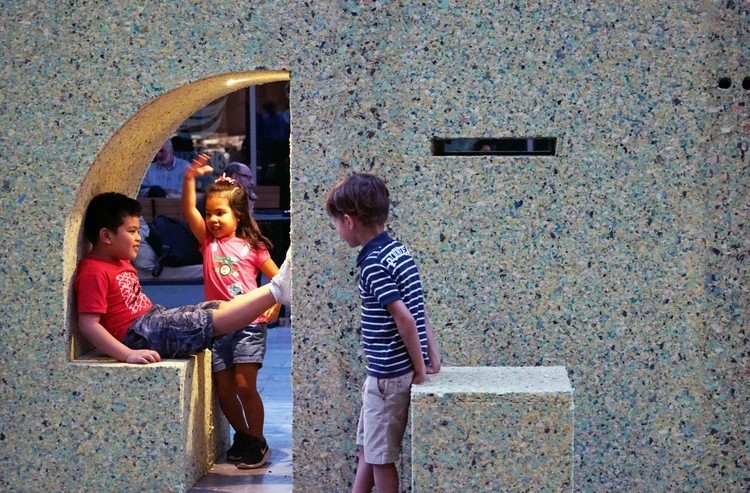
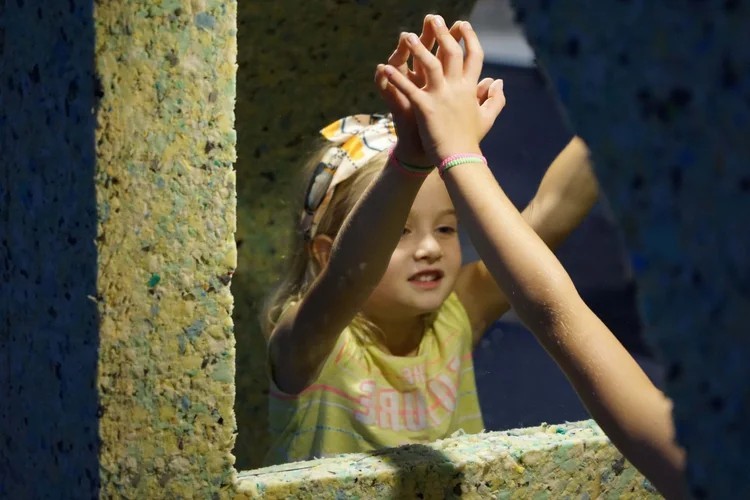
WAL(L)TZ, Lebanon Pavilion, Dubai Design Week 2019
Photo: Tessa Sakhi, Tara Sakhi
Material quality plays a decisive role. Wood, stone, glass, fabric, and recycled materials each carry their own narrative and sensory character. The touch, weight, flexibility, light reflection, and even sound of a material deepen spatial experience. Colors, textures, and scents form part of these sensory layers, moving architecture beyond mere visual representation into a multidimensional experience.
In Tessa’s perspective, spatial experience is the sum of these layers, simultaneously activating mind and body, transforming human interaction into a complete, dynamic experience.
She notes:
"A space comes alive when the body can touch it, the eyes follow its movement, and the mind connects it to memory. Real architecture is not just form, it is a dialogue between humans and their environment."
In many projects, she intentionally incorporates bodily interaction, repetition, and sensory play into the design. Pathways, surfaces, heights, light and shadow, and material details all serve as tools to invite visitors to move, touch, observe, and sense. The resulting environment transforms experience from passive observation into active, multisensory, and personal discovery.
DECKS - Transportable Disco Bar, Fleeting Hearts, Beirut, Lebanon, May 2018
Photo: Tony Elieh, Courtesy of Tessa El Sakhi
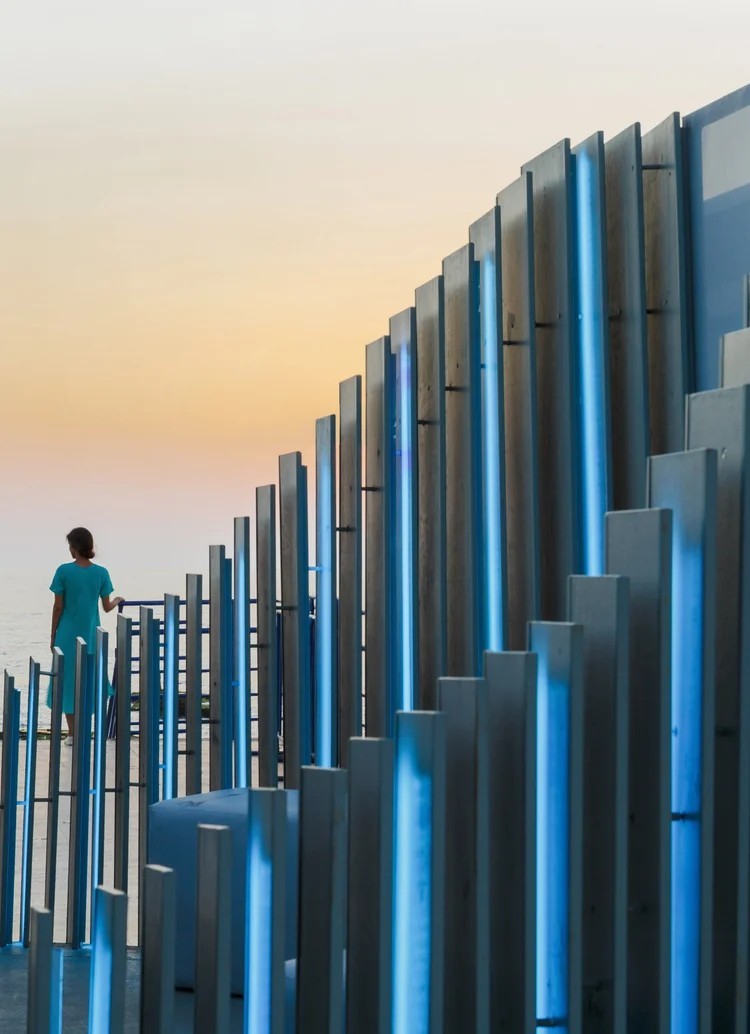

Photo: Courtesy of Tessa El Sakhi
Tessa’s foray into perfumery is not a departure from architecture, but a natural extension of the sensory and phenomenological approach she pursues in her spaces. If architecture is an experience occurring in space, perfume is an experience unfolding in time, something not seen but profoundly registered in memory and body.
She developed her collection based on a personal and emotional connection to Lebanese nature, a land that, even with scarce public or green spaces, remains vivid in her olfactory memory. The primary inspiration for her fragrances comes from forests, soil moisture, seasonal changes, and the early, childlike experience of being in nature, a source she identifies as one of her deepest inspirations.
The four perfumes represent the four seasons, not as images, but as sensory states. Scents transport the individual through time, evoking particular moments, forgotten spaces, or distant emotions. For Tessa, this is where architecture and perfume converge: both can create memory, one through space, the other through time.
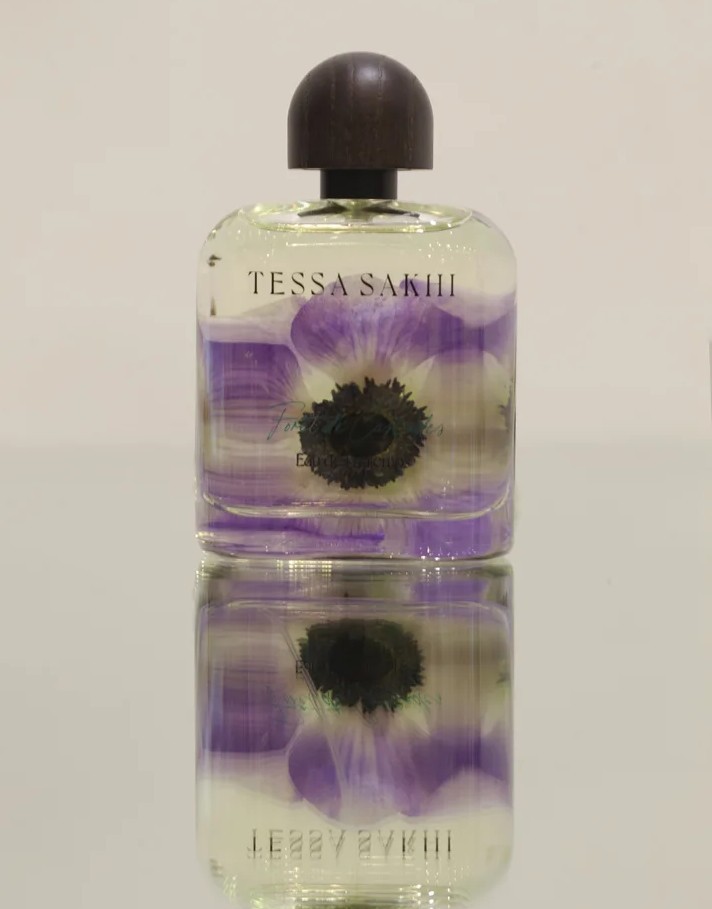



Photo: Courtesy of Tessa El Sakhi
She emphasizes that this project, unlike many commercial brands, was not born from marketing strategy or narrative construction; it emerged authentically from her personal life, from her love for natural scents, her mother’s influence, and her lived experience in nature.
The project is also tied to her environmental commitment. Part of the proceeds supports urban reforestation initiatives in Lebanon, a tangible effort to restore nature to a depleted environment. Here, perfume is not only a sensory experience but a tool for real-world intervention.
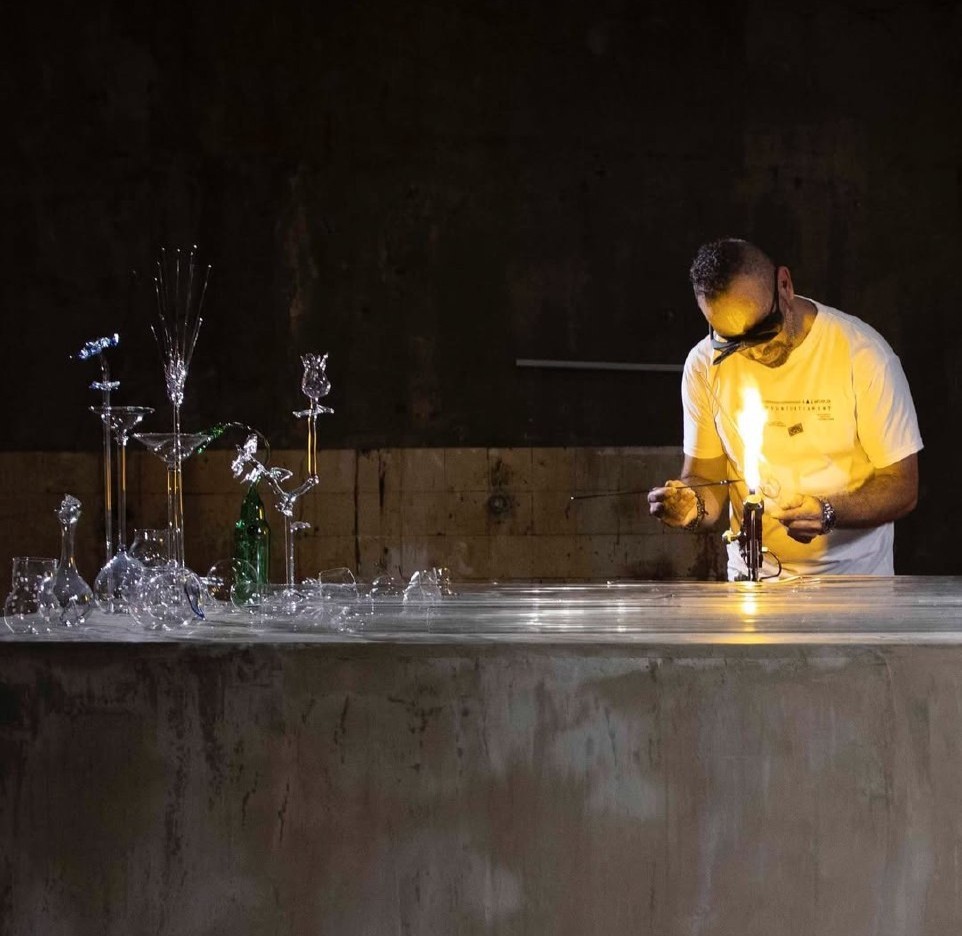
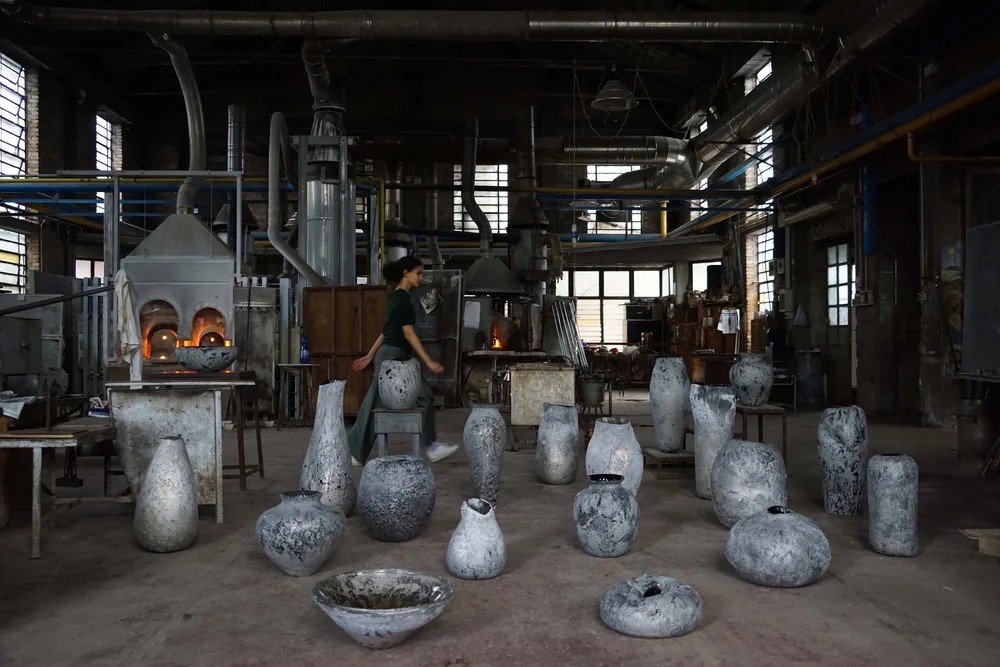
If perfume represents architecture extended in time, her work with glass embodies a direct encounter with the “nature of material”, a substance that resists absolute control and requires dialogue and coexistence.
Her experience in Murano, the heart of Venetian glassmaking tradition, marked a pivotal moment in her intellectual and professional journey. She encountered not merely a material but a culture, history, and knowledge system passed down through generations.
Entering this world as an outsider with an experimental approach was met with resistance. Artisans, accustomed to repeating established patterns, initially resisted rule-breaking. Yet through consistent presence, relationship-building, and persistent dialogue, she gradually bridged this distance, cultivating a collaborative, trust-based partnership.
Glass taught her a fundamental lesson, one that profoundly shaped both her work and personal life.
She states:
"You cannot treat glass like architecture, with absolute precision and full control. It doesn’t work that way. Everything must flow. You must let it happen, let it take shape. You may have an idea, but ultimately, it is the glass that shows you what is possible."
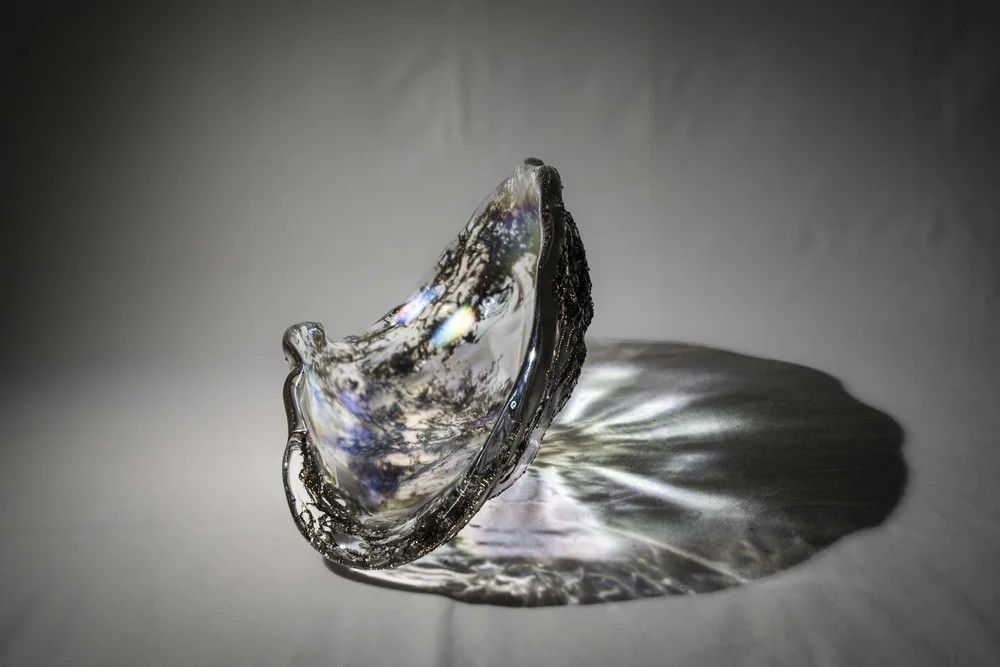

Whispers From The Deep, Murano Sea Sculptures
Material: Murano Glass, Recycled Metal Waste
Material: Murano Glass, Upcycled Metal Threads
Date of Creation: February 2018
Photo: Courtesy of Tessa El Sakhi
This approach marked a paradigm shift in her design process, from control to acceptance, from prediction to discovery. In working with glass, “chance” is no longer an error but part of the creative process, an element that can yield forms and textures previously unimaginable.
In this sense, glass is not just a material for Tessa, it is a mindset, a state in which the designer flows with the material instead of imposing form, allowing design to emerge as a living process.
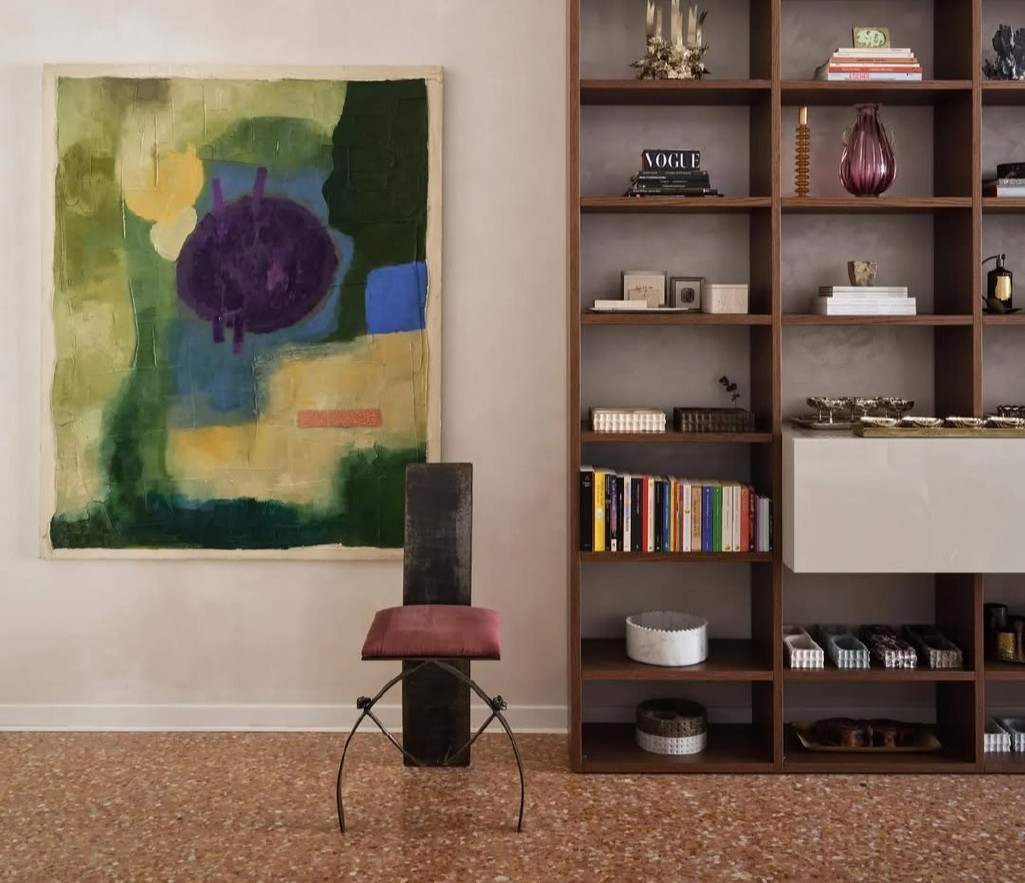
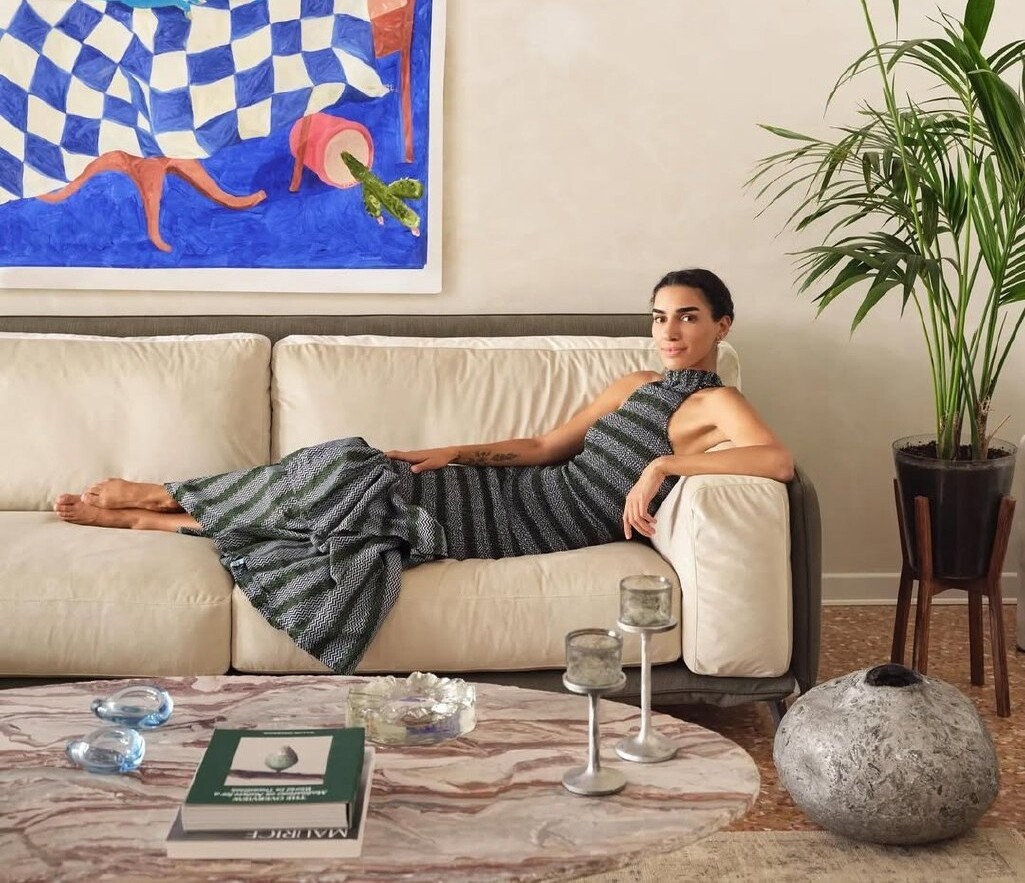
Photo: Courtesy of Tessa El Sakhi
In Tessa El Sakhi El Maalouli’s view, architecture transcends shape and form; it is a living, sensory, and human phenomenon. Her work operates at intersections, between Beirut and Venice, tradition and innovation, material and emotion, time and space.
With each project, she creates spaces that invite people to see, touch, feel, and inhabit. For her, architecture is dialogue, a conversation between humans and their environment, between memory and the present moment, between past and future.
Her consistent approach across all works reflects a commitment to humanity, to nature, and to lived experience; architecture that is not merely seen, but touched, remembered, and interwoven with life. In this vision, every material, every light and shadow, every movement and spatial detail contributes to a larger narrative, allowing the occupant to live within it, discover it, and connect with it.
Written by Zara Saberi
Research and references are used for contextual accuracy.
