
|
EN
Subscribe to our Newsletter
A conversation with Iranian handpan musician Erfan Farhdoust on nature, sound, silence and the search for stillness in contemporary life.
By Zara Saberi
In the mist-covered landscapes of northern Iran, where silence often speaks louder than words, Erfan Farhdoust has found a language of his own. Through the handpan, he explores a relationship between music, landscape and identity that resonates far beyond performance.
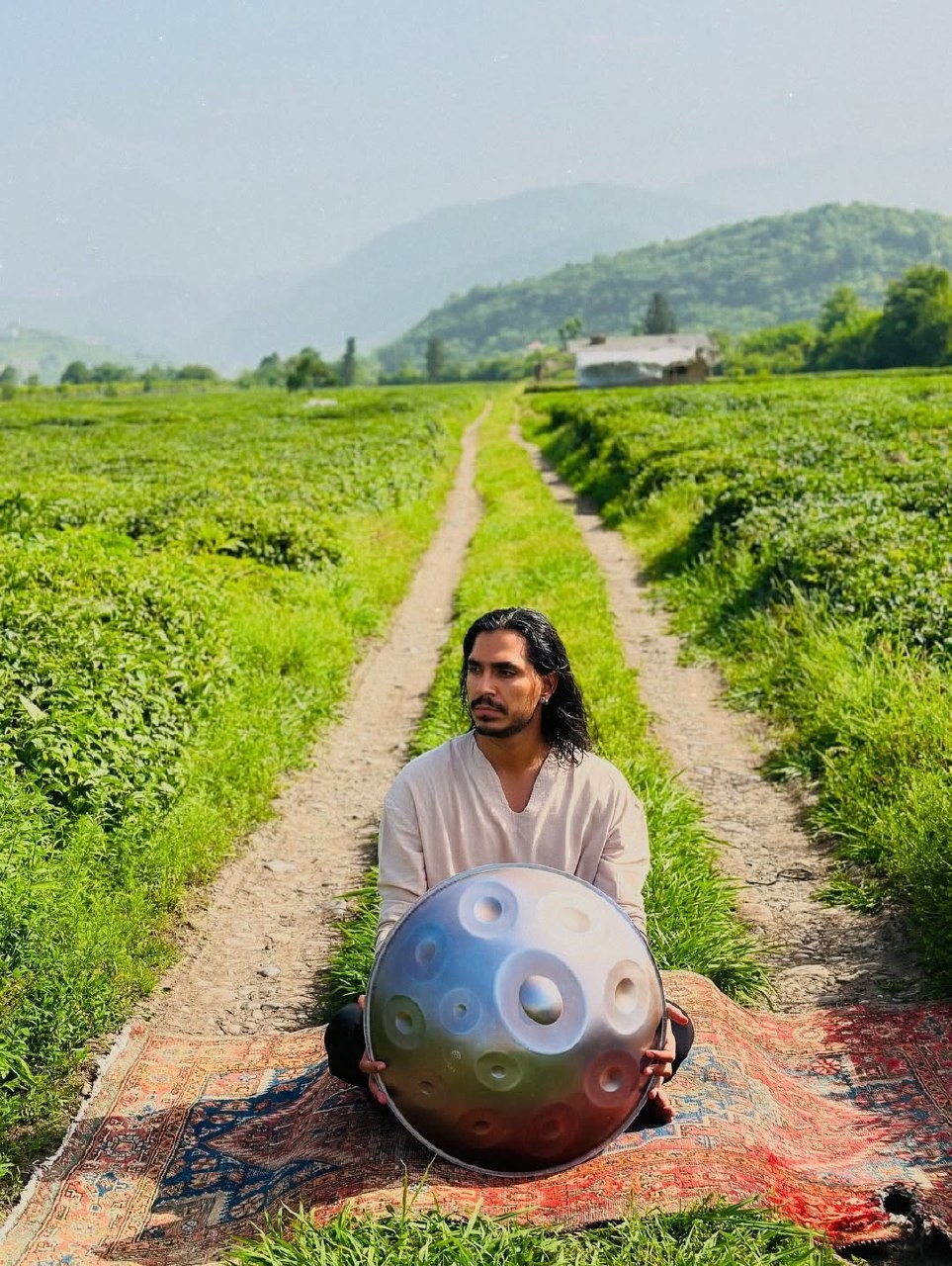
Photo: Courtesy of Erfan Farhdoust
There are days in northern Iran when the boundary between earth and sky seems to disappear.
Mist settles gently on the branches of trees. The distant sound of the Caspian Sea drifts inland. For a brief moment, the world appears to slow its pace.
In such moments, silence is no longer the absence of sound. It becomes a sound of its own.
Perhaps this is why certain instruments acquire a different meaning in certain landscapes. The handpan is one of them. Not because it emerged from this part of the world, but because it carries within it a quality of silence that feels strangely familiar to many Iranians, the same silence found in remote mountain ranges, endless deserts, ancient courtyard homes, and the forests that stretch along the country's northern coast.
At a time when the world has become louder, faster, and increasingly demanding of attention, a new generation in Iran has gravitated towards sounds that move in the opposite direction. Sounds that do not seek to dominate a space, but simply to be heard.
For many of them, the handpan is more than a musical instrument. It exists somewhere between music, meditation, and personal ritual, a way of pausing in a world that rarely allows pause.
Among this generation is Erfan Farhdoust, a musician who approaches the handpan not merely as an instrument, but as a way of seeing the world.
His story cannot be explained through a single city.
Born in Tehran, much of his perspective was shaped elsewhere, on roads that cut through the country, in small towns, and among the varied landscapes of Iran. For him, Iran is not simply a geography.
It is a collection of encounters, horizons, and experiences that have gradually informed the way he understands both life and sound.
Today he lives in Tonekabon, where fog, forest, and sea form part of everyday existence.
Yet when he speaks about the future, there is little sense of a fixed destination. Some paths, he believes, are meant to be discovered rather than planned.
Perhaps this is why, when discussing inspiration, he refuses to place any individual at the centre of the narrative.
"Inspiration comes mostly from nature," he says. "From a kind of order that exists without needing to be seen. From the simple feeling that everything eventually finds its place."
For Erfan, music was never a profession waiting to be chosen. It arrived first as a feeling, vague, persistent, and difficult to explain.
Yet his early life appeared destined for a very different path.
His teenage years were spent on football pitches. The endless energy of childhood drew him toward sport, and he pursued it seriously enough to study Physical Education at university. Many of the teammates he played alongside now compete at the highest levels of Iranian football, and he continues to follow their achievements with genuine enthusiasm.
But life rarely unfolds in a straight line.
Sometimes everything changes through a moment so quiet that it almost goes unnoticed.
Photo: Courtesy of Erfan Farhdoust
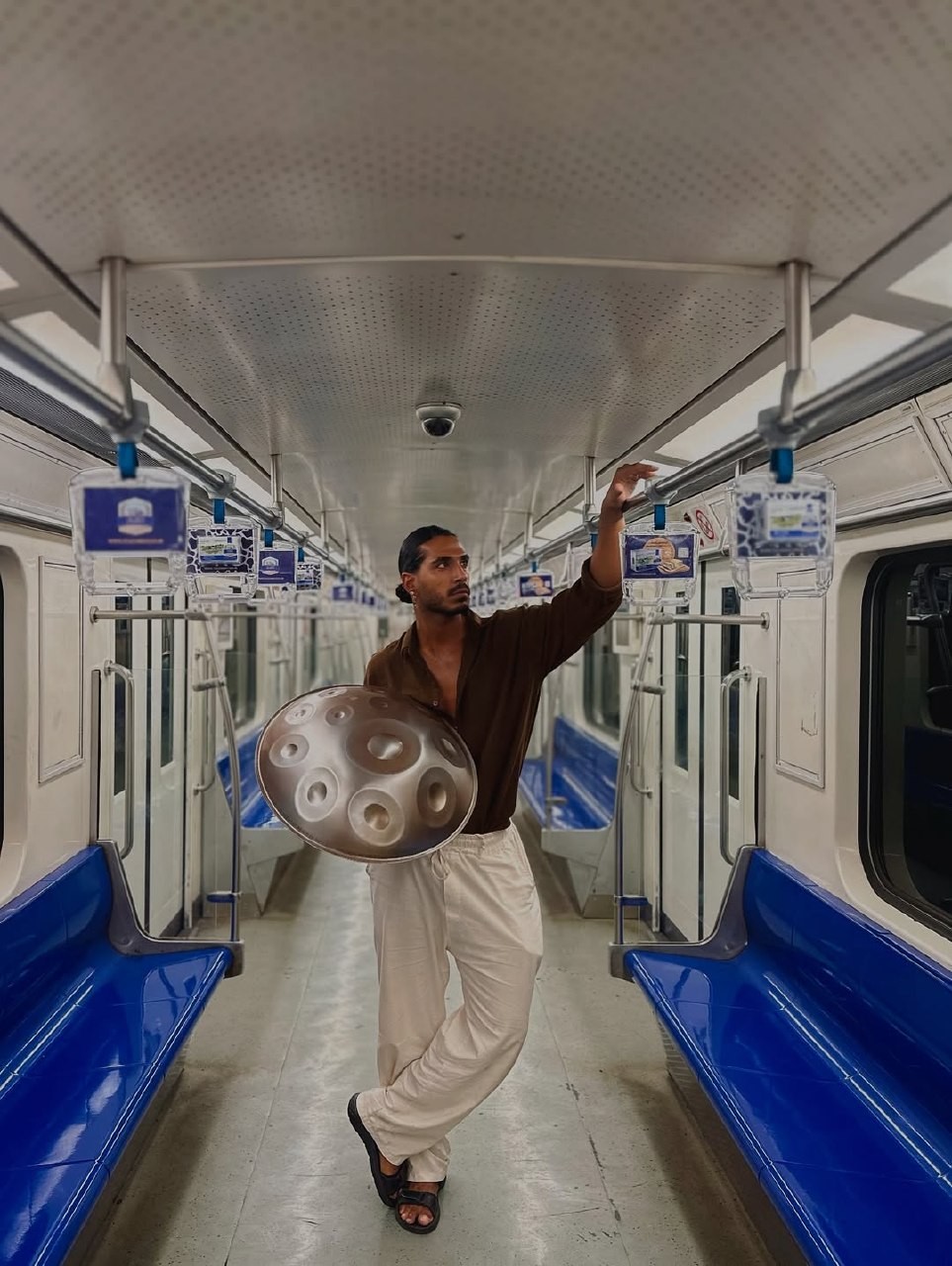
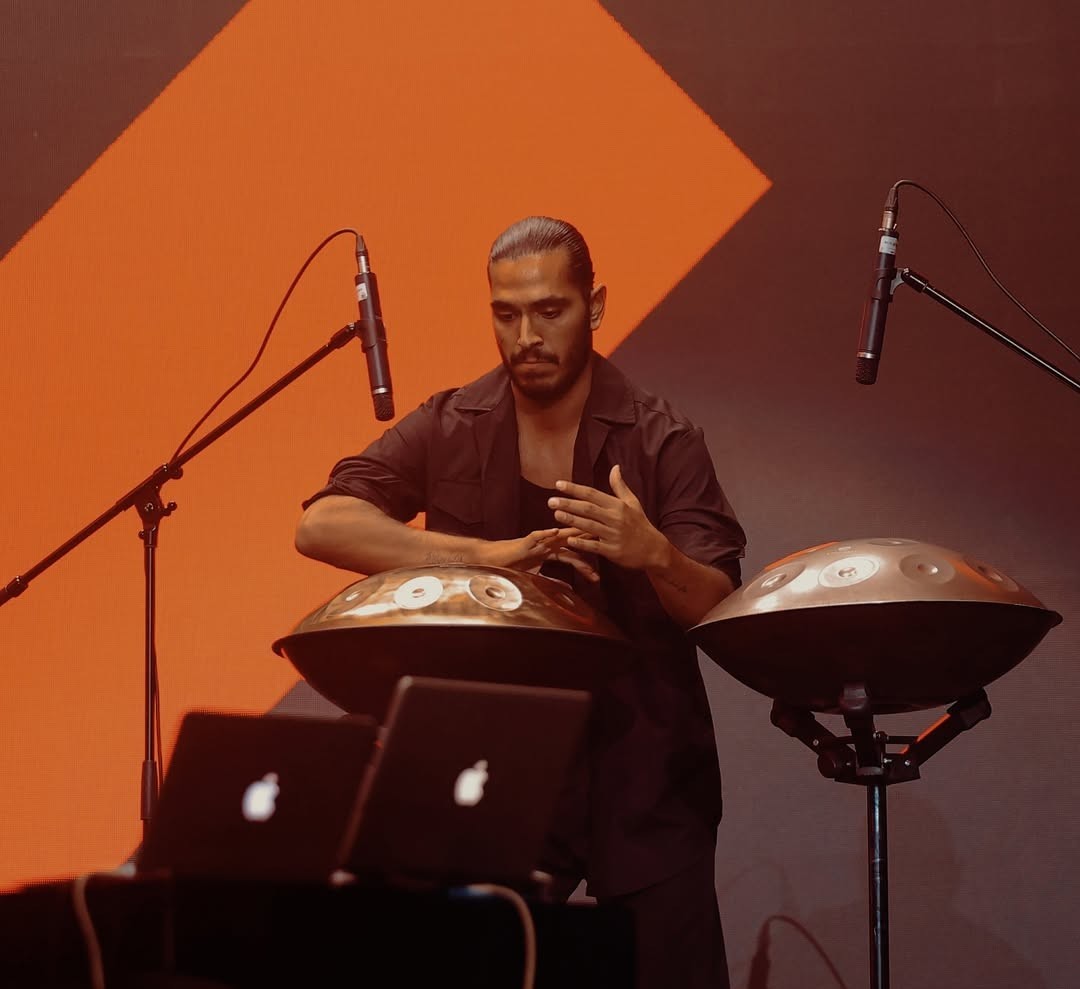
For Erfan, that moment arrived in 2019, when he purchased his first handpan.
"At first it was simply an experiment," he recalls. "Just curiosity."
Yet something in the sound lingered.
The resonance of metal beneath the fingertips. The vibration suspended in the air long after the note itself had disappeared. The feeling that emerged when the instrument was played before an audience.
"It felt like something got stuck inside me," he says. "And it never left."
What began as curiosity gradually evolved into obsession.
Hours of daily practice. Endless research. A growing fascination with the instrument's possibilities, including those hidden beneath its deceptively simple appearance.
Unlike many enthusiasts, Erfan is not troubled by the misconceptions surrounding the handpan.
"I think it's natural," he says. "Many people see it as simpler than it really is."
To explain its complexity, he often returns to a comparison he has repeated many times:
"The handpan is like combining a piano with a drum."
Photo: Courtesy of Erfan Farhdoust
Then he elaborates.
"You have to think about melody and rhythm at the same time. You need to hear the next phrase while you're still living inside the previous one."
For him, practice is about far more than technique.
It is a form of awareness.
Sometimes he spends hours playing in front of a mirror.
"Not to look at myself," he explains, "but to understand how my body works with sound."
At other times, he practises with his eyes closed, removing every visual reference until only the music remains.
"At a certain point, you begin to hear the notes in your mind before you play them."
He rejects the idea that music belongs to any particular nation or culture.
