
|
Subscribe to our Newsletter
In a world overwhelmed by climate crisis, conflict, and uncertainty, The Book of Hope offers something rare: a calm, grounded belief in humanity’s ability to change. Through an intimate conversation with Jane Goodall, this book reframes hope not as optimism, but as an active choice, one that demands courage, responsibility, and action.
By Gisoo Tayebi
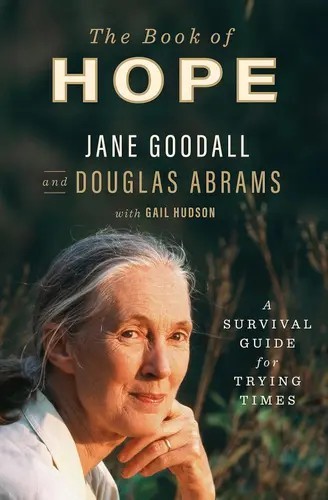
The Book of Hope is a long and profound conversation with Jane Goodall, a woman who has devoted her life to studying nature, animal behavior, and environmental conservation. Written as a dialogue with Douglas Abrams, the book weaves together personal stories, scientific experiences, and deeply human reflections.
In this book, Jane explains why, despite the many crises facing the world today, from climate change to war and social injustice, she continues to believe in hope.
She emphasizes that hope is not a shallow feeling or naïve optimism. Hope is a driving force, something that pushes us to act, to create change, and to work toward a better future. According to Jane, hope requires courage and patience, and it depends on taking small but meaningful steps, even when the challenges feel overwhelming.
The book is built around four main pillars of hope:
1. Human Intellect and Ingenuity
Jane believes that human intelligence is one of the greatest sources of hope. Throughout history, people have repeatedly found solutions in the most difficult circumstances. Our ability to think creatively, invent, and solve problems has saved lives and transformed societies time and again.
2. The Resilience and Regenerative Power of Nature
One of the most beautiful sources of hope, in Jane’s view, is nature’s extraordinary capacity to heal itself. Forests grow back after fires, endangered species recover, and ecosystems can regenerate if given the chance. She shares many examples from her fieldwork in Africa and environmental projects around the world that demonstrate this powerful resilience.
3. The Energy and Commitment of Young People
Jane sees young people as one of the most powerful forces for change. They are informed, courageous, and ready to act. Refusing to accept injustice, they actively engage in environmental and social issues, driven by a clear vision for a better future. Her program, Roots & Shoots, stands as a global example of how young people can create meaningful and lasting impact.
4. The Indomitable Human Spirit
This pillar focuses on humanity’s remarkable ability to rise after falling. Through stories of individuals and communities who have survived and rebuilt after severe crises, Jane reminds us that humans are inherently resilient. This spirit of perseverance is one of the foundations of hope.
Photo: Pinterest
The central message of the book is that hope only becomes real and alive when it is paired with action. Even the smallest efforts, caring for the environment, helping others, or changing everyday habits, can create powerful waves of change.
Jane urges us not to surrender to global problems, but instead to take responsibility for our own small part.
The Book of Hope is both inspiring and realistic. It does not hide the world’s problems, but it reminds us that hope is a responsibility, one that none of us can afford to abandon.
Jane Goodall stands as one of the most transformative figures in modern environmental thought, a scientist whose work not only expanded our understanding of animal behavior, but also redefined humanity’s relationship with the natural world. Long before she became a global icon, her fascination with animals began in early childhood, shaped by an instinctive curiosity about how living beings think, feel, and interact.
This curiosity eventually led her to East Africa in her early twenties, where a chance meeting with Louis Leakey would alter the course of her life. Recognizing her patience, intuition, and unconventional perspective, Leakey entrusted her with a task that was, at the time, radically ambitious: to observe chimpanzees not from a distance, but within their natural environment, over time, and without imposing rigid scientific frameworks.
In 1960, Goodall arrived in what is now Tanzania and began her fieldwork in Gombe National Park. With minimal equipment, just a notebook, a pair of binoculars, and an extraordinary level of determination, she entered a landscape that was, in many ways, still unknown to science. What followed would become one of the most significant breakthroughs in behavioral research.
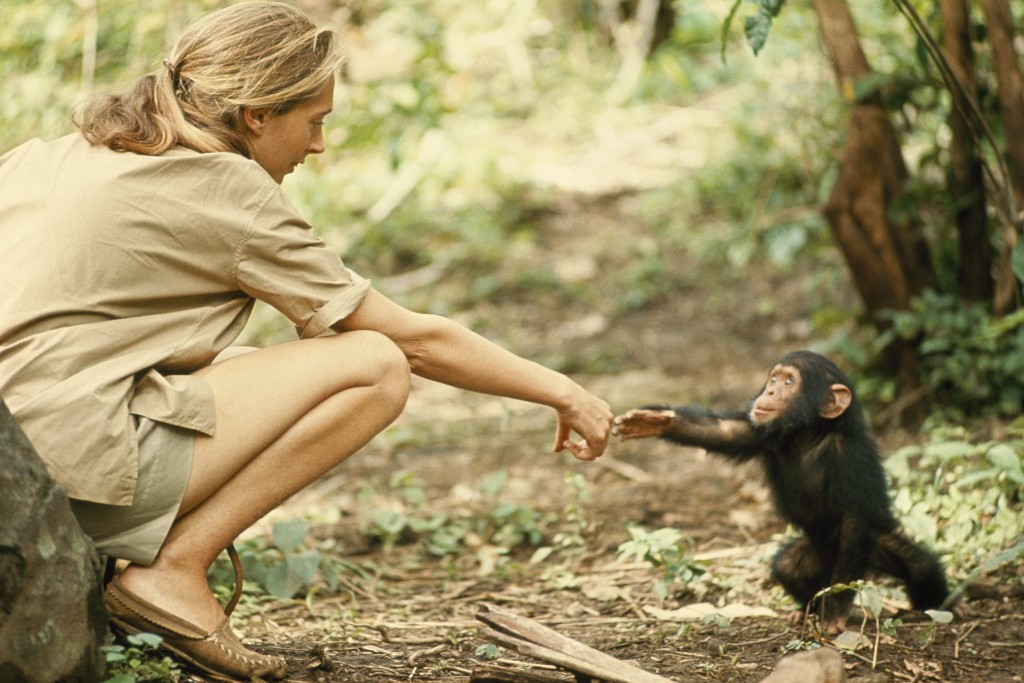
Photo: Pinterest
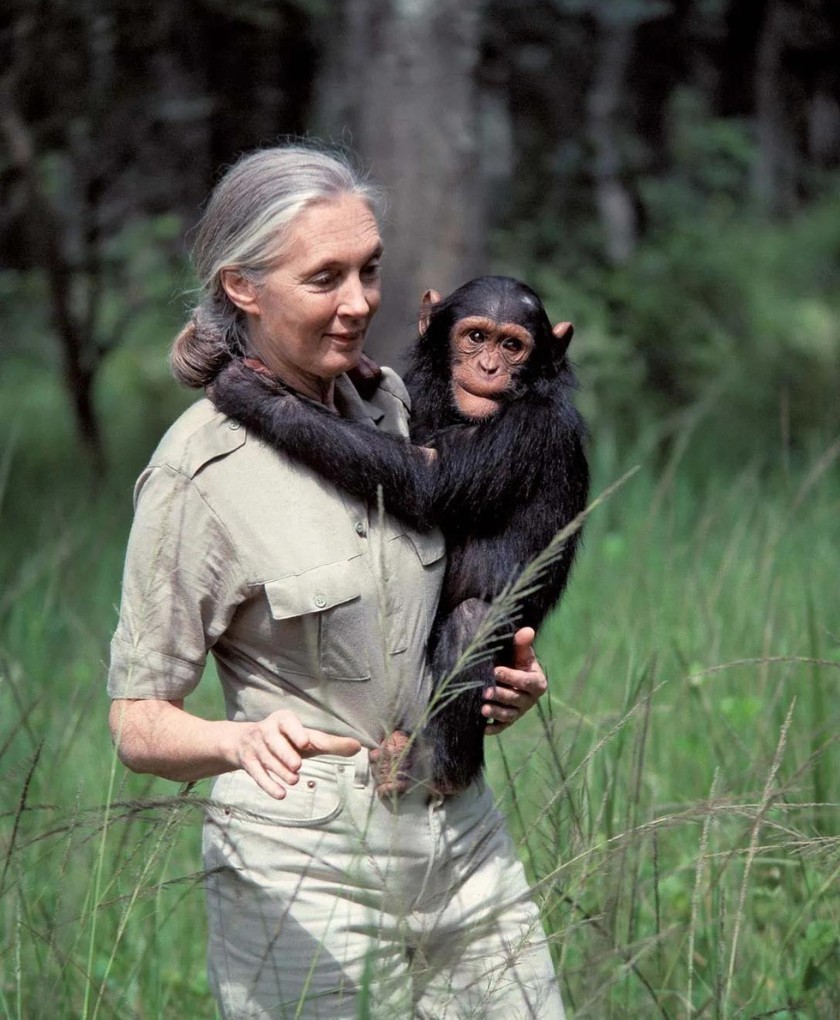
Through months of quiet observation, she documented behaviors that challenged long-standing scientific assumptions. Chimpanzees were seen crafting and using tools, forming complex social bonds, expressing emotion, and exhibiting individual personalities. These discoveries blurred the once rigid boundary between human and animal, forcing the scientific community to reconsider what it meant to be human.
Yet Goodall’s work did not remain confined to research. As decades passed, the context around her began to change. Forests diminished, wildlife populations declined, and the fragile ecosystems she had once studied in isolation became increasingly threatened by human expansion. In response, her role evolved, from observer to advocate.
Traveling across multiple regions in Africa, she witnessed firsthand the deep interconnection between environmental degradation and human hardship. Poverty, lack of resources, and limited access to education were not separate from conservation issues, they were central to them. This realization shaped a new philosophy in her work: that protecting wildlife could not happen in isolation from supporting human communities.
From this point forward, Goodall’s work expanded into global environmental activism. Through a range of international initiatives, she has inspired younger generations to take an active role in shaping the future, grounded in the belief that meaningful change often begins at the most local level.
Beyond the field, her voice reached millions through books, lectures, and documentaries, each carrying a consistent message rooted in both realism and belief. She does not deny the scale of global crises, climate change, biodiversity loss, and social inequality, but instead reframes them as challenges that demand engagement rather than despair.
Her contributions have been recognized worldwide. Appointed as a United Nations Messenger of Peace and honored as a Dame of the British Empire, Goodall’s influence extends across disciplines, from science and education to policy and culture. Yet these titles remain secondary to the enduring impact of her work.
Photo: National Geographic
At the core of her legacy lies a principle that echoes throughout The Book of Hope:
Hope is not passive.
It is built — through knowledge, responsibility, and action.
In this sense, Goodall’s life is not simply a story of scientific discovery, but a continuous effort to bridge understanding and responsibility, reminding us that the future of the natural world is inseparable from the choices we make every day.
Written by Gisoo Tayebi
Research and references are used for contextual accuracy.
