
|
EN
Subscribe to our Newsletter
Across Iran’s deserts and mountain passes, ancient caravanserais rise like silent fortresses, once pulsing with merchants, travelers, and cultural exchange along the Silk Road. Today, these thousand-year-old roadside inns are reborn as atmospheric boutique stays, where historic architecture, timeless hospitality, and immersive storytelling invite travelers to experience history not as memory but as a destination.
by The Editorial Staff
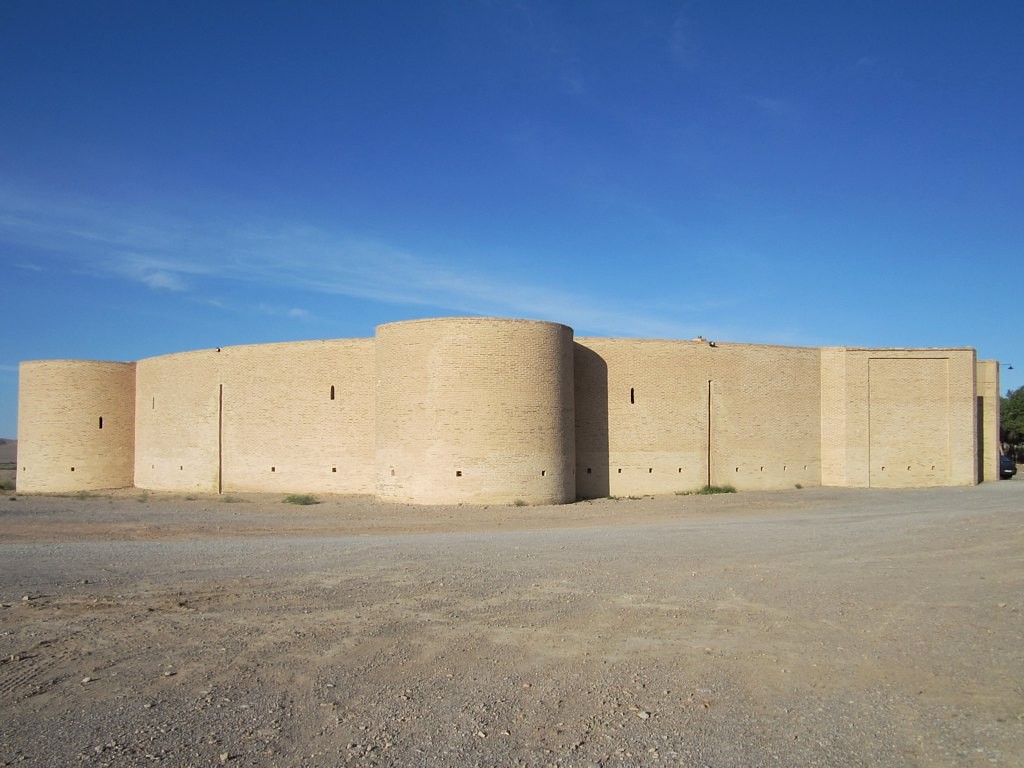
Zeinodin Caravanserai
Photo by David Stanley
Travel across Iran’s ancient routes from vast deserts and salt plains to rugged mountain passes and you will encounter monumental stone and brick complexes rising quietly from the landscape. At first glance, they resemble silent fortresses: thick defensive walls, towering gateways, symmetrical courtyards, and an overwhelming stillness that seems frozen in time. Their geometry is imposing, their presence mysterious, and their silence almost theatrical. Yet behind these walls once unfolded one of the most dynamic systems of movement, trade, diplomacy, and cultural exchange in the premodern world.
Centuries ago, these structures pulsed with life. Merchants negotiated prices beneath flickering lanterns, animals rested after months of travel, travelers exchanged stories from distant lands, and pilgrims found shelter along sacred routes. These were caravanserais, the roadside inns of antiquity and they formed the backbone of long-distance travel across the Silk Road and beyond.
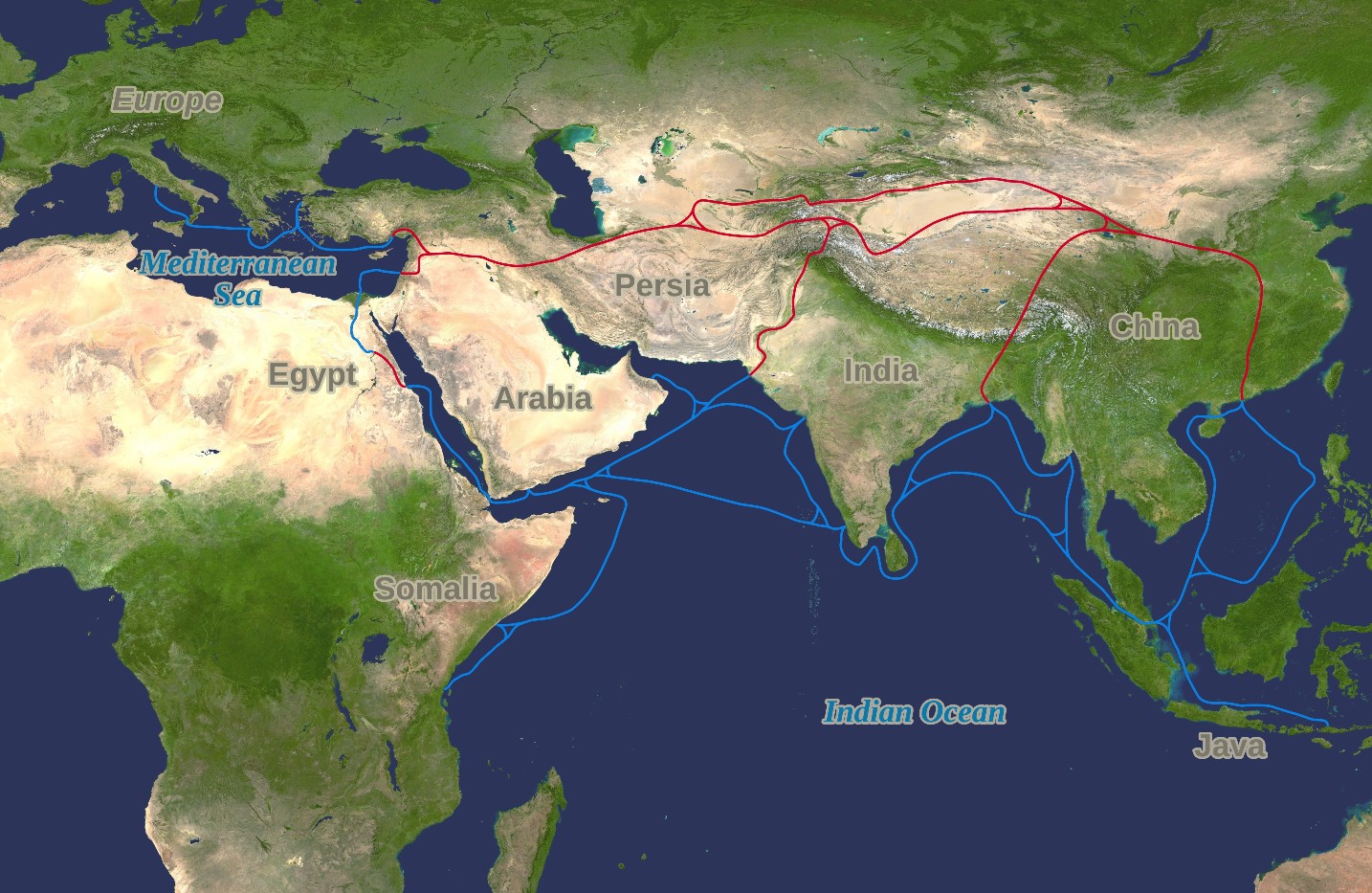
Silk Route
Today, caravanserais are no longer merely remnants of forgotten empires. Many have been carefully restored as atmospheric cultural destinations and boutique accommodations, transforming historical infrastructure into immersive travel experiences. To explore Iran’s caravanserais is to journey not only across geography, but across time through stories of merchants, explorers, pilgrims, and empires that shaped the interconnected world long before globalization became a modern concept.
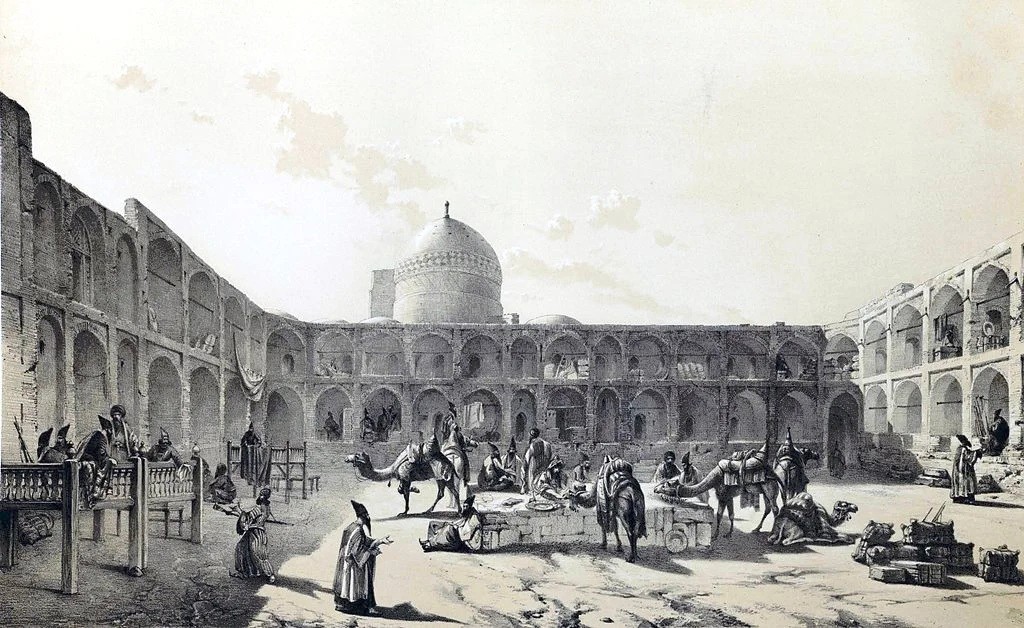
Caravanserai οf Qazvin
By Eugène Flandin in Persia
Long before airplanes crossed continents or highways connected cities, trade depended on caravans, large groups of merchants traveling with camels, horses, and valuable cargo across dangerous and unpredictable landscapes. These journeys were physically demanding and often lasted months or even years. Caravans faced constant threats, including bandits, sandstorms, extreme temperatures, and the scarcity of food and water.
Caravanserais emerged as an architectural and logistical solution to these challenges. The term itself combines “caravan,” referring to groups of traveling merchants, and “serai,” meaning enclosed palace or lodging complex. They functioned as fortified roadside inns, designed to provide security, shelter, and essential resources for travelers and animals.
Strategically positioned approximately one day’s journey apart, caravanserais created a reliable rhythm of travel. Merchants could plan their routes knowing they would find protection, water, storage, and rest at regular intervals. This infrastructure transformed uncertain travel into organized trade networks, allowing commerce and cultural exchange to flourish across continents.
Iran’s geographic position made it one of the most vital hubs within these networks. Situated between East Asia, Central Asia, the Middle East, and Europe, Iran naturally became a crossroads of civilizations. Caravanserais allowed these routes to operate as stable arteries connecting global trade and cultural exchange.
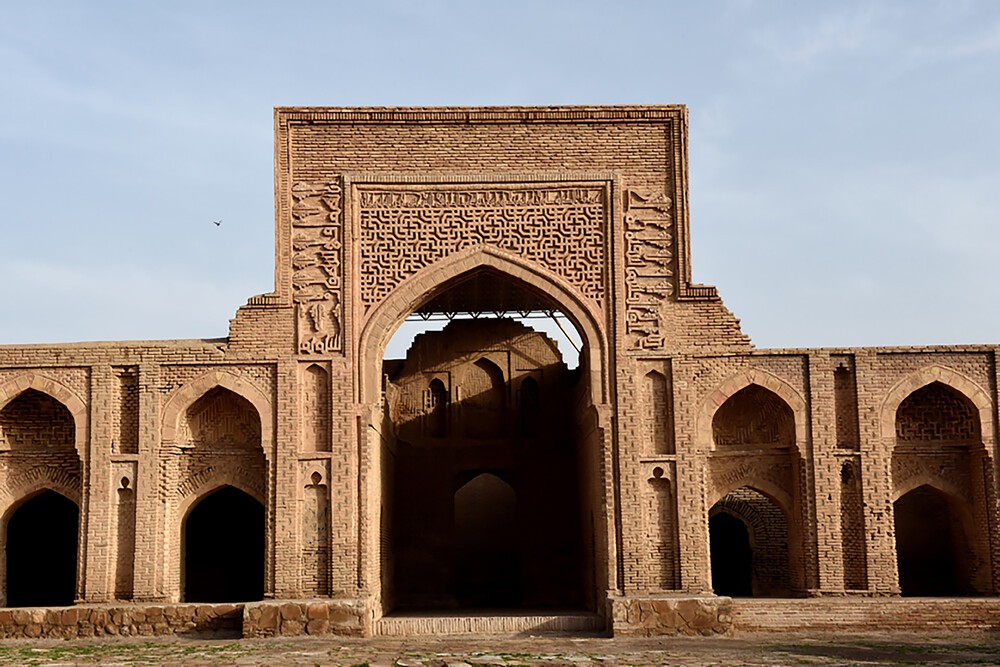
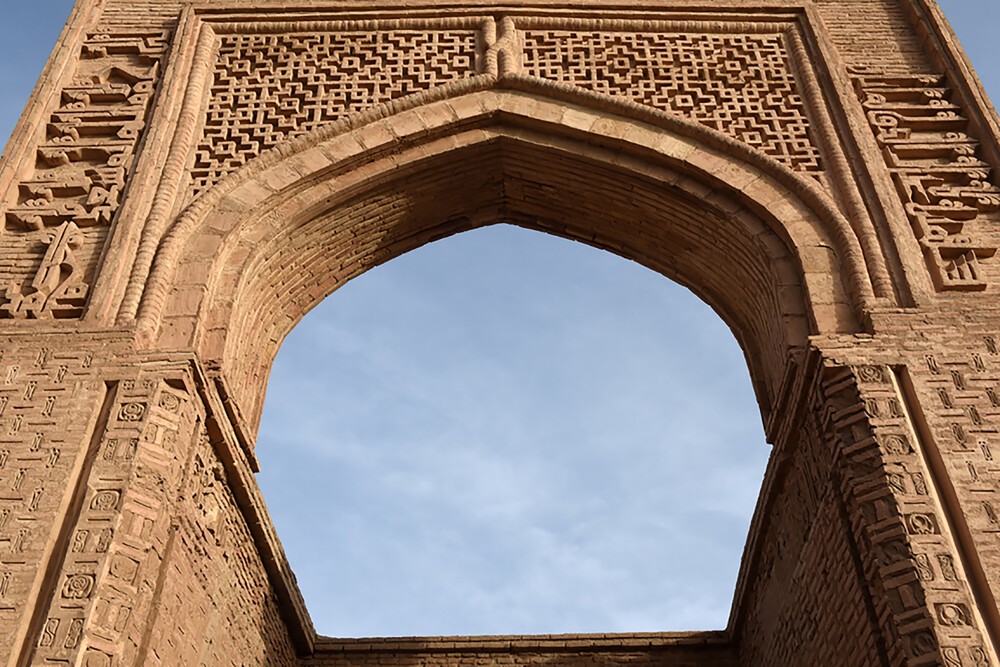
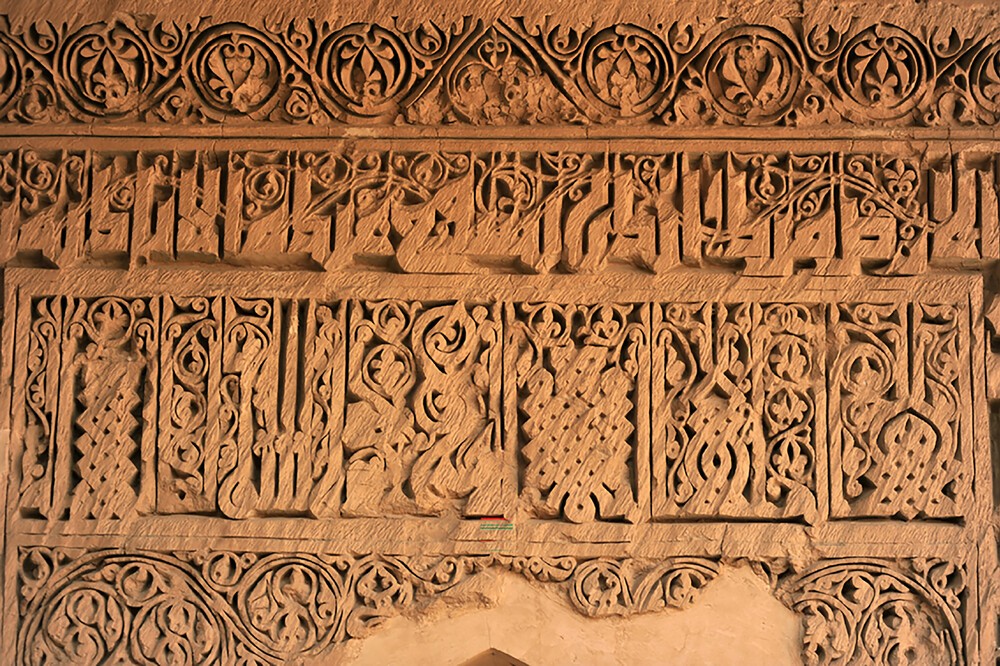
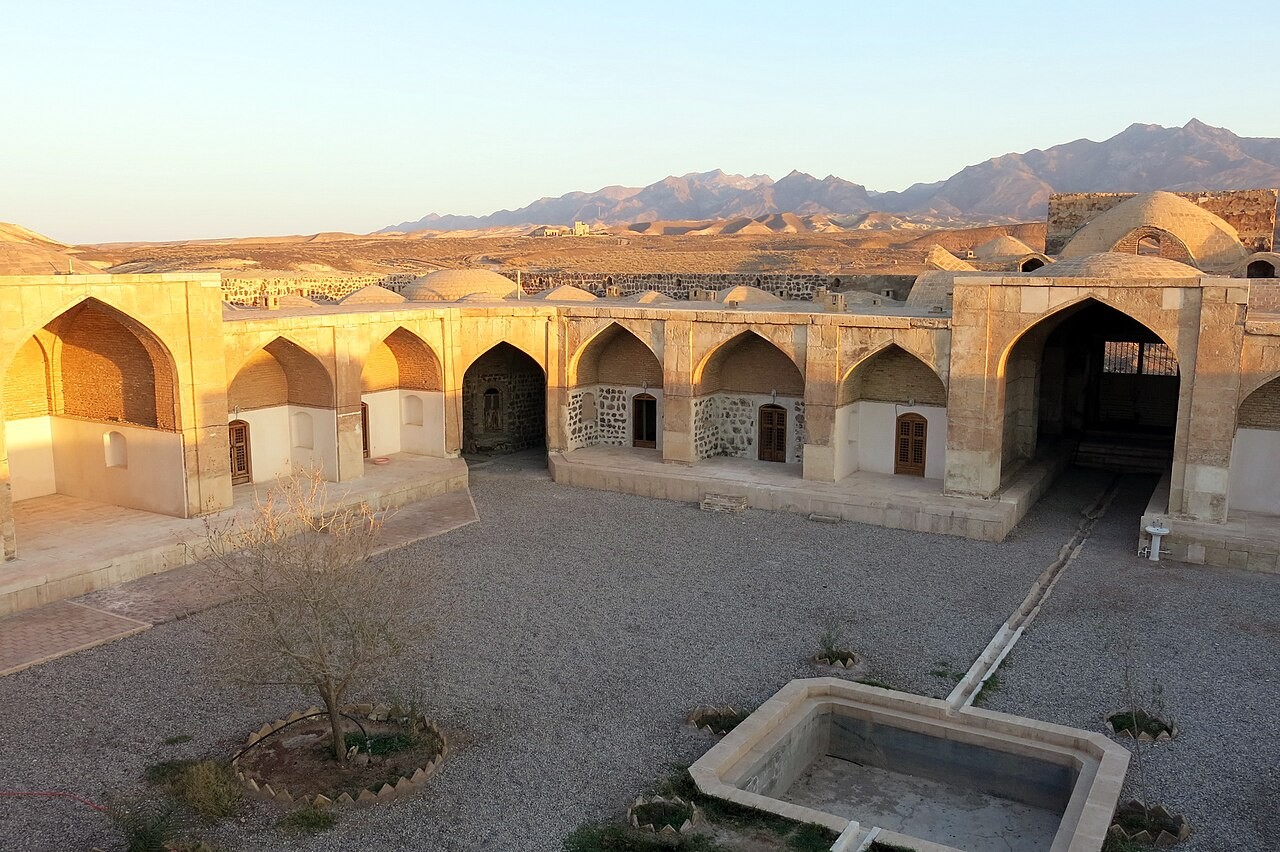
Robāt-e Sharaf Caravanserai
Photo: Babak Sedighi
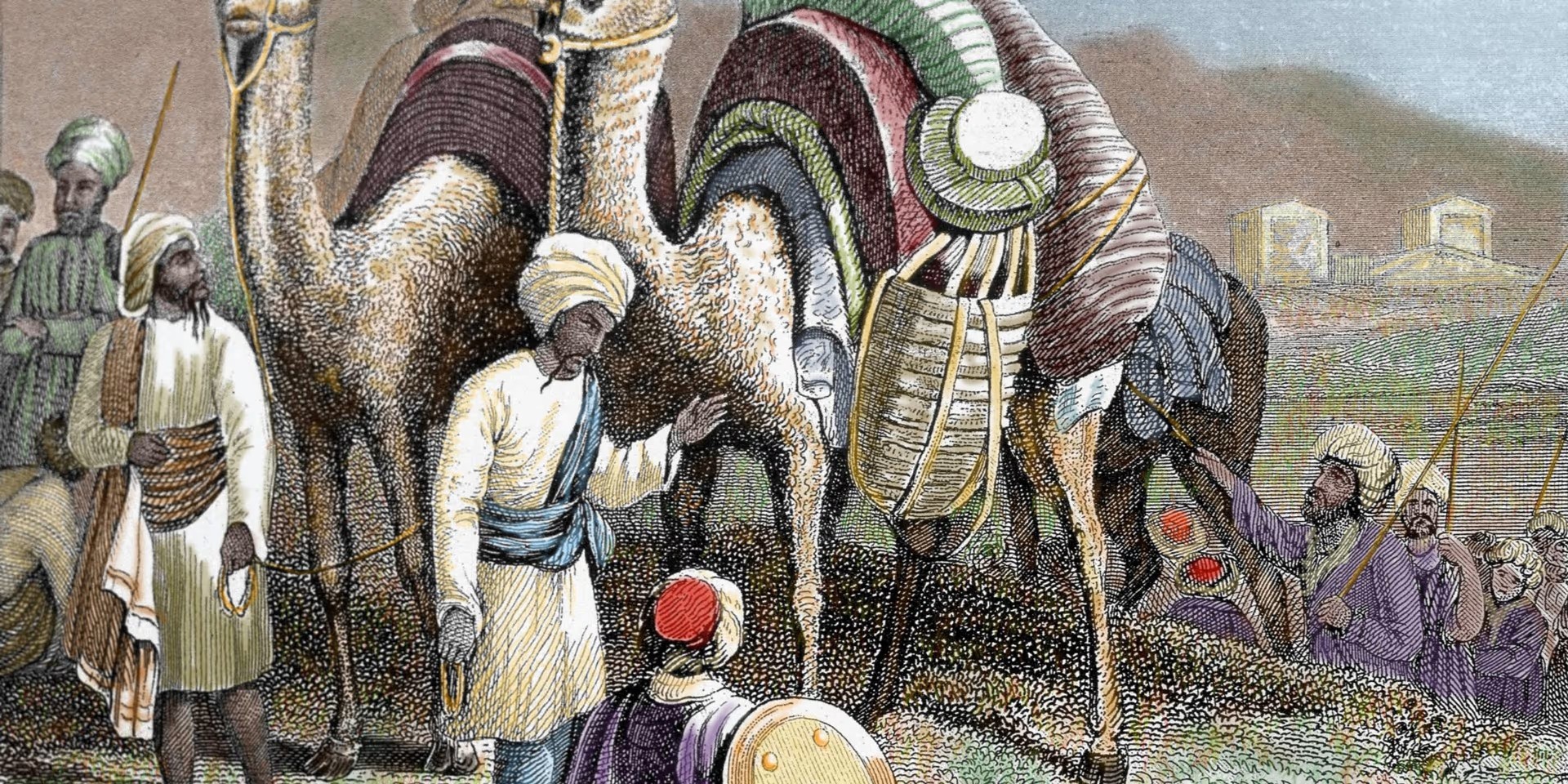
Silk Road, Traded goods
Photo: Gettyimages
The roots of caravanserai networks in Iran trace back more than 2,500 years to the Achaemenid Empire under Darius the Great. His ambitious Royal Road connected Sardis in Asia Minor to Persepolis, forming one of the earliest examples of organized long-distance communication and transportation systems.
Along this route, relay stations supported imperial messengers, soldiers, and administrators traveling across the vast empire. While simpler than later caravanserais, these stations established the concept of secure roadside infrastructure that would evolve significantly in later centuries.
During the Islamic Golden Age, Iran’s geographic and political position placed it at the center of east-west exchange. As Silk Road trade expanded between China, Central Asia, the Middle East, and Europe, caravanserais developed into sophisticated complexes capable of supporting entire trade ecosystems.
Merchants transported silk, spices, gemstones, textiles, ceramics, manuscripts, and metalwork. Alongside these goods traveled languages, religions, scientific knowledge, and artistic traditions. Caravanserais became cultural meeting grounds where Persian traders negotiated with Chinese merchants, Arab scholars exchanged manuscripts, and Central Asian travelers shared stories of distant civilizations.
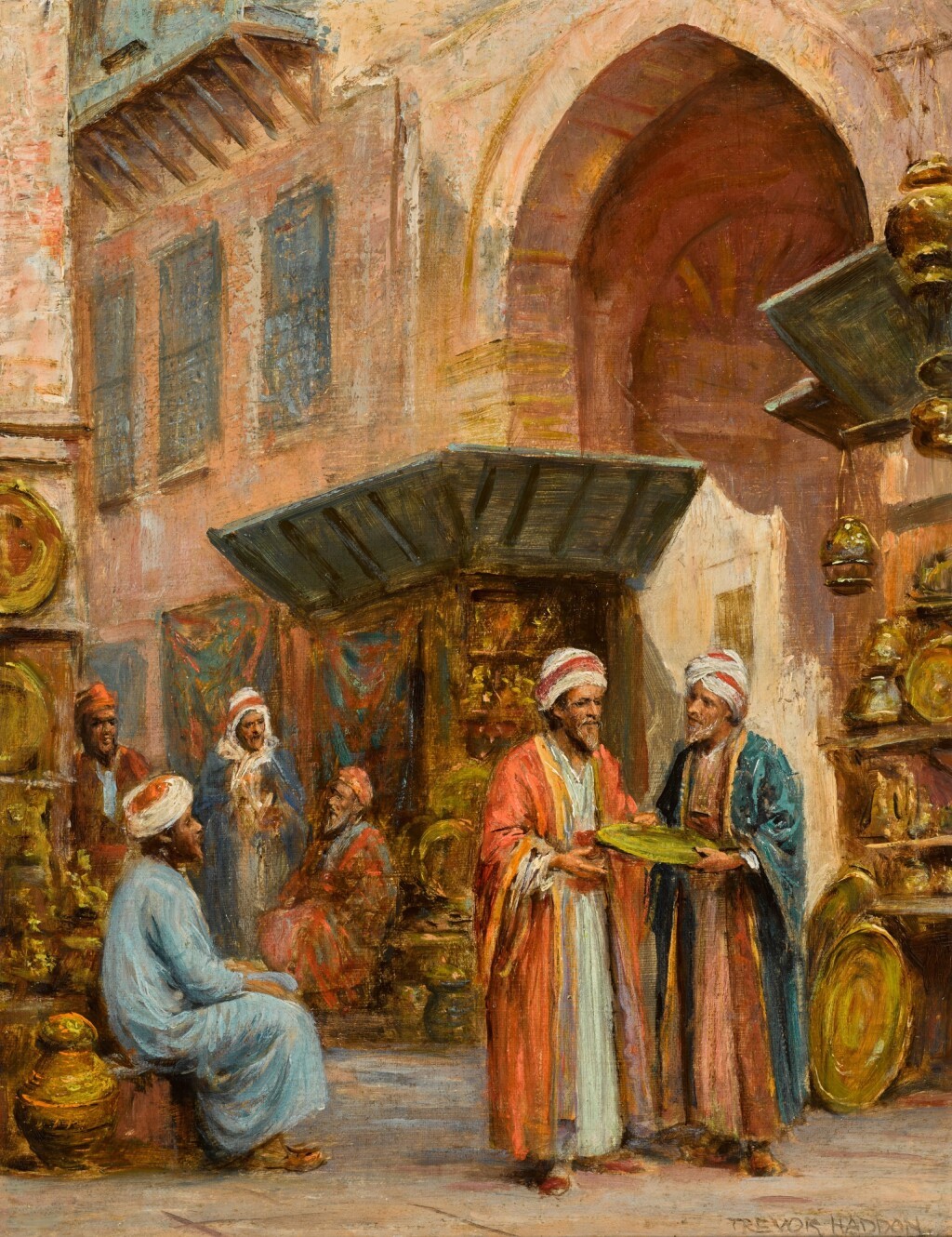
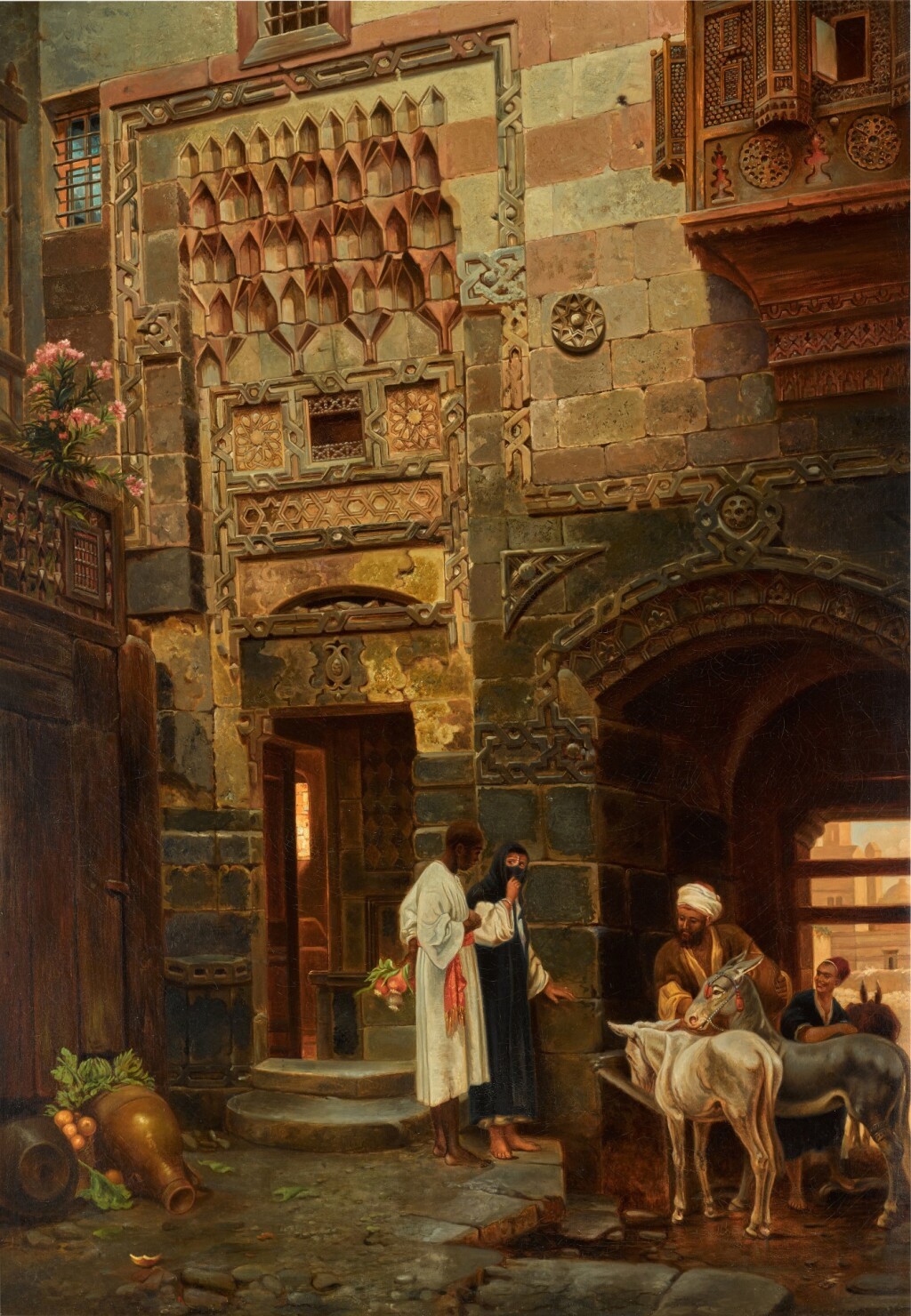
Arthur Trevor Haddon
Austrian School, 19th century
To fully understand the significance of caravanserais, one must consider the geography that shaped their existence. Iran’s landscape is remarkably diverse, encompassing vast deserts, salt flats, fertile valleys, rugged mountains, and coastal plains. This environmental diversity made long-distance travel both breathtaking and hazardous, requiring carefully planned routes supported by dependable infrastructure.
Caravanserais functioned as geographic anchors along these routes. In the central Iranian plateau, desert caravanserais provided essential refuge from extreme heat during the day and freezing temperatures at night. Their thick walls and domed chambers were engineered to stabilize interior temperatures, creating surprisingly comfortable living environments despite harsh external conditions.
In mountainous regions such as the Alborz and Zagros ranges, caravanserais served an entirely different purpose. Snow, avalanches, strong winds, and steep passes created unpredictable travel conditions. Mountain caravanserais were often constructed using dense stone masonry to resist heavy snowfall and structural stress.
Along coastal trade routes near the Persian Gulf and the Caspian Sea, caravanserais supported maritime commerce, enabling goods transported by ship to continue inland along trade networks.
Caravanserais were masterpieces of functional and environmental architecture. Their designs balanced safety, climate adaptation, and social interaction, reflecting centuries of architectural refinement.
Most caravanserais followed rectangular or square layouts centered around an open courtyard. This courtyard served as the operational core of the complex, where animals could be unloaded, goods organized, and travelers gathered to rest or trade.
Surrounding the courtyard were guest chambers, storage areas, and protected stables. Thick outer walls provided defense against attacks and extreme weather. Massive gates controlled access and often featured intricate brickwork or tile decorations symbolizing hospitality and authority.
Water infrastructure was crucial. Caravanserais incorporated cisterns, wells, and qanat systems to supply travelers and animals. Many also included bathhouses, prayer areas, and kitchens, functioning as fully self-contained service centers.
While caravanserais were built for safety and logistics, their courtyards became vibrant social environments. These spaces hosted temporary communities formed by travelers from vastly different cultural, linguistic, and religious backgrounds.
Merchants negotiated deals and exchanged goods from distant regions. Storytelling and news-sharing transformed caravanserais into early information networks. Culinary traditions also spread as travelers introduced new spices, cooking methods, and ingredients across cultures.
For pilgrims traveling to sacred destinations, caravanserais offered both shelter and spiritual support. Shared prayer spaces strengthened religious connections across regions.
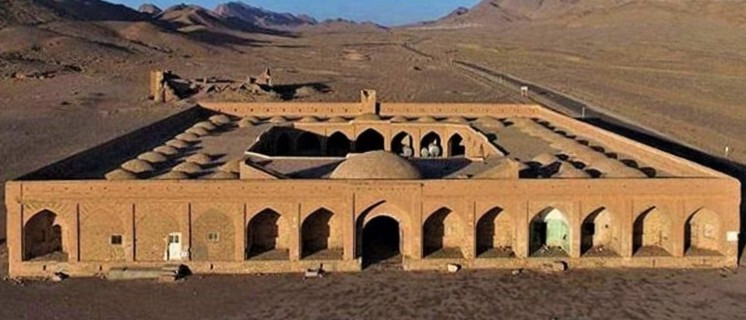
The Silk Road was not only a trade network but also an intellectual corridor. Scholars, physicians, astronomers, and artists traveled alongside merchants and pilgrims, carrying manuscripts, scientific theories, and artistic ideas between civilizations.
Caravanserais provided safe environments for these exchanges. Technologies such as papermaking, textile weaving, and architectural innovations spread through Silk Road networks supported by caravanserai infrastructure.
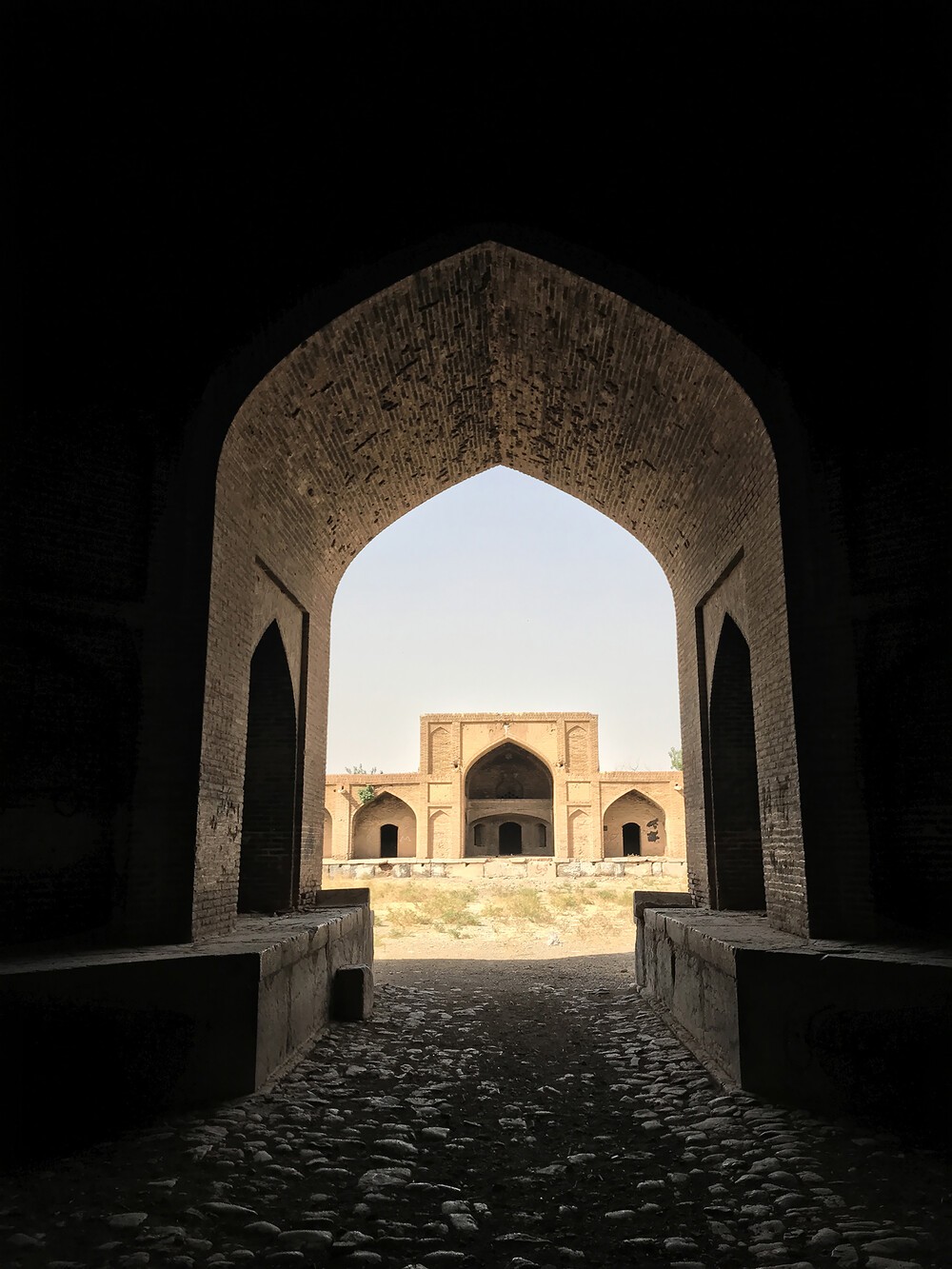
Sheikhali Khān (Chāleh Siyāh) Caravanserai
Photo: Hamid Binaei Faal
Although often overlooked, women and families played essential roles in caravan life. Historical evidence suggests women participated in trade, managed family businesses, and operated small commercial activities within caravanserais.
Families relied on caravanserais for protection during long journeys, while traveling artisans used them as temporary workshops to repair goods and share craftsmanship techniques.
Symbolism and Aesthetics in Caravanserai Design
Caravanserais reflected deeper cultural values beyond functionality. Persian architecture emphasized harmony, symmetry, and spatial balance, which caravanserais embodied through geometric layouts and monumental gateways.
Decorative brickwork, tile patterns, and inscriptions symbolized prosperity, protection, and hospitality. Even in remote desert regions, caravanserais conveyed artistic sophistication, reinforcing Iran’s historical identity as a center of architectural excellence.
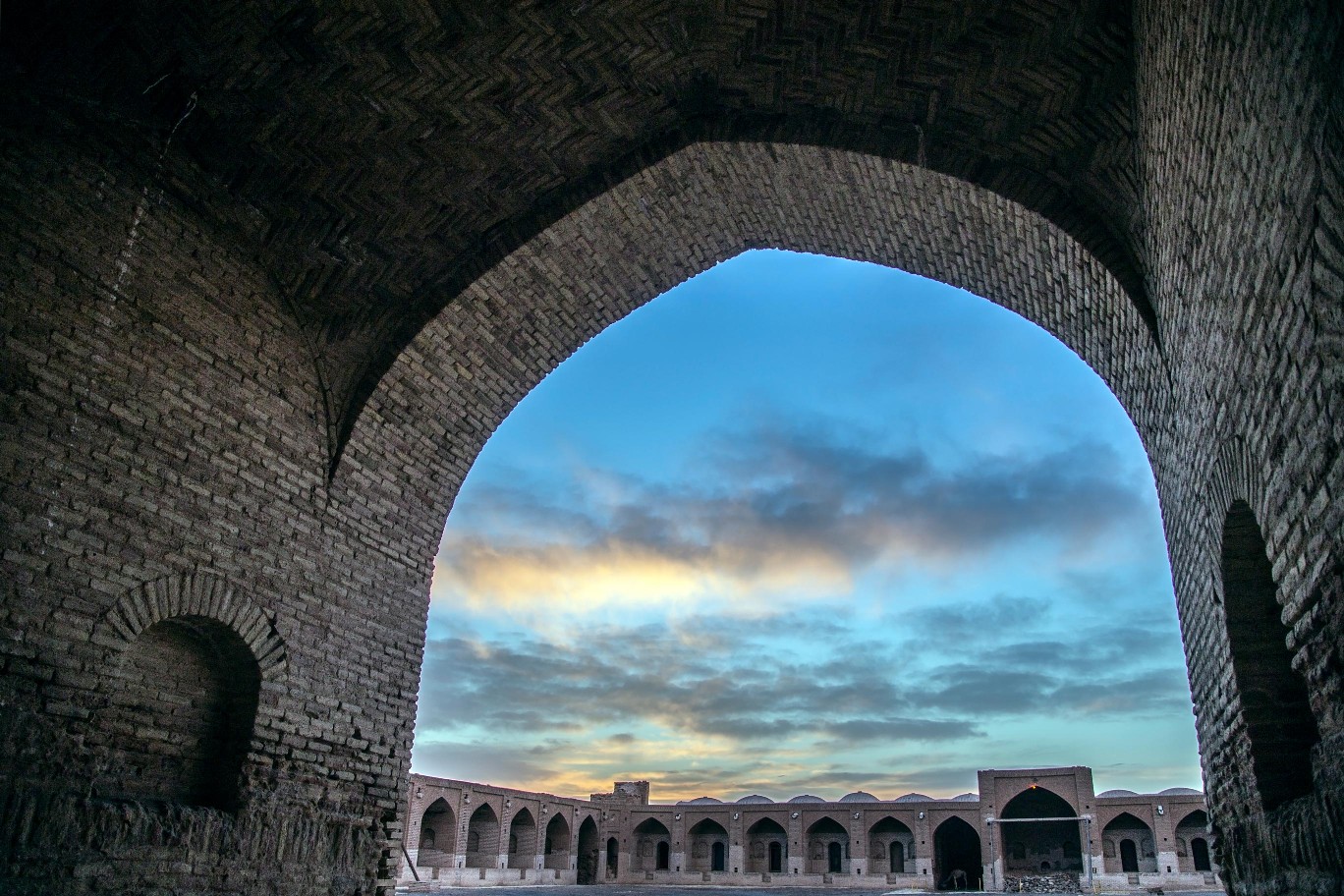
Photo: Mostafa Meraji
Caravanserais demonstrate remarkable environmental adaptability. Windcatchers directed airflow to cool interior spaces naturally. Thick earthen walls provided insulation against temperature extremes. Underground qanat systems transported water efficiently across long distances.
These environmentally conscious designs serve as early examples of sustainable architecture and continue to inspire modern climate-responsive building strategies.
Although caravanserais existed for centuries, their golden age emerged during the Safavid dynasty in the 16th and 17th centuries. Shah Abbas I recognized the economic importance of secure trade routes and ordered the construction of hundreds of caravanserais across Iran.
Safavid caravanserais combined functionality with artistic sophistication. Monumental iwans, symmetrical courtyards, and decorative brick patterns reflected imperial authority and cultural refinement. European travelers described them as safe havens across harsh landscapes.
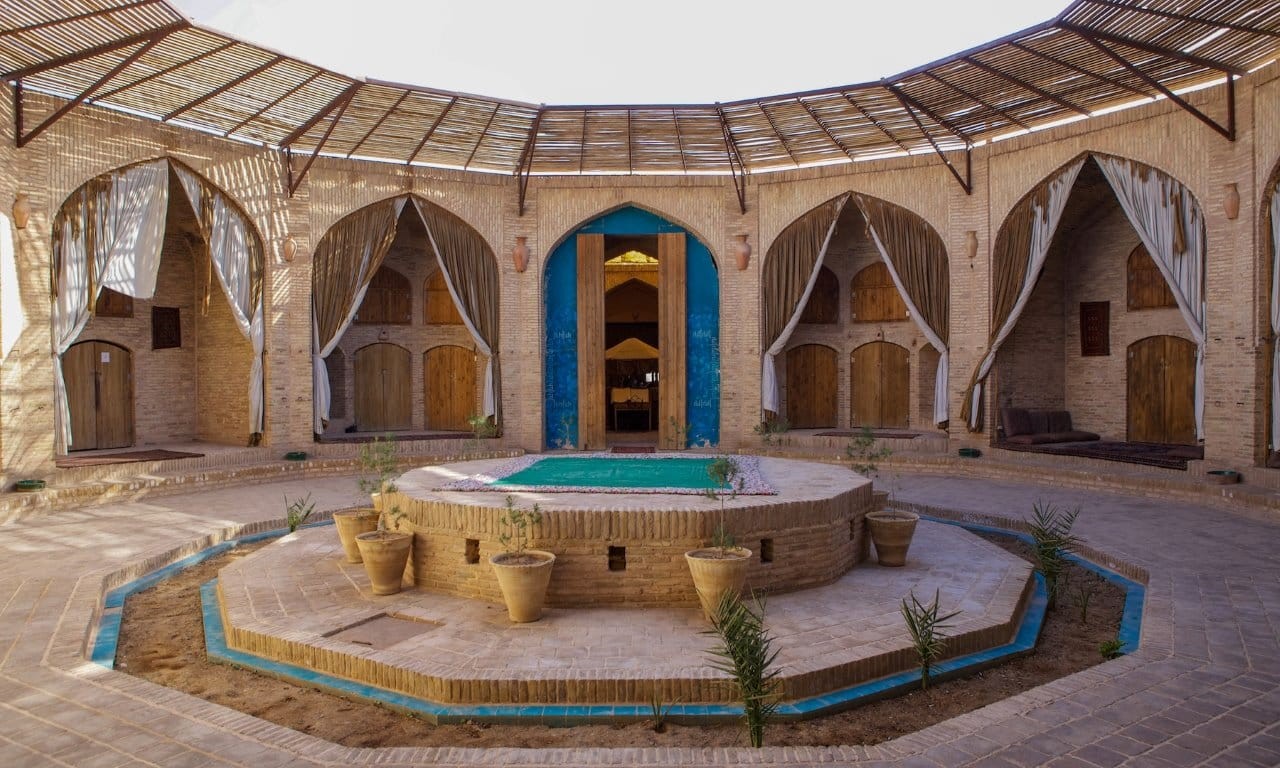
Iran hosts one of the world’s largest collections of surviving caravanserais, with more than 1,700 structures remaining across the country. In 2021, UNESCO inscribed 54 Persian caravanserais on the World Heritage List, recognizing their global historical significance.
Zein-o-din Caravanserai
Located near Yazd, this rare circular caravanserai offers visitors the opportunity to experience desert silence and stargazing within Safavid architecture.
Qasr-e Bahram
Situated in Iran’s central desert, this royal caravanserai reflects Safavid grandeur and now serves as a unique desert retreat.
Robat Sharaf
Famous for intricate Persian brickwork, Robat Sharaf is considered one of Iran’s most beautiful caravanserais.
Deir-e Gachin
Often called the “Mother of Caravanserais,” this structure dates back to the Sassanian era and demonstrates the continuity of Iranian travel infrastructure.
Caravanserai_Zein-o_Din-yazd
While Iran preserves one of the richest caravanserai networks, similar structures exist across Silk Road regions. Turkey’s Seljuk caravanserais, Central Asian trade-route complexes, and Middle Eastern roadside inns reflect shared architectural traditions and interconnected cultural histories.
Modern restoration projects have transformed many caravanserais into boutique hotels, cultural centers, and heritage destinations. Visitors can experience Persian cuisine, traditional crafts, desert landscapes, and historical architecture simultaneously.
Cultural festivals, music performances, and storytelling events increasingly take place within restored caravanserais, transforming them into living cultural spaces.
Travelers can explore caravanserais along several historical routes:
Yazd–Kerman Desert Route: Famous for atmospheric desert caravanserais and salt plains.
Khorasan Trade Route: Features architectural masterpieces connecting Iran to Central Asia.
Qom and Central Plateau: Hosts some of the oldest caravanserais in Iran.
Alborz Mountain Routes: Offers dramatic alpine scenery and mountain-adapted caravanserais.
Despite UNESCO recognition, many caravanserais face preservation challenges including environmental erosion and urban expansion. Restoration requires specialized knowledge of traditional building techniques to maintain historical authenticity.
International cooperation and heritage initiatives continue working to protect these structures for future generations.
Caravanserais as Lessons for Modern Infrastructure
Caravanserais demonstrate how infrastructure can integrate economic, cultural, and environmental functions. Their strategic placement, climate adaptation, and community-centered design provide valuable insights for modern transportation and urban planning.
The Enduring Romance of Caravan Travel
Caravanserais evoke timeless imagery of exploration and adventure. Standing within their courtyards often creates an emotional connection to history, allowing visitors to imagine caravans arriving at sunset and travelers sharing stories beneath lantern light.
Traveling through Iran’s caravanserais is not merely sightseeing, it is participation in a global historical narrative shaped by trade, exploration, and cultural exchange. These once-functional waystations have become destinations themselves, reminding travelers that human connection has always defined the spirit of travel.
In an era shaped by rapid technological change, caravanserais remain enduring symbols of movement, hospitality, and intercultural dialogue. Their gates remain open, inviting modern explorers to rediscover the ancient rhythm of travel that once connected the world.
Caravanserais were more than waystations; they were living networks of trade, culture, and human connection. Their courtyards witnessed the exchange of goods, ideas, and stories, and their walls sheltered travelers across deserts, mountains, and plains. Centuries later, these structures still carry the essence of movement, hospitality, and intercultural dialogue qualities that resonate strongly with today’s travelers seeking experiences that go beyond conventional tourism.
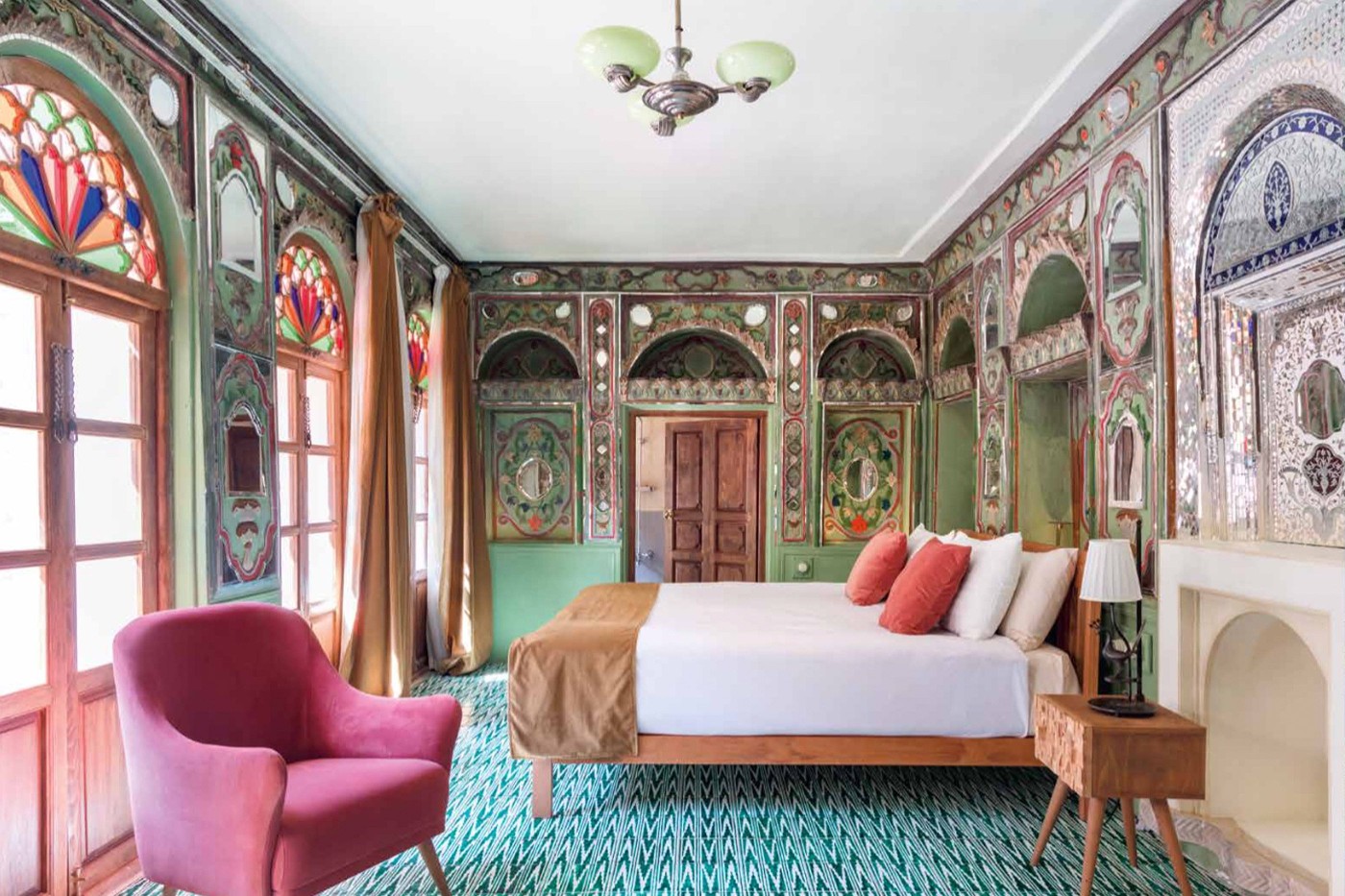
The modern revival of caravanserais as boutique hotels transforms history into lived experience. Staying in a restored caravanserai is not merely about comfort; it is about inhabiting a space that once connected continents, cultures, and civilizations. These boutique accommodations honor the spirit of their original purpose: offering sanctuary, fostering interaction, and leaving guests with lasting memories.
In essence, the journey that began with Silk Road merchants now continues for today’s explorers. Caravanserais teach us that luxury can coexist with authenticity, that architecture can narrate stories, and that travel whether across deserts or in a boutique hotel courtyard remains a timeless path to connection, reflection, and discovery.
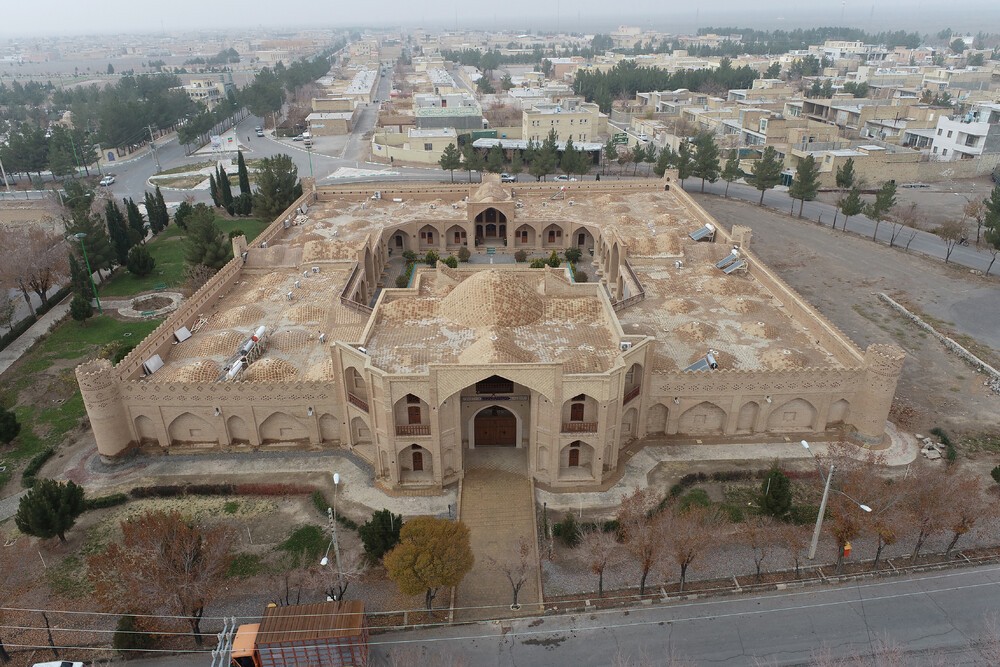
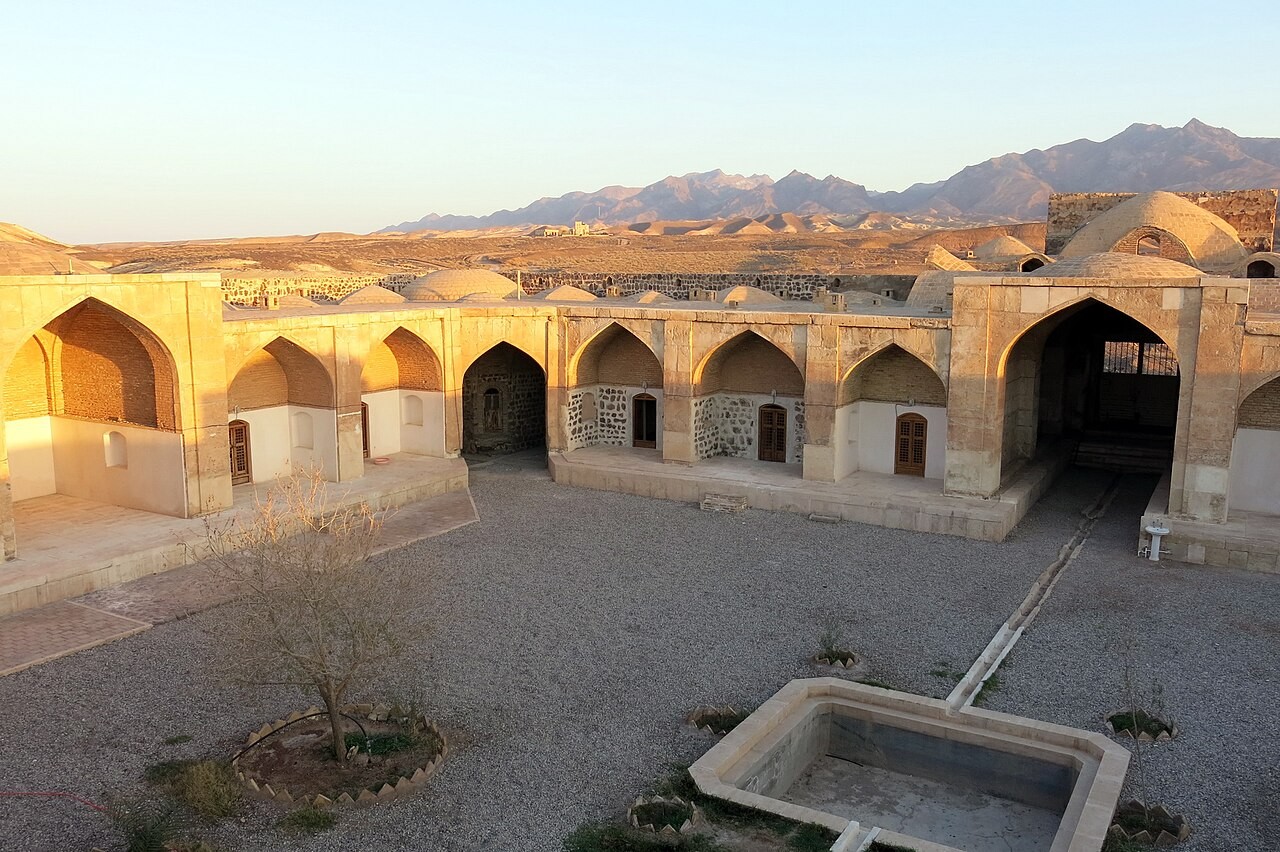
Kūhpāyeh Caravanserai
Photo: Ali Eqra
Ghasr Bahram
Photo: Getty Images
This article is an original editorial analysis produced by [DIBA magazine]
Research and references are used for contextual accuracy.