
|
EN
Subscribe to our Newsletter
What happens to style when the future arrives without instruction? When choice expands faster than meaning, and clothing precedes language? In some places, fashion does not emerge through refinement or desire, but through rupture, worn not to signify belonging, but to remain intact.
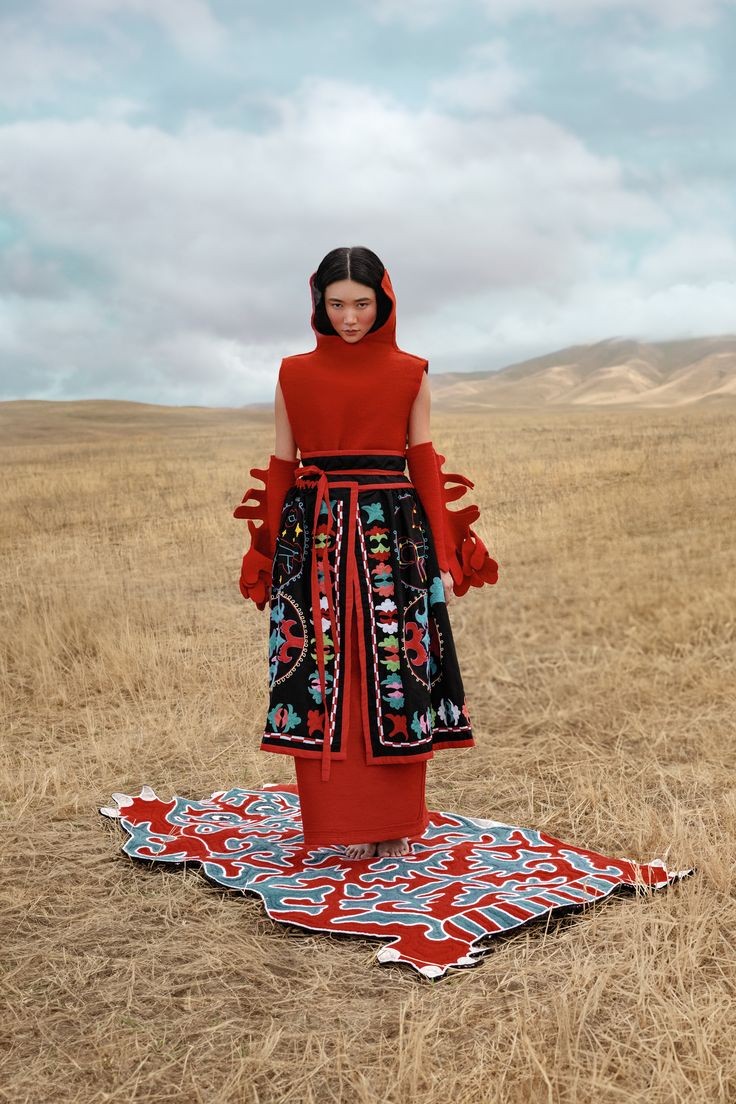

Photo: Natasha Yankelevich
What does fashion look like when modernity arrives all at once, without preparation, without institutions, without time?
In Mongolia, fashion did not evolve. It arrived through collapse.
The end of socialist rule in 1990 dismantled not only a political and economic system, but an entire visual regime.
Under socialism, clothing in Mongolia functioned primarily through standardization and utility, reflecting broader patterns of socialist material culture across the Soviet sphere.
Dress was not a language of aspiration or distinction; it was a mechanism of regulation, necessity, and ideological modesty. When that system disappeared, it left behind a material vacuum.
Into this vacuum entered the market.
The collapse of socialism in Mongolia introduced consumer goods before consumer culture.
Clothing circulated before meaning. Brands appeared without hierarchy; choice expanded without shared codes. As anthropologists studying post-socialist material life have observed, the withdrawal of the state did not immediately produce freedom, but uncertainty, an uncertainty that became visible on the dressed body.
In the absence of a domestic fashion industry or institutional infrastructure, clothing in urban centers such as Ulaanbaatar was shaped largely by informal and second-hand economies.
Research on post-socialist informal markets shows how used garments move across borders stripped of their original cultural context. In Mongolia, these clothes, jackets, jeans, sportswear, were worn not as symbols of trend alignment, but as practical responses to economic volatility and extreme climate.
This condition produced a distinctive visual landscape. Western garments coexist with traditional forms; functional layering overrides stylistic coherence. What might appear eclectic or unrefined from a global fashion perspective is, in fact, historically precise. Mongolian fashion does not narrate progress, it documents rupture.
Traditional garments such as the deel did not disappear after socialism, but their function shifted. Once embedded in everyday nomadic life, the deel increasingly became symbolic, referential, or ceremonial. Its presence alongside imported clothing reveals the post-socialist tension between ethnic continuity and global exposure. Clothing becomes the site where this tension is negotiated daily.
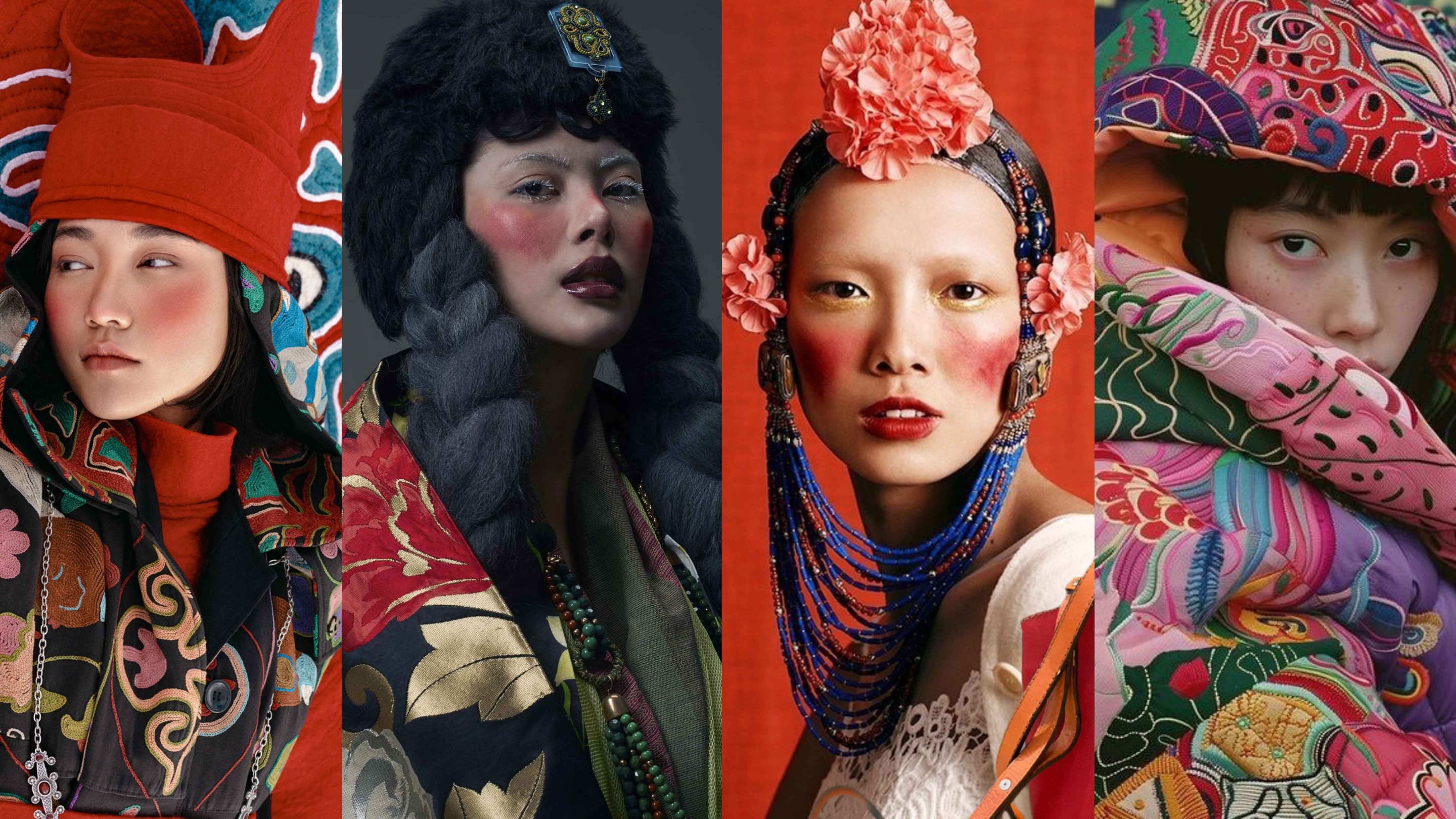
Photo: Natasha Yankelevich, Pinterest, AI
When you think of Mongolia, you might picture a group of nomads in deels, riding horses across open plateaus, images long circulated through ethnographic photography and travel literature.
Yet these romanticized images no longer reflect contemporary reality.
In a nation of just over three million people, nearly two-thirds of the population now live in urban areas such as Ulaanbaatar.
While poverty remains a serious issue in ger districts, Mongolia has also experienced rapid economic growth since the early 2000s.
This transformation is visible in the cityscape itself. Glass high-rises and shopping malls rise beside Soviet-era apartment blocks.
Foreign brands, once inaccessible, are now sold in places such as the State Department Store in Ulaanbaatar.
Fashion here signals motion, not arrival.
The experience of freedom itself was materially unstable. Liberation arrived without structure. In Mongolia, fashion reflects this condition: abundance without literacy, choice without consensus, visibility without validation. To dress became an act of navigation rather than expression.
This is why Mongolian fashion after socialism cannot be read through familiar Western narratives of stylistic evolution. It is not minimalism, revival, or streetwear. It is shock layering, a collision of systems that have not yet resolved into hierarchy.
What emerges is a fashion culture without spectacle. There is little emphasis on trend cycles or global alignment. Instead, clothing prioritizes endurance, adaptability, and survival. Fashion here is not about being seen, it is about remaining functional within uncertainty.
To frame Mongolian fashion as “behind” global modernity is therefore misleading. It is not behind; it is differently situated. It reveals a truth often obscured by fashion discourse: modernity does not arrive evenly, and fashion does not always follow desire.
Sometimes, it follows collapse.
This article is an original editorial analysis produced by [DIBA magazine].
Research and references are used for contextual accuracy.