
|
EN
Subscribe to our Newsletter
In Georgian national dance, as stabilized through Sukhishvili’s performances, movement is designed not for expansion, but for restraint. The female body on stage carries balance rather than individual expression. What is visible is tradition; what remains less visible is the order that sustains it.
Long before Georgian women entered illuminated stages and foreign theaters, their bodies existed in a quieter register, shaped by narrative rather than spectacle.
In Georgian literary traditions and oral folklore, the female figure rarely occupies the center through action. She is present without expansion. She carries meaning without movement. Her body functions less as an instrument of expression than as a moral surface, measured, upright, and continuous. Songs, epic fragments, and rural narratives repeatedly return to the image of the woman who waits, endures, and preserves. (see overview of Georgian folklore traditions) Movement is never forbidden, but it is carefully rationed.
This economy of motion produced a gendered imagination in which excess was never neutral. To move too much was to risk impropriety; to remain composed was to embody virtue. Over time, this logic embedded itself not only in stories, but in expectations, about how women should appear in public, how they should occupy space, and how their bodies should signify honor.
Modernity did not erase this framework. It formalized it.
The founding of the Sukhishvili Georgian National Ballet in 1945 marked a decisive moment when these inherited values were no longer transmitted through text or memory, but through choreography. Under the direction of Iliko Sukhishvili and Nino Ramishvili, Georgian dance was elevated to a national and international language. But elevation came with selection.
What was chosen was not spontaneity, but clarity. Not variation, but coherence.
The female dancer within the Sukhishvili repertoire embodies a body that appears perpetually managed. Her verticality is unwavering. Her steps skim the floor rather than confront it. The long costume does not amplify motion; it disciplines it, diffusing effort and masking weight. Facial expressions remain restrained, almost ceremonial. There is no collapse, no visible strain, no interruption.
To fall would be more than a technical error. It would be a symbolic failure.
This choreography constructs femininity as an exercise in containment. In contrast to the explosive masculinity of Georgian male dances, marked by leaps, turns, and percussive contact with the ground, the female body is tasked with sustaining equilibrium. She becomes the stabilizing axis around which spectacle unfolds. Her stillness absorbs the risk performed by others.
This division is not simply traditional. It is ideological.
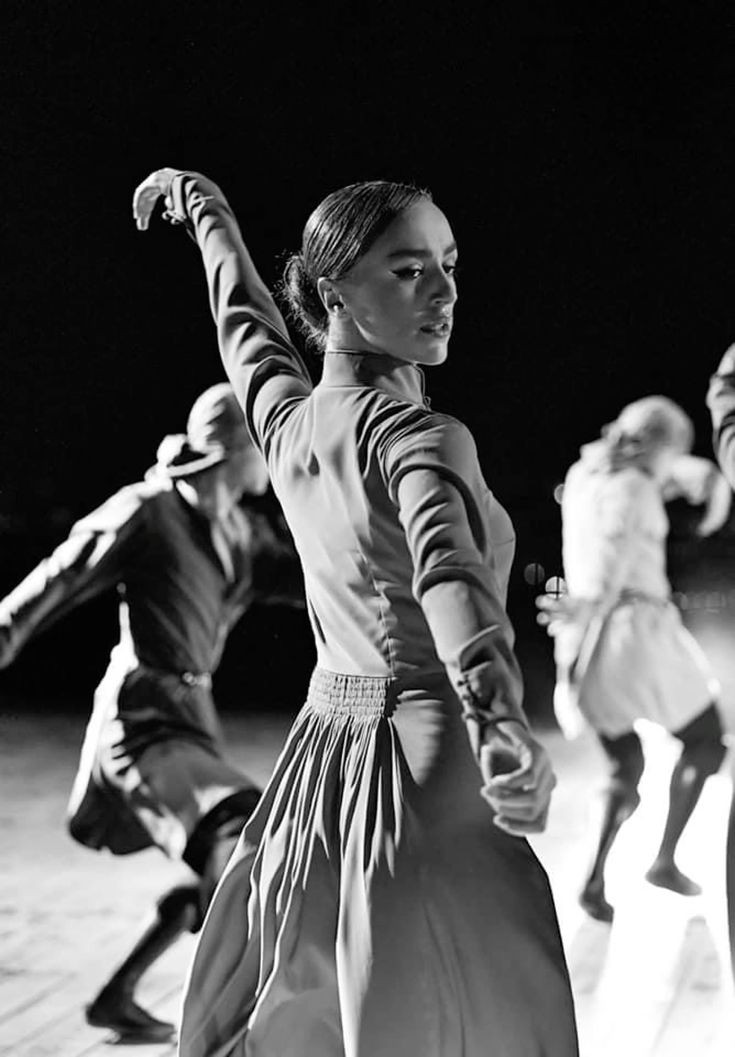
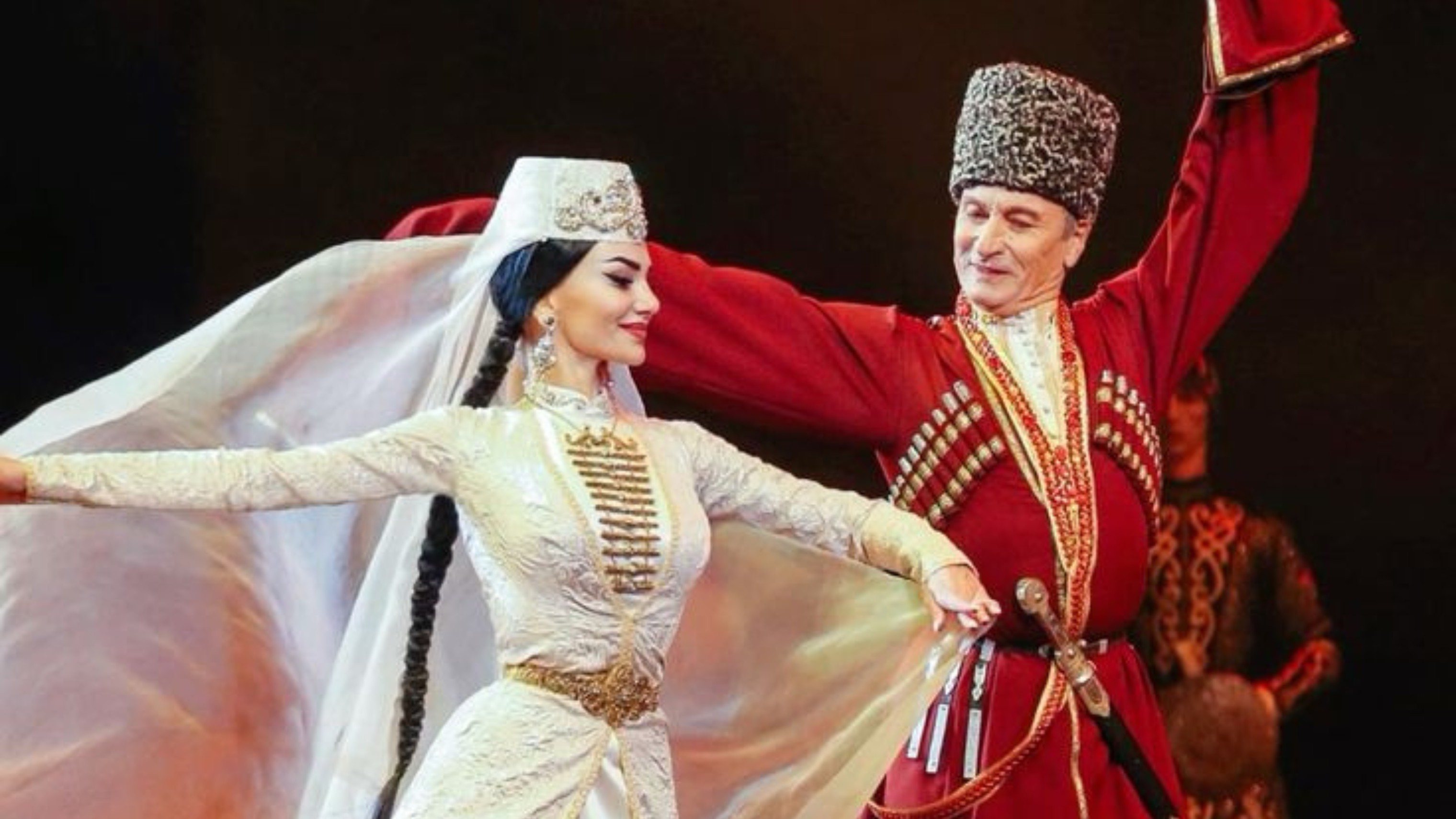
Photo: Pinterest
Through decades of touring across Europe, the Americas, and Asia, Sukhishvili exported a singular image of Georgian womanhood. Performances staged during the Soviet period carried additional weight: they were meant to represent a nation that was distinct yet governable, ancient yet orderly. The disciplined female body fit this mandate perfectly. It communicated cultural depth without unpredictability.
Archival footage, preserved and circulated through institutions such as the Georgian National Museum, did not merely document these performances. It stabilized them. Repetition across time transformed choreography into canon. What audiences saw again and again became truth. The archive, in this sense, functioned as an authority.
Once movement was archived, it ceased to be negotiable. The gestures of Sukhishvili dancers were no longer interpretations of tradition; they became tradition itself. This is where performance crosses into prescription. The female body, once shaped by context and community, was now governed by precedent.
Crucially, this rigidity was not inherent to Georgian folk culture. Village dances historically allowed for variation, adaptation, and personal inflection. What Sukhishvili produced was a theatrical extraction—a purified version of movement optimized for legibility and endurance. In doing so, it replaced lived plurality with a singular visual grammar.
Within this grammar, the woman’s role is not to disrupt time but to hold it together.
Her presence signals continuity. She reassures the viewer that nothing has slipped, nothing has fractured. Femininity here operates as cultural maintenance. The woman does not command attention; she secures legitimacy.
This logic continues to exert pressure in contemporary Georgia. Dancers and performers who depart from the Sukhishvili aesthetic, who allow their bodies to appear heavy, horizontal, unstable, or visibly laboring, often encounter resistance. Their movement is read not as experimentation, but as deviation. To alter the posture is to alter the narrative.
And yet, that narrative was never timeless.
Sukhishvili did not invent Georgian femininity, but it fixed it into form. It took literary ideals of restraint and translated them into kinetic law. Through repetition, circulation, and archival authority, those laws became naturalized.
What remains today is not merely a dance tradition, but a disciplined memory of womanhood—one that insists on control, coherence, and composure.
The Georgian woman on stage is not frozen. She is held.
This article is an original editorial analysis produced by [DIBA magazine].
Research and references are used for contextual accuracy.