|
EN
Subscribe to our Newsletter
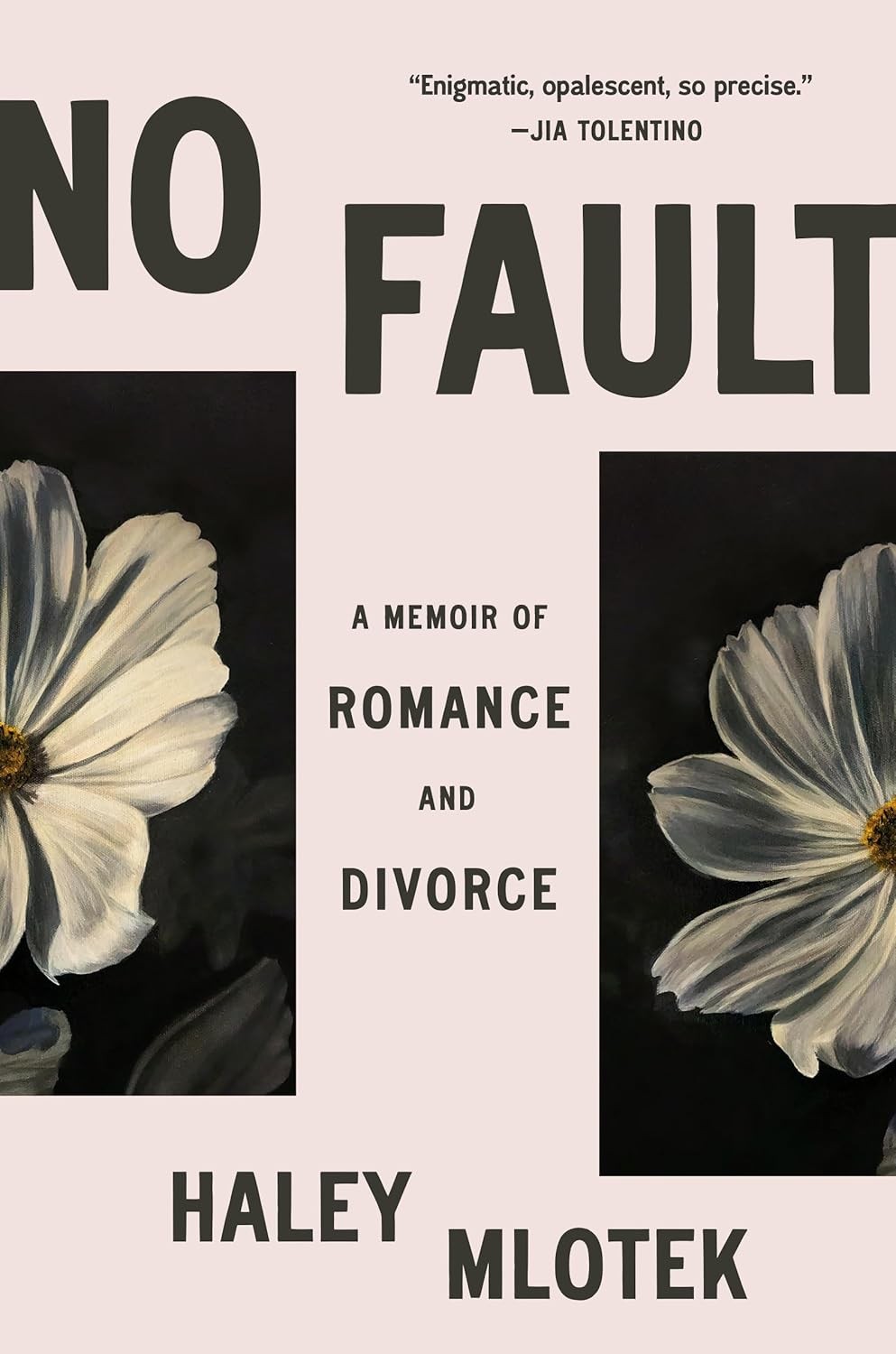
What if divorce isn’t a failure, but a form of clarity? In No Fault, Haley Mlotek reframes separation as an intimate, cultural, and deeply feminist act, tracing how leaving can become the beginning of self-definition rather than its collapse.
By the Editorial Staff
An intimate and honest account of the most romantic and most revolutionary aspect of relationships: divorce.
In a world where marriage is still seen as a symbol of stability and divorce as failure, Haley Mlotek boldly offers a different narrative: divorce is not an ending, but a beginning.
No Fault is the memoir of a woman who, after thirteen years in a relationship and just thirteen months of marriage, chooses to walk away, and from that rupture, begins a journey inward, into history, and through culture.
As a child, Mlotek answered phones at her mother’s mediation and marriage counseling practice, typing up divorce forms for separating couples. She listened closely to her grandmother’s stories about her many “husbands.” Divorce, for her, was both a temptation and a warning.
She grew up with the sense that divorce was the result of resistance and desire—a catastrophe that, behind its wreckage, promised something better.
But when she experienced it herself, she realized it was more than a personal decision. It was a cultural mirror, reflecting love, power, and identity.
No Fault is not just a memoir; it’s a cultural inquiry, a quiet provocation. With sharp insight and flashes of humor, Mlotek traces the history of divorce, from Victorian marriages to modern portrayals in literature and film. She draws inspiration from writers like Audre Lorde, Elizabeth Gilbert, and Deborah Levy, placing her own story alongside theirs with unflinching honesty.
Her prose is poetic, her structure nonlinear. Mlotek’s sentences whisper and strike, sometimes gentle, sometimes like a hammer. She moves beyond traditional memoir form, gliding between personal memory, cultural analysis, and literary reflection. This book isn’t just about the end of a relationship; it’s about doubt, hope, and the redefinition of “family” in the 21st century.
You ask: Why read this book? If you’re looking for a story that speaks not only from the depths of heartbreak but from the depths of thought and culture, No Fault is for you. It doesn’t offer solutions or prescriptions, it asks, “What happens after?” And that question alone opens the door to a new understanding of love, separation, and the feminine self.
This article is an original editorial analysis produced by [DIBA magazine].
Research and references are used for contextual accuracy.