|
EN
Subscribe to our Newsletter
In the twentieth century, costume ceased to be an accessory to performance and became a form of thinking in motion. Across dance and theatre, fabric no longer followed the body, it questioned it, reshaped it, and redefined how movement, identity, and meaning could exist on stage.
By the Editorial Staff
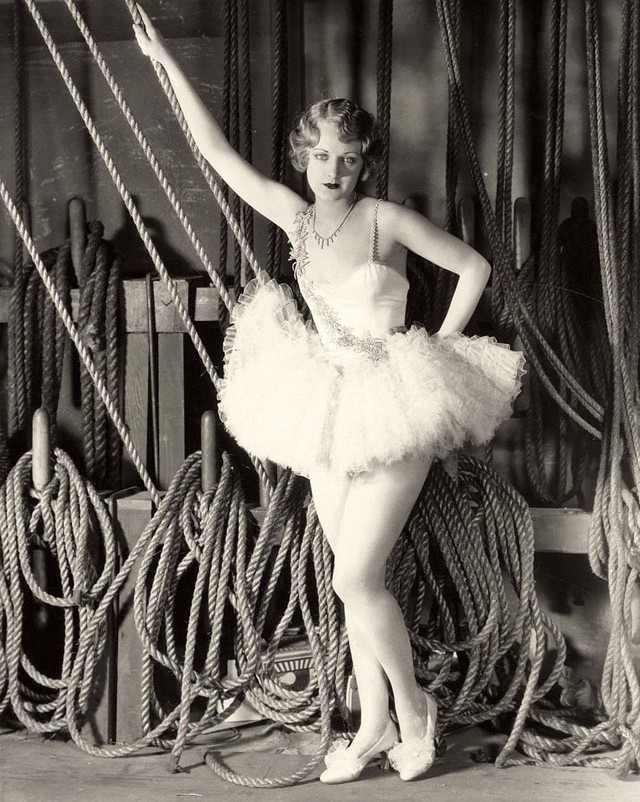
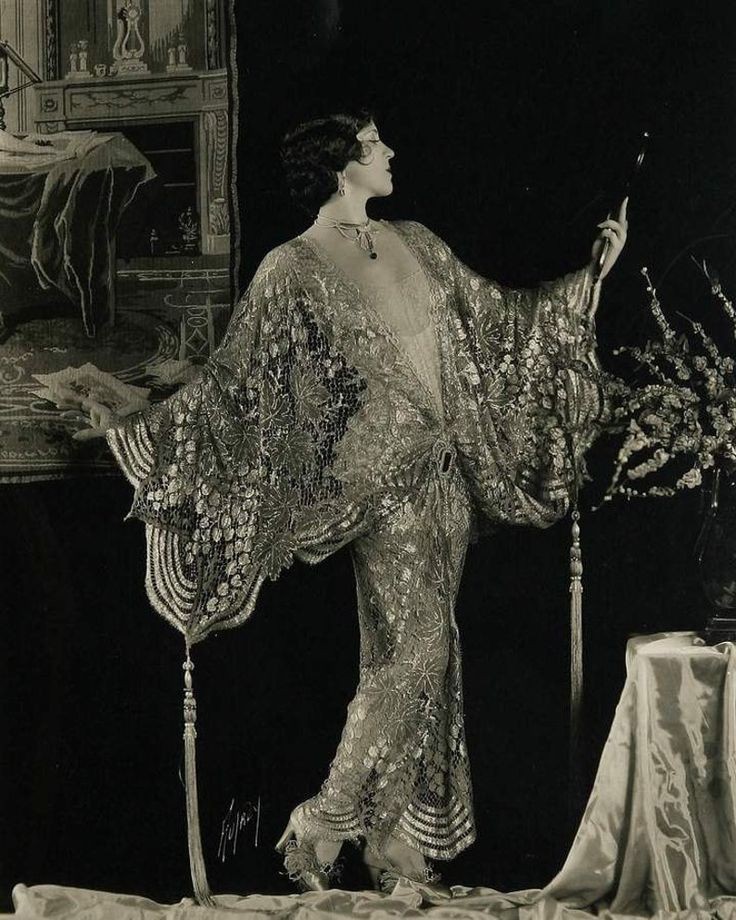
Photo: Pinterest
I. Costume as Theory, Not Ornament
At the threshold of the 20th century, Western theatre and dance faced a crisis of representation. Naturalism, dominant in late 19th-century performance, had reduced costume to historical illustration, a visual servant to realism. Against this, theorists like Adolphe Appia and Edward Gordon Craig proposed a radical shift: costume should suggest, not reproduce; it should function symbolically within space, light, and movement.
This was not merely an aesthetic preference. It was a philosophical repositioning of the performing body. Appia argued that the actor’s body exists in dialogue with light and architecture; therefore, costume must participate in that dialogue. Craig went further, imagining the performer as a “super-marionette,” where costume, gesture, and spatial abstraction override individual psychology.
Here, costume becomes a conceptual mediator, between body and space, history and abstraction, visibility and meaning.
II. Ballets Russes: The Birth of Total Visual Performance
Serge Diaghilev’s Ballets Russes did not simply modernize ballet, it detonated it. Presented in Paris in 1909, the company collapsed the boundaries between fine art and performance. Costume was no longer subordinate to choreography; it was its equal partner.
Designers such as Léon Bakst introduced saturated color palettes that challenged the muted tones of academic ballet. His costumes did not flatter bodies, they recomposed them, elongating limbs, flattening torsos, exaggerating silhouettes. Movement was reframed through color and line.
Natalya Goncharova’s designs for Le Coq d’Or (1914) exemplified this synthesis. Drawing on Russian folk traditions while fracturing form through Cubist influence, her costumes destabilized historical continuity. Time became layered, not linear. The costume here functioned as temporal collage, a body wearing multiple epochs at once.
III. Costume and the Mechanized Body: Expressionism & Constructivism
As Europe moved toward industrial modernity, the performing body increasingly appeared as mechanical, fragmented, and abstract. In expressionist and constructivist theatre, costume was used to redefine corporeality itself.
Vsevolod Meyerhold’s biomechanics rejected psychological realism in favor of physical precision. Costumes designed for his productions emphasized articulation, restriction, and repetition. The body was treated as an instrument, and costume as its casing.
German theatre theorists posed a pivotal question:
Should costumes humanize abstract space, or abstract the human body?
The answer increasingly favored abstraction. The costume became architectural. Shoulder lines widened, torsos stiffened, faces masked. Clothing was no longer worn on the body; it re-engineered the body as a graphic form within space.
IV. Modern Dance: Costume as Extension of Motion
Modern dance expanded costume’s function even further. As choreography abandoned narrative and embraced rhythm, gravity, and time, costumes had to respond kinetically.
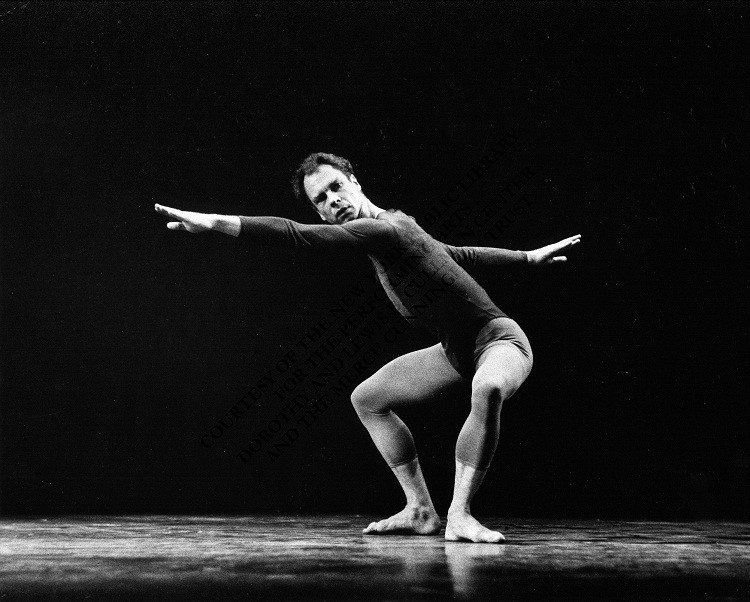
Merce Cunningham treated movement as autonomous from music or story. His costumes, often stripped of ornament, emphasized clarity of motion. Fabric was chosen not for symbolism but for how it behaved under movement, how it resisted, flowed, or collapsed.
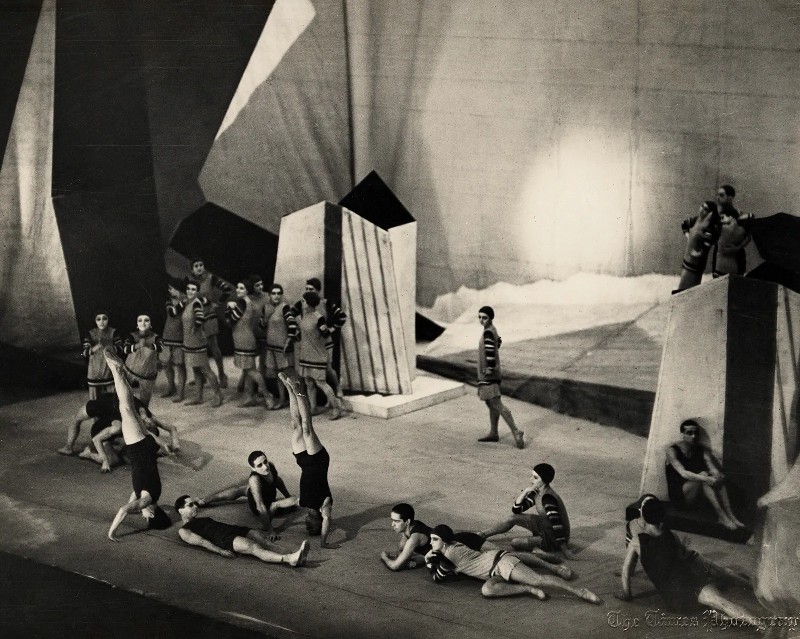
Le Train Bleu, Serge Diaghilev's Ballet Russes.
Choreographed by Bronislava Nijinska, Paris, 1924
Photo: Britannica
Alwin Nikolais radicalized this approach. For him, costume was inseparable from scenography. His designs enveloped dancers in elastic skins, metallic shells, or abstract volumes. The dancer disappeared as an individual; what remained was motion itself.
Nikolais was accused of erasing humanity. His response was telling:
Humanity, he argued, is not centered, it is distributed across systems, environments, and forces. Costume, then, became a philosophical statement about the human condition in a technological age.
V. Musical Theatre: Costume as Emotional Architecture
Unlike avant-garde dance, American musical theatre demanded legibility. Costume here functioned as emotional architecture, clarifying character, era, and social tension at a glance.
In West Side Story (1957), costume design encoded conflict through color and cut. Movement-driven choreography required garments that could withstand athleticism without obscuring narrative clarity. Slim silhouettes, flexible fabrics, and coded palettes allowed costumes to operate simultaneously as social marker and kinetic tools.
In My Fair Lady (1956), costume narrated transformation. The shift in Eliza Doolittle’s wardrobe visualized class mobility before it was spoken. The costume became dramaturgy.
Merce Cunningham
Photo: Getty Image
VI. Political Theatre and the Ethics of Dress
Bertolt Brecht reconceptualized the costume as an ideological device. In epic theatre, clothing must expose systems, not immerse audiences in illusion. Costumes in Mother Courage and Her Children signal economic function, social rank, and moral contradiction simultaneously.
Jerzy Grotowski pushed this ethic further. In Akropolis (1962), the costume abandoned representation altogether. Torn fabrics, exposed bodies, and uniform anonymity stripped performers of individuality. Costume became ritual residue, a reminder of collective trauma rather than personal identity.
Here, clothing ceased to decorate the body and instead testified against history.
VII. Global Traditions: Codified Bodies, Symbolic Cloth
While Western theatre pursued abstraction, Asian theatrical traditions maintained rigorously codified systems.
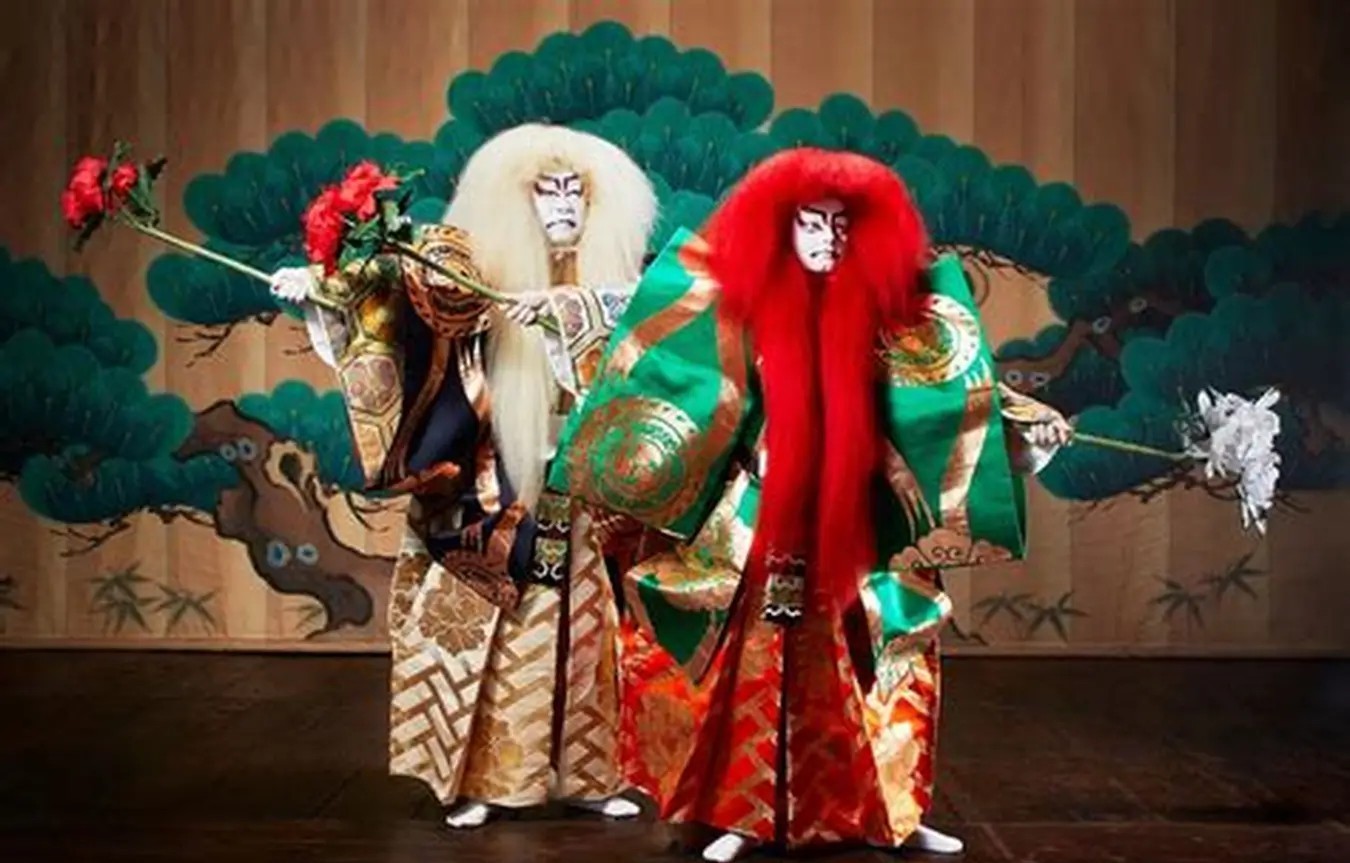
In Noh theatre, costume is language. Every fold, color, and textile density communicates age, gender, status, and spiritual state. Masks freeze expression; movement animates it. Costume operates as compressed semiotics.
Kabuki, shaped by historical prohibition, transformed excess into clarity. Exaggerated silhouettes and kumadori makeup externalize emotion. The body becomes emblematic rather than psychological.
These traditions reveal an alternative modernity, one where innovation lies not in reinvention, but in precision and continuity.
VIII. Makeup, Masks, and the Politics of the Face
The history of theatrical makeup mirrors costume’s evolution. From ancient masks to greasepaint to cinematic realism, makeup negotiates visibility, distance, and identity.
Postwar theatre brought actors closer to audiences. Heavy makeup collapsed under scrutiny. Naturalism reasserted itself—but selectively. Experimental theatre rejected makeup’s illusionism while embracing its ritual potential.
Makeup, like costume, became a choice laden with ideology.
IX. Conclusion: Costume as Cultural Intelligence
Across the 20th century, costume in dance and theatre evolved into a form of cultural intelligence. It shaped bodies, questioned identities, encoded politics, and reframed movement.
Costume is not what performers wear.
It is how performance thinks.
This article is an original editorial analysis produced by [DIBA magazine].
Research and references are used for contextual accuracy.