
|
EN
Subscribe to our Newsletter
Cloth is not surface. It is memory worn in public. In African fashion, fabric does not follow trend cycles, it carries history, power, and resistance across bodies and generations. To dress here is not to decorate, but to remember.
TEXTILES AS ARCHIVE
In many African societies, fabric is more than material, it is memory woven into threads. Textiles serve as repositories of historical consciousness, encoded with communal knowledge about cosmology, status, and story. Two cloth traditions, in particular, illustrate this point with analytical clarity: Kente cloth and African wax prints (Ankara).
Kente cloth, originating among the Akan (especially Ashanti) in present-day Ghana, is historically emblematic of power and continuity. Its very name derives from the Akan word kɛntɛn, meaning “basket”, a metaphor that parallels the cloth’s interlaced structure and narrative function. (Wikipedia)
Kente patterns are not mere decoration; each color and motif carries semantic weight. Gold may signify wealth or royalty; blue suggests peace and harmony; green connotes growth; black evokes maturity and spiritual depth. (Kohan Textile Journal) Thus, to wear Kente is to inscribe oneself within a matrix of social relations and cultural values, an act of public historiography, not mere adornment.
In contrast, African wax prints (often called Ankara) illustrate how textiles become sites of cultural negotiation. Though technically rooted in batik techniques from Indonesia introduced by European traders in the 19th century, the fabric’s meaning was radically transformed once it took root in West African markets. (Wikipedia) Local communities adapted and redesigned the prints, infusing them with African narratives, proverbs, and symbolic motifs that resonated with indigenous visual languages. (Fashion Police NG)
This transformation from imported object to locally authored cloth reflects a larger truth: African textiles are not static relics preserved in museums. They are living archives, constantly rewritten through use, adaptation, and meaning-making.
GLOBAL FASHION AND CONTINUITY
African cloth has also been a political language. During anti-colonial movements of the mid-20th century, wearing prints became an act of cultural assertion and economic independence. Leaders and citizens alike embraced textiles as symbols of national pride and decolonization, challenging Western dress codes and asserting autonomy in the sphere of appearance. (Sena Nukunu)
Photo: Pinterest
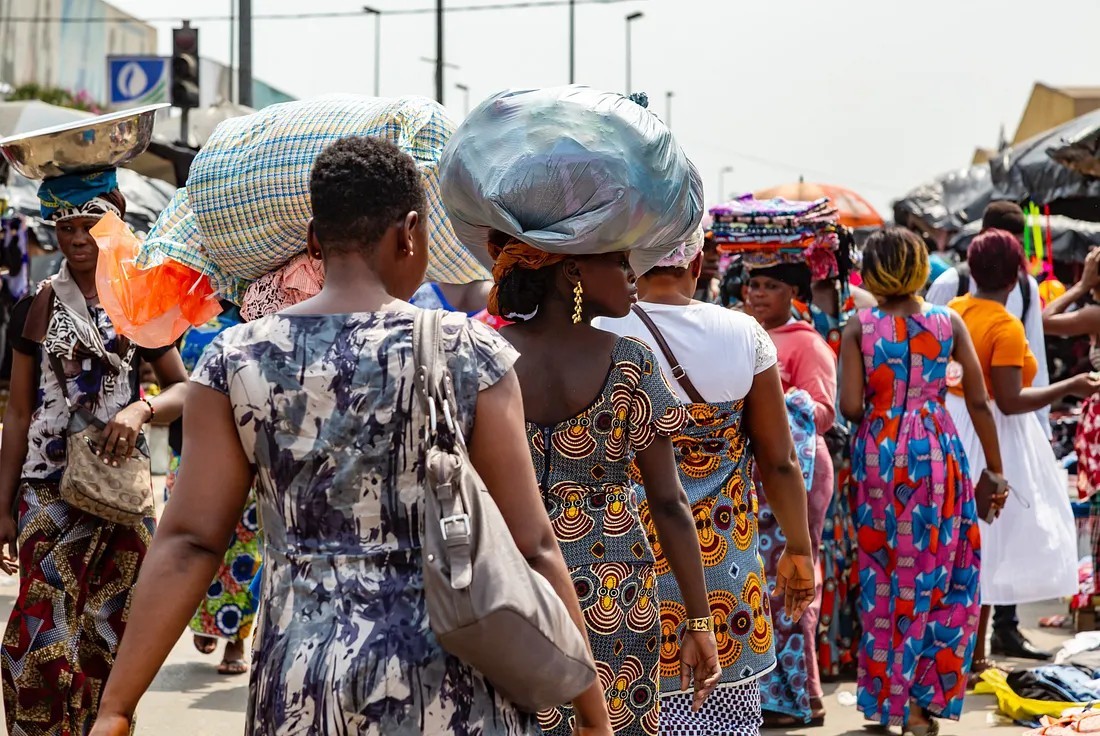
For example, Ankara patterns sometimes bore explicit references to independence rhetoric, figures, and slogans, transforming cloth into wearable discourse that communicated resistance and solidarity.
Similarly, Kente cloth has traveled far beyond its Ghanaian origins to become a diasporic symbol of Black identity and resilience. Public displays of Kente in political arenas, academic ceremonies, and cultural movements, including notable moments of protest by
African-American legislators asserting Pan-African solidarity, underscore cloth’s capacity to function as political semiotics.
These textile practices challenge reductive narratives that confine African fashion to “tribal” or “folk” categories. Instead, they reveal clothing as active intervention in cultural hierarchies, a medium through which communities claim space, narrate history, and contest erasure.
Photo: Eva Blue
Today, African textiles operate simultaneously within local traditions and a global fashion circuit. Designers across the continent—ranging from West African innovators to contemporary houses—incorporate cloth into contemporary silhouettes that engage global aesthetics while preserving cultural integrity.
However, this global circulation is not unproblematic. The appropriation of African prints in Western fashion often divorces the patterns from their semantic contexts, reducing them to exotic quotation instead of cultural archive. The challenge for modern fashion theory is to recognize textiles not merely as visual signifiers, but as embodied histories that articulate community memory, resilience, and identity.
In this light, African textiles are not peripheral to fashion history, they are central texts that demand inclusion in any comprehensive understanding of dress, power, and meaning in the global era.
This article is an original editorial analysis produced by [DIBA magazine].
Research and references are used for contextual accuracy.