
|
EN
Subscribe to our Newsletter
Elsa Schiaparelli revolutionized fashion by merging garment design with conceptual art and Surrealist collaborations, creating iconic pieces such as the Lobster Dress and Shoe Hat. Today, under Daniel Roseberry, the house continues to push creative boundaries with sculptural silhouettes, surreal motifs, and a visionary approach that positions fashion as a medium for expression, cultural critique, and artistic dialogue.
In the history of fashion, Elsa Schiaparelli occupies a place where the boundaries between garment design, conceptual art, and radical thought dissolve. She emerged at a moment when fashion was still bound to classical ideals of beauty and form; yet Schiaparelli, through a bold, avant-garde vision and collaborations with the Surrealist movement, forged an entirely new horizon—one in which clothing shifted from mere adornment to a medium for ideas, provocation, and cultural dialogue.
Her collaborations with Salvador Dalí, Jean Cocteau, and Man Ray produced some of the most iconic works ever created in fashion: the Lobster Dress, the Shoe Hat, and the Skeleton Dress.
These pieces—at once humorous, psychological, exaggerated, and unsettling—challenged fashion’s relationship with reality. In a world where garments were expected to flatter or function, Schiaparelli proved that fashion could question, disrupt, and express, much like the most daring works of modern art.
Yet her legacy did not remain in the past. With the arrival of Daniel Roseberry as Creative Director, the house of Schiaparelli has reemerged as one of the most provocative and visually dominant luxury maisons of the digital era. Roseberry, with a deep understanding of Schiaparelli’s historic DNA, doesn’t replicate the past but rewrites it: exaggerated anatomies, sculptural silhouettes, gold-plated forms, human motifs, and surreal emblems now define a new visual language, one that commands the red carpet, saturates global moodboards, and shapes editorial narratives worldwide.
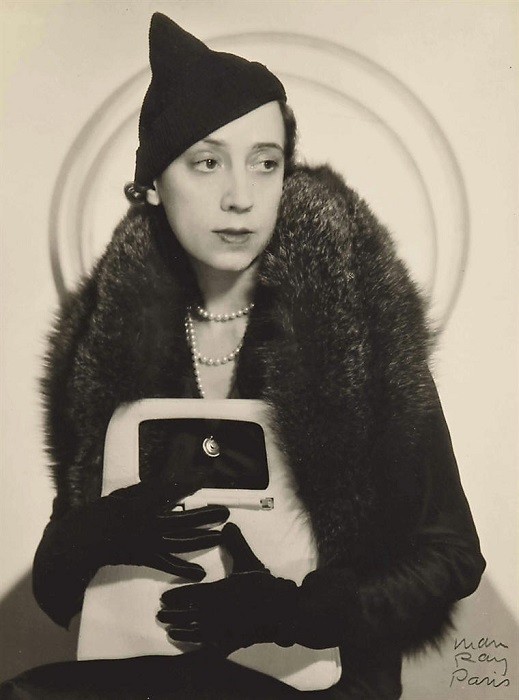
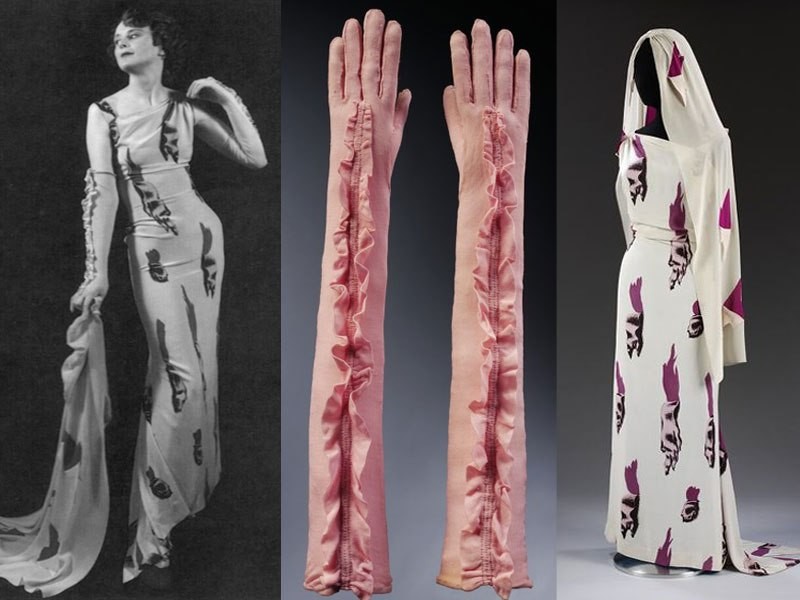
Ultimately, Schiaparelli’s legacy affirms that fashion is far more than something worn on the body. She was the first to turn clothing into a language—a language capable of expressing imagination, social critique, identity, and the subconscious in visual and tactile form. Her vision marked not a stylistic moment, but the beginning of an era in which fashion could carry ideas and worldviews as powerfully as painting, cinema, or literature.
Today, Roseberry’s reinterpretation of this radical DNA restores Schiaparelli to a place where fashion becomes “expression,” not “object”—moving fluidly between concept and form, body and imagination, tradition and boldness. In a world increasingly shaped by speed, repetition, and fast consumption, the house of Schiaparelli—across both eras—reminds us that design can be an act of thought: a provocation, a question, a shift in how we see the body, beauty, and ourselves.
This is why Schiaparelli remains a subject of study, inspiration, and analysis. It is a brand that reminds us that when fashion dares, it does not merely change style—it shapes culture. And that is precisely what transforms Elsa Schiaparelli from a designer into a cultural and intellectual phenomenon.