
|
EN
Subscribe to our Newsletter
This article examines couture not as the apex of decoration, but as a system of discipline, control, and bodily training. Through an analysis of contemporary couture and the work of Robert Wun, it argues that craft today operates architecturally, shaping behavior rather than spectacle.
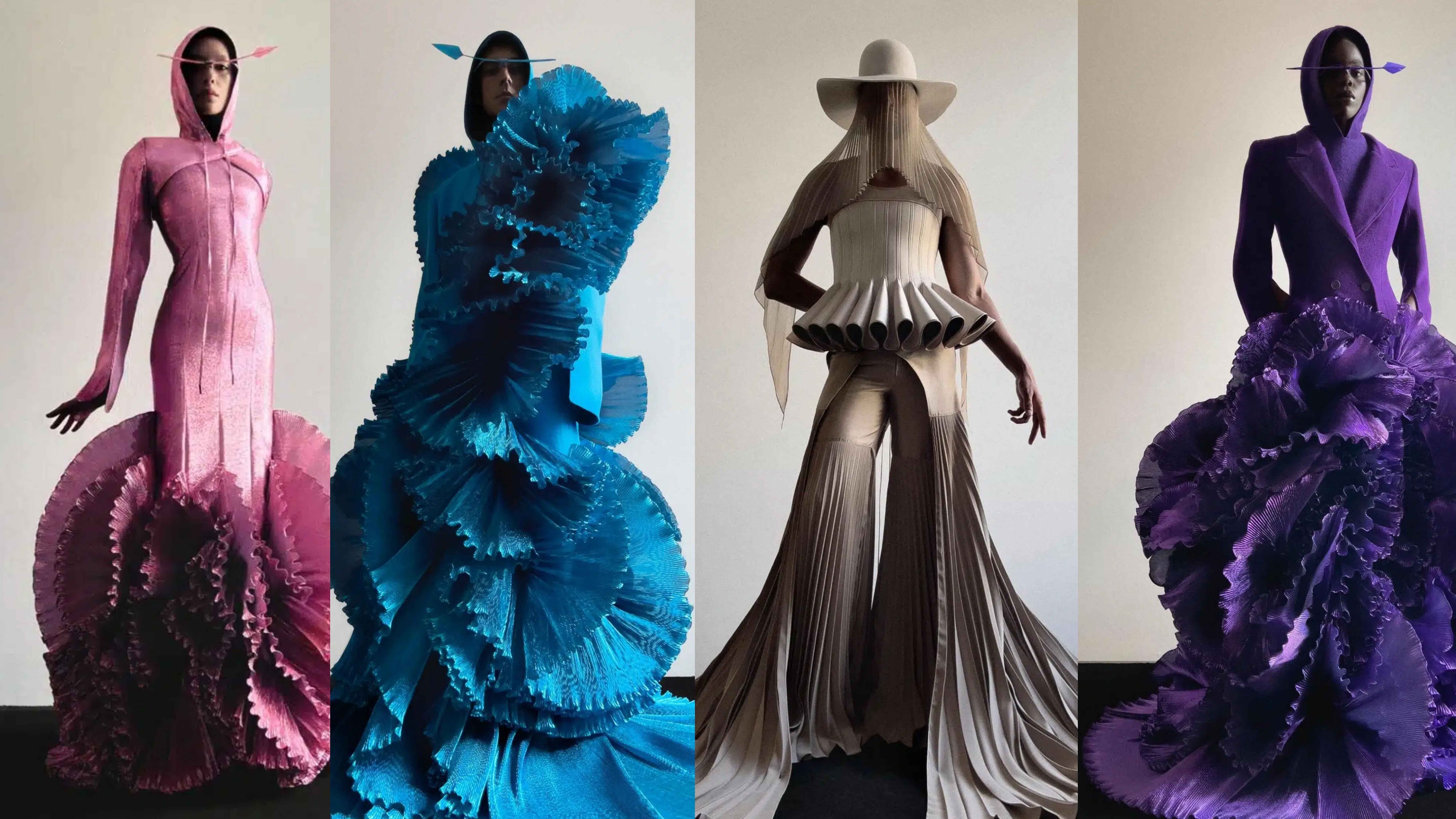
Robert Wun / Spring-Summer 2023
COUTURE HAS NEVER BEEN SOLELY ABOUT BEAUTY.
This may be its most persistent—and convenient—misconception. If couture were merely the pinnacle of ornament, it would have long been eclipsed by faster images, louder spectacles, and cheaper forms of exaggeration. What sustains couture is not decoration, but discipline: an insistence on control, slowness, and precision within a system increasingly defined by speed.
In a fashion landscape built on urgency, couture remains deliberately slow. Not out of nostalgia, nor as refusal, but as choice. Hours of handwork are not symbolic gestures of luxury; they are structural commitments to an alternative rhythm of production. Here, time is not an aesthetic quality—it is a condition.
Contrary to popular belief, couture is not a space of unlimited freedom.
It is, in fact, deeply restrictive. Every gesture must be justified. Every stitch must earn its presence. Nothing exists simply because it can. This is where craft moves beyond ornament and becomes discipline: where the designer no longer asks what can be added, but what can be removed without collapsing the structure.
In contemporary couture, surface excess has softened.
Embroidery no longer needs to announce itself. Volume no longer needs to overwhelm. This is not because beauty has lost value, but because meaning has shifted. Today, controlled restraint carries more authority than visual noise. Garments that do not shout, yet remain precise and uncompromising, embody a different kind of power.
Couture disciplines the body as well.
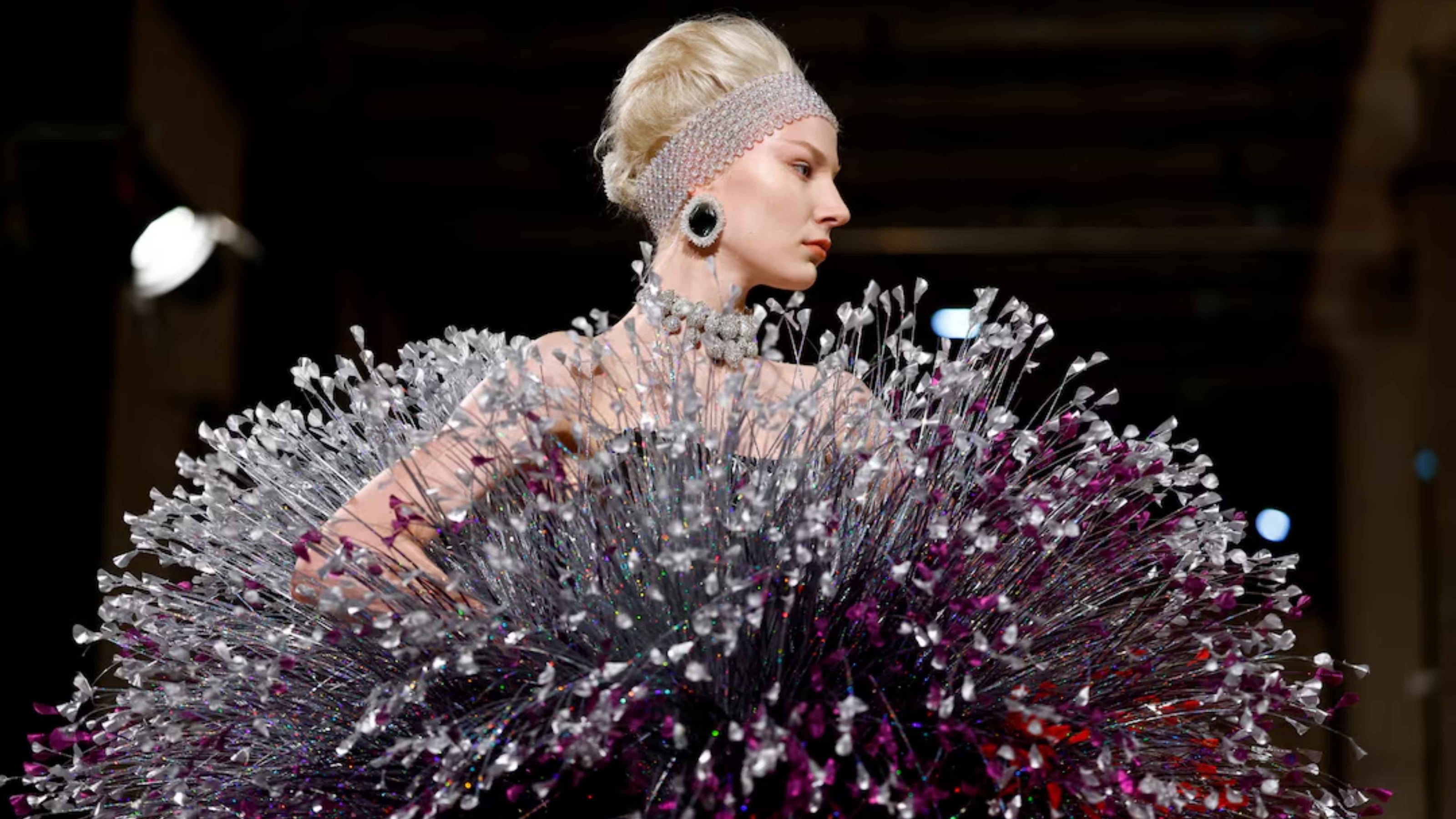
THESE GARMENTS ARE NOT DESIGNED FOR COMFORT.
They demand posture. They regulate movement. They slow the wearer down. Couture does not liberate the body; it trains it. Clothing becomes less adornment and more behavioral architecture.
From this perspective, couture aligns more closely with architecture than with seasonal fashion. As architecture defines space, sets limits, and directs movement, couture does the same. These garments are not made for free circulation; they are designed for specific states of presence and attention.
Alongside historic couture houses, a small group of brands has emerged—not as custodians of tradition, but as analysts of form and normativity. They approach couture not as heritage to preserve, but as a system to be re-read. The official framework of this system is defined by the Fédération de la Haute Couture et de la Mode.
This approach is clearly visible in the work of Robert Wun. Founded in 2014, the house entered the official Paris Haute Couture calendar in less than a decade, without relying on inherited legacy or historical quotation. Wun rejects the classical skeleton of couture. Rather than reproducing established silhouettes, he turns form into a dialogue between reality and fantasy. In his couture collections, symmetry is often broken, balance is suspended, and volumes create pauses rather than flow. Lines are drawn not to display the body, but to assess it—the garment does not frame the body; it evaluates it.
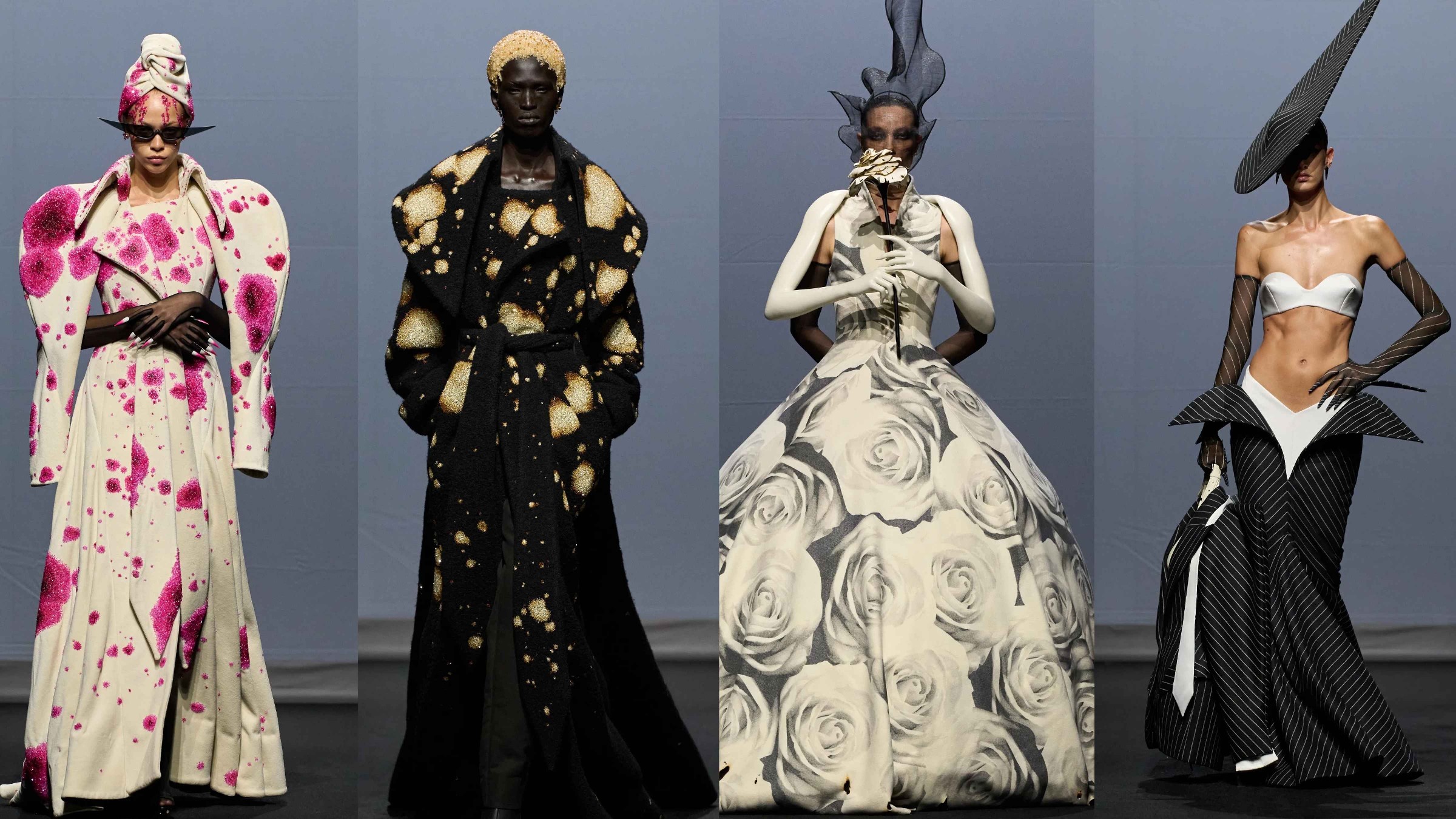
Robert Wun, Fashion Week Couture Fall 2025
Silhouettes are elongated, asymmetrical, and deliberately severe. The body is not seduced by comfort; it is guided. The garment subtly but firmly dictates posture: shoulders align, balance must be consciously maintained, and movement becomes intentional. These are not garments that disappear once worn; they remain present—almost supervisory.
What stands out most is not what these garments reveal, but what they withhold. Surface embellishment is minimal. Meaning resides in construction: internal corsetry, sharp tailoring, unexpected weight distribution. Craft is neither hidden nor theatrical—it operates quietly, drawing authority from precision rather than display.
In many looks, asymmetry forces the body to continually adjust its weight. These garments are not comfortable, but they are exact. They do not beautify the body; they make it aware. The wearer remains conscious of standing, turning, pausing.
The surface of Wun’s garments is often calm. This visual silence is not absence—it is choice. A signal of discipline. A demonstration that control itself can be a higher form of expression. Couture here offers no promise of freedom or escape, but a proposal for focus, slowness, and inhabiting form—one that continues to resist a culture built on acceleration.
This article is an original editorial analysis produced by [DIBA magazine].
Research and references are used for contextual accuracy.