
|
EN
Subscribe to our Newsletter
On the northern coast of Hormuz Island, Majara Residence by ZAV Architects emerges as a chromatic constellation of 200 Superadobe domes shaped by earth, climate, and community. Spanning 10,300 square meters, the retreat accommodates up to 85 guests while integrating cafés, galleries, prayer rooms, and public spaces that welcome both travelers and locals. Built using the sandbag technique pioneered by Nader Khalili, the project employs passive cooling systems, solar energy, and locally sourced materials to minimize ecological impact. More than a hospitality complex, Majara continues the island’s “soil carpet” legacy transforming architecture into a living ritual of color, craft, and collective memory rooted in the landscape of Hormuz.
By the Editorial Staff
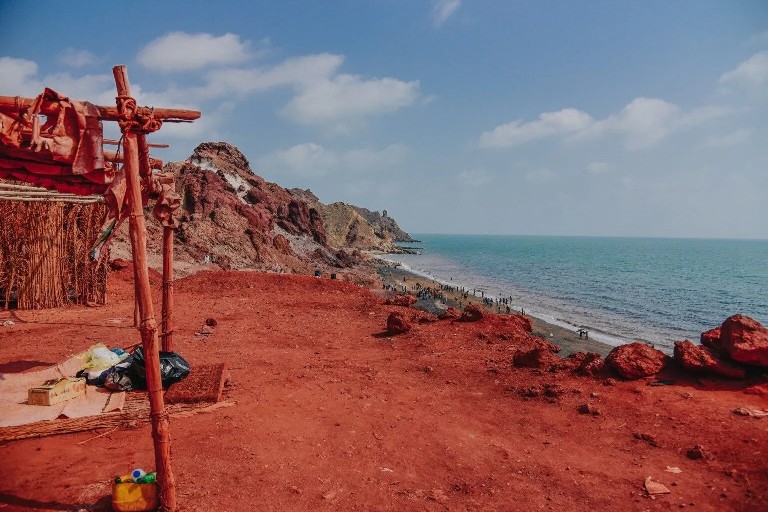
Hormuz Island is the kind of place that unsettles your sense of geography, in the best possible way. Floating at the mouth of the Persian Gulf, near the strategic Strait of Hormuz, this small Iranian island spans only about 42 square kilometers, yet it carries a presence far larger than its scale. Its position has long made it one of the most geopolitically significant maritime corridors in the world, where oil tankers and commercial vessels trace ancient trade routes across modern waters. But beyond its strategic importance lies something far more magnetic: a landscape that appears almost extraterrestrial. Iron-rich soils stain the terrain in deep crimsons and burnt oranges, while streaks of silver, violet, and ochre ripple across hills sculpted by wind and salt. The contrast between turquoise waters, an intensely blue sky, and the island’s mineral-saturated earth creates a chromatic drama rarely encountered elsewhere. Hormuz is not merely seen, it is experienced as a collision of color, texture, and scale.
Yet Hormuz is as much a historical phenomenon as it is a geological wonder. During the medieval period, it stood at the crossroads of global commerce, functioning as a vital trading hub linking Persia, India, East Africa, and beyond. Merchants, sailors, and empires converged here, transforming the island into a node of extraordinary wealth and influence. Its strategic value inevitably drew colonial powers; in the early 16th century, the Portuguese seized control, leaving behind the still-standing Portuguese Fortress as a reminder of imperial ambition and maritime rivalry. Later, Anglo-Persian forces reclaimed the island, reshaping its political narrative once again. Though global trade routes eventually shifted and Hormuz receded from its former economic prominence, its layered history remains etched into its architecture and collective memory. Today, what was once a contested stronghold has evolved into a contemplative landscape, where geology and history intertwine, inviting travelers not only to witness beauty, but to stand at a crossroads of time itself.
Presence in Hormuz Majara residency
On the remote yet cosmopolitan edge of the Persian Gulf, where maritime trade routes slice between continents and oceanic horizons meet mineral-rich deserts, an extraordinary architectural experiment has unfolded one that redefines what a retreat can be, and what travel might look like in the 21st century. Majara Residence, tucked into the rugged yet jewel-toned terrain of Hormuz Island, is more than a place to stay; it is a vivid testament to the power of design rooted in place, people, and purpose.
Completed in 2020 by the Tehran-based design practice ZAV Architects, Majara marks a profound departure from the generic luxury hotels that dominate today’s global tourism landscape. Instead of polished glass facades or imported materials, what emerges here is a tapestry woven from the very soil and spirit of the island, vibrant networks of earthen domes, locally grown labour, and community collaboration. Over its roughly 10,300 square metres, this residence blends hospitality, artistry, culture, and sustainability into a single architectural organism that invites both travellers and locals to inhabit, explore, and partake in a shared cultural narrative.
Majara Residence
Photo: Instagram
To truly understand Majara, one must first grasp the layered identity of Hormuz Island itself. Lying at the northern threshold of the Strait of Hormuz, a waterway that channels a significant portion of the world’s oil shipments, the island carries a paradoxical legacy. It is at once geopolitically strategic and economically marginal, visually stunning yet historically overlooked. Though its multicolored hills and surreal landforms draw the eyes of the curious, until recently Hormuz lacked the infrastructure to sustain long-stay tourism. Short trips from nearby ports were common, but the absence of meaningful accommodation meant visitors seldom stayed beyond a day trip or overnight stay.
In response, in the late 2000s a grassroots artistic movement, known as “Presence in Hormuz,” began to emerge initially through creative experiments like the annual “Soil Carpet” land-art event, where artists and residents painted vast patterns onto the shoreline using naturally occurring ochre pigments. These expressive interventions momentarily reframed the island as a site of cultural production rather than solely geographical curiosity, yet they stopped short of catalysing any lasting economic transformation because there was nowhere for visitors to meaningfully stay or engage with the place beyond transient encounters.
Majara
Photo: Tahmineh Monzavi
Majara Residence was conceived as the structural answer to this challenge, an architectural strategy designed not merely to accommodate visitors, but to activate the island’s latent potential. Rather than imposing an external model of tourism, the project sought to cultivate sustainable, community-centric tourism that could generate economic benefit, cultural exchange, and regional identity simultaneously.
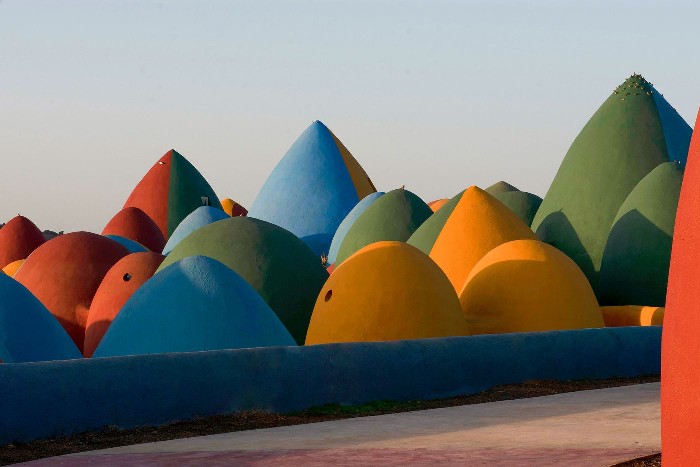
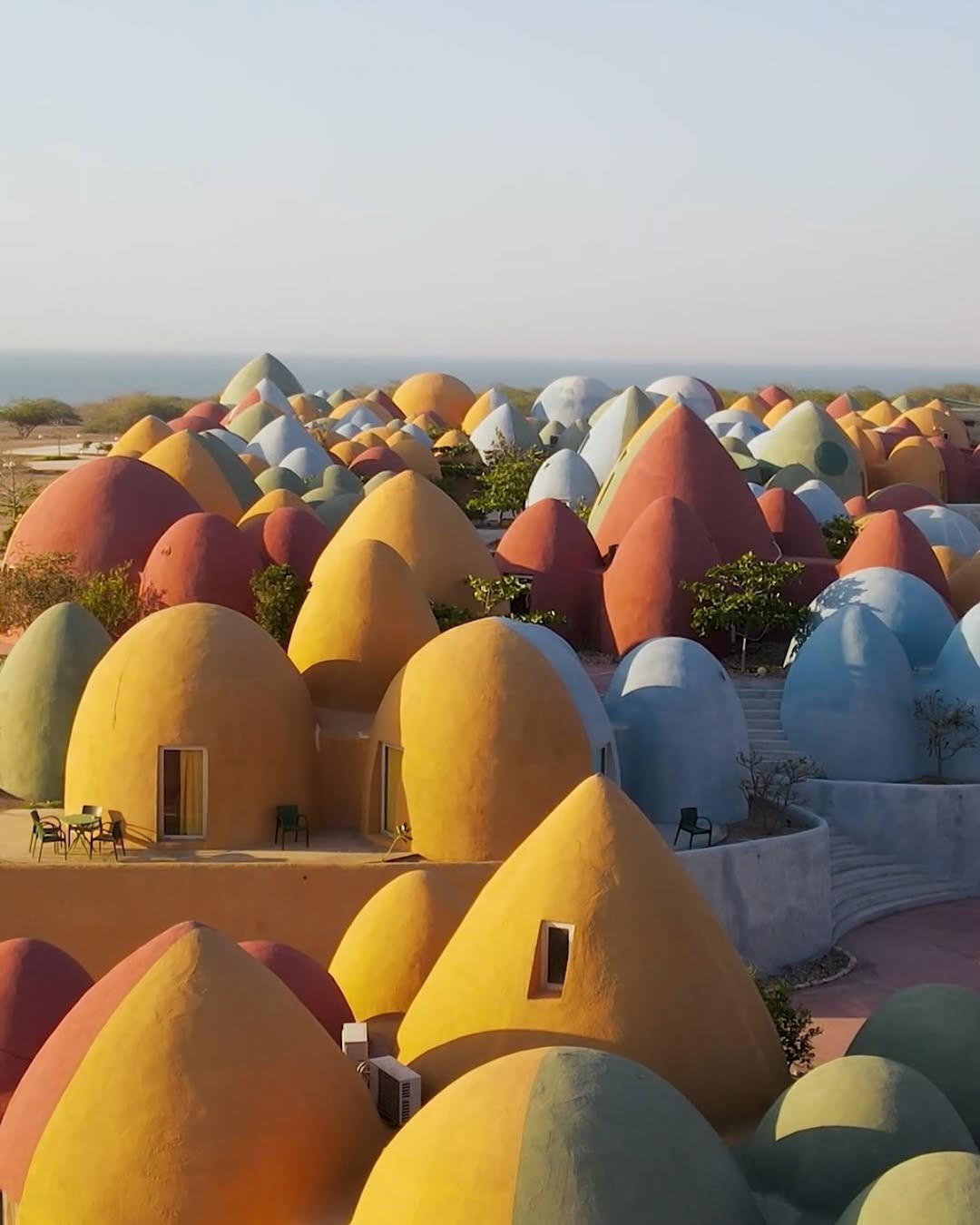
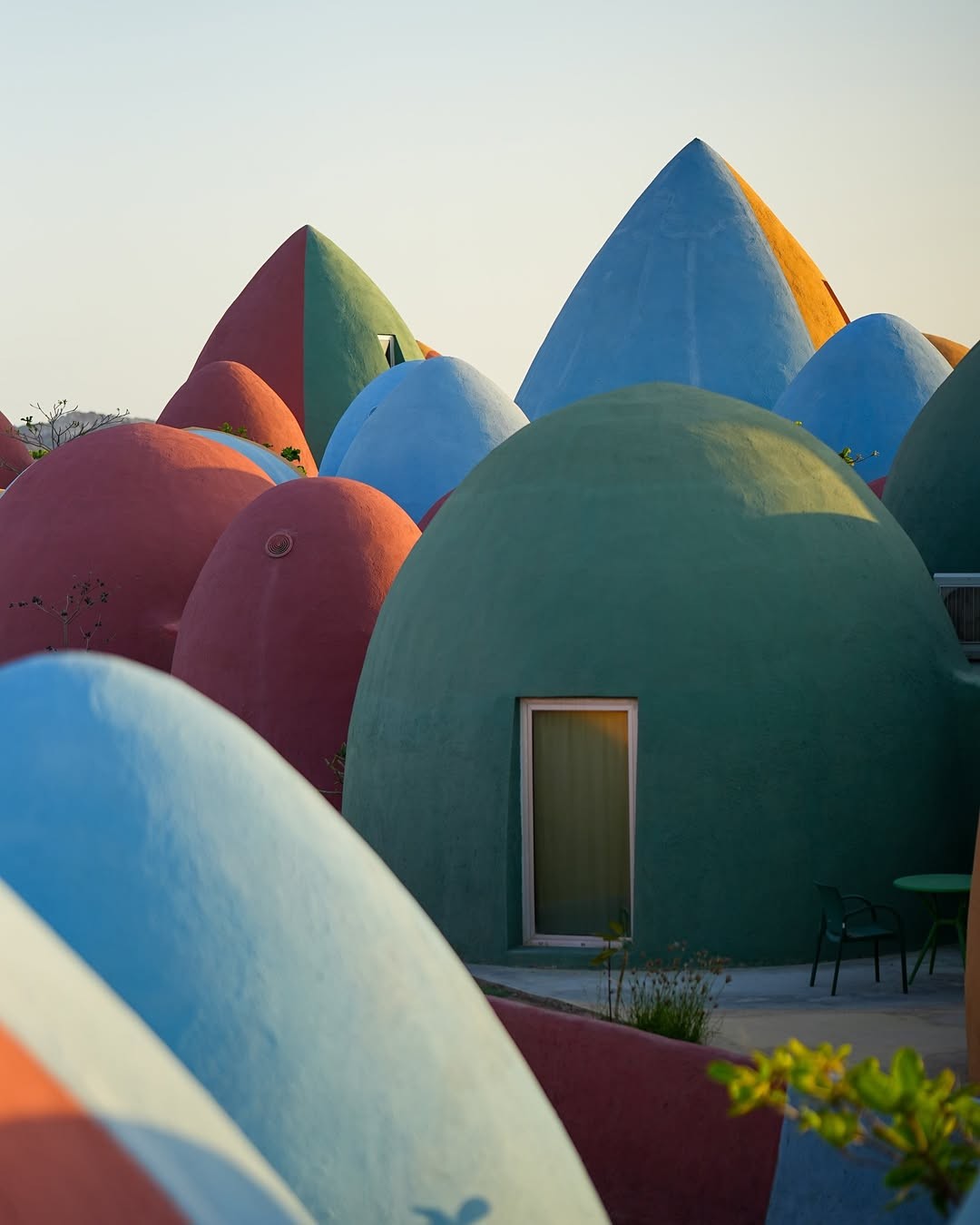
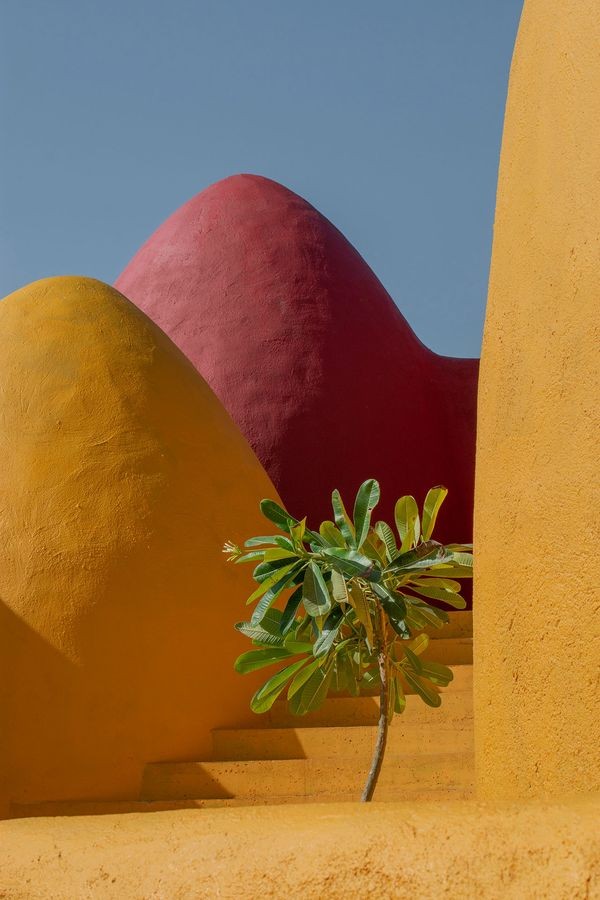
At first sight, Majara feels like a mirage, a chromatic cluster of domed forms that seem to rise organically from the landscape like colourful anthills, mineral deposits given shape by human intention. The domes’ colours bright reds, deep blues, earthy yellows, and verdant greens are not random decorative gestures, but deliberate echoes of Hormuz’s own rainbow-toned terrain that has earned the island the nickname “Rainbow Island.” This visual strategy accomplishes something profound: Majara does not sit on the land; it belongs to the land, visually and materially representing the intimate connection between architecture and site.
Underneath this poetic surface is a grounded, resourceful construction method: the Superadobe sandbag technique, originally developed by Iranian-American architect Nader Khalili in the late 20th century. Superadobe uses long bags filled with earth, sand, and small amounts of stabiliser, stacked in continuous coils to form walls and domes that are structurally sound, thermally efficient, and remarkably responsive to arid climates. Ironically, though the domes appear fantastical, their logic is wholly rooted in practicality. Thick earthen walls provide high thermal mass, reducing the need for artificial cooling in a region where temperatures routinely soar. In Majara’s case, this technique was adapted so that domes could achieve larger radii and lower profiles, creating a layered spatial experience both macro and micro in scale.
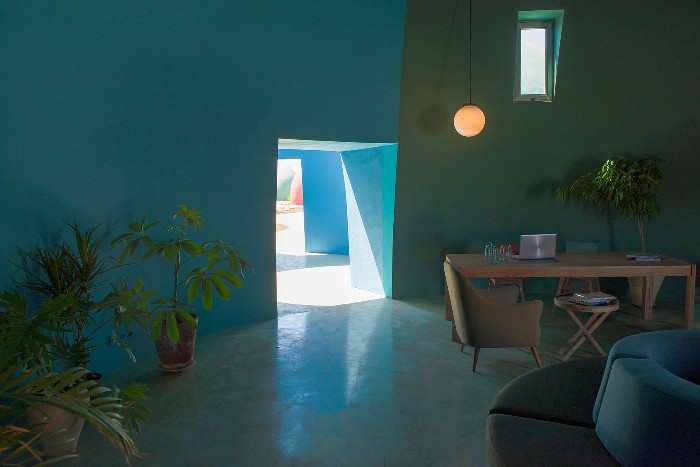
Photo Tahmineh Monzavi
The choice of Superadobe was not merely ecological or aesthetic; it was deeply socially intentional. By emphasising a low-tech, labor-intensive approach, the project deliberately minimised the reliance on expensive imported materials and specialist equipment. Instead, it trained local workers, many without prior construction experience, to become adept builders, masons, and craftspeople. Over 50 residents of Hormuz participated directly in the construction process, gaining new architectural skills and receiving tangible economic benefit from the project. This mechanism of training, labour empowerment, and skill transfer was as much a design strategy as the use of colour or form.
In effect, Majara turned architecture into both a productive endeavour and a learning environment where the act of building became a catalyst for community development, economic diversification, and cultural continuity. By prioritising labour over materials in its budget, Majara also ensured that financial resources circulated within the local economy, extending the project’s impact far beyond its physical footprint.
Part of what makes Majara unique is that it deliberately avoids the exclusivity or enclosure typical of resort design. Rather than a gated compound where visitors remain isolated from their surroundings, Majara’s layout resembles a small, porous village “a gateless complex” of interconnected domes linked by shaded walkways and public spaces that invite movement, encounters, and communal life.
The 200 domes vary in size and purpose. Approximately 130 of them contain 17 guest suites that host up to 85 visitors, each offering a unique spatial experience due to the subtle variations in shape and configuration. The remaining domes accommodate a wide range of public and communal functions, from cafés and restaurants to art galleries, craft studios, souvenir shops, prayer rooms, and tourist information points. Each of these spaces is spatially integrated into the larger narrative of the complex, blurring boundaries between private and public, visitor and resident, host and guest.
These clusters of domes are arranged organically, with pathways weaving through them like sinuous ribbons, guiding visitors gently toward gathering points, shaded communal zones, or scenic outlooks. In this layout, the architecture itself becomes a kind of storytelling device, one that speaks of hospitality, curiosity, and connection. Landscape and built form interlock, forming microenvironments for rest, reflection, and exchange.
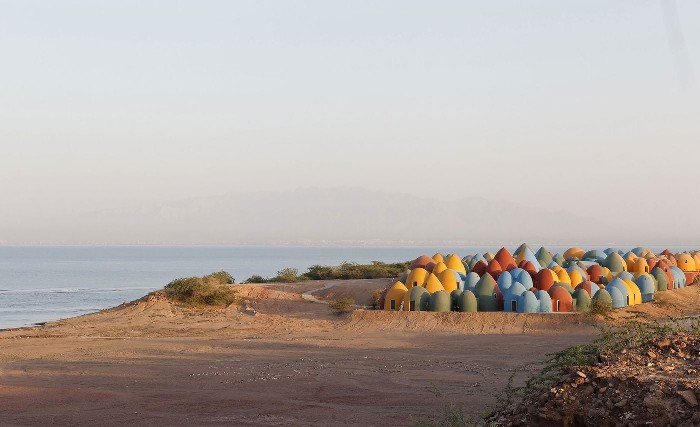
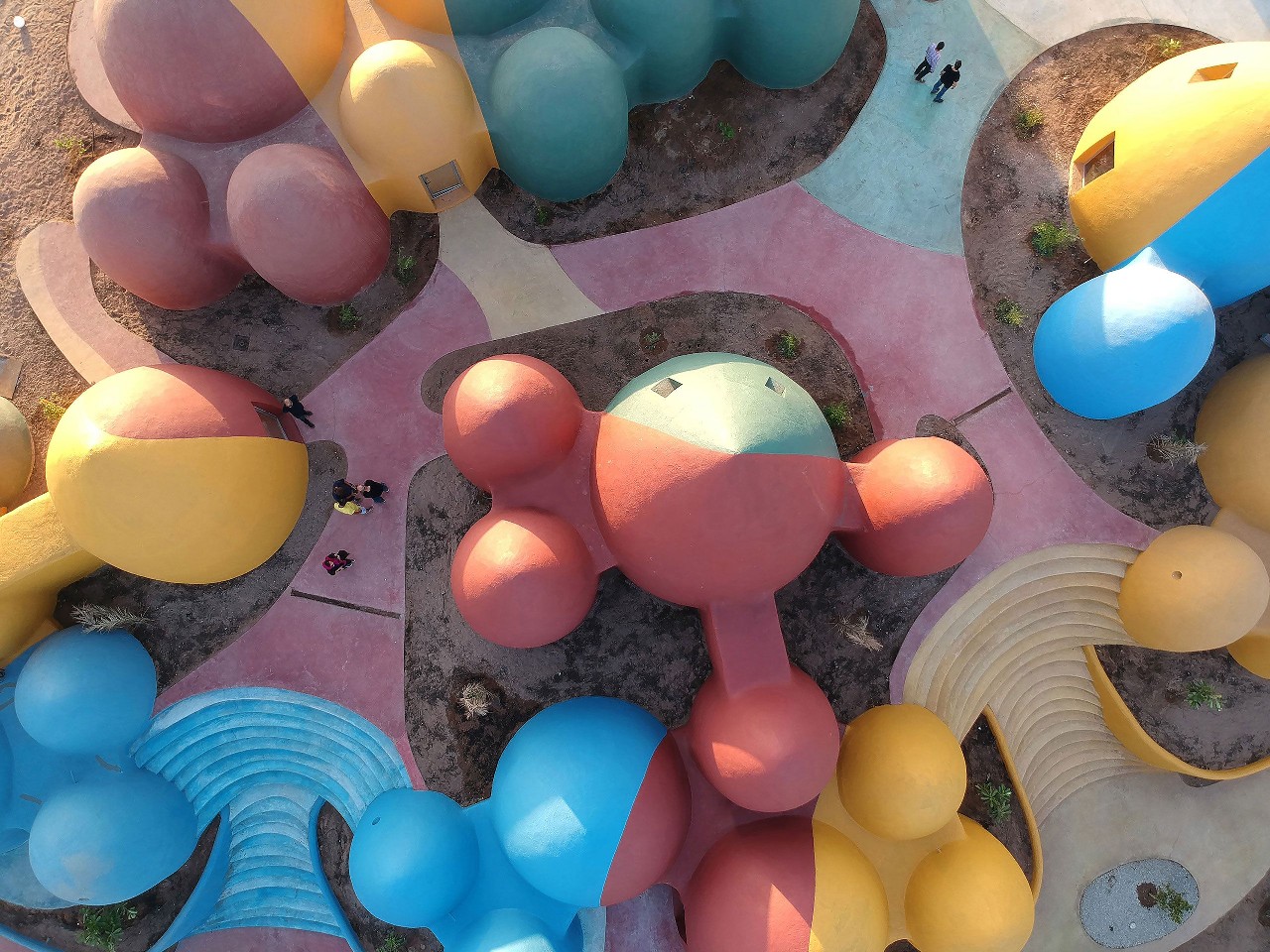
Photo: Soroush Majidi
Photo: DJI
One of the most immediately striking aspects of Majara Residence is its colourful palette, which transforms a remote stretch of dust and stone into a living mosaic. These hues are not superficial stains, but intentional reflections of the island’s geological soul. Hormuz’s terrain is composed of layers of iron oxide and mineral deposits that produce reds, ochres, yellows, and violet-tinted cliffs, a chromatic richness that local artists have celebrated for decades. Majara borrows this palette not just to fit in, but to amplify it, turning architecture into a visual continuation of natural landscape.
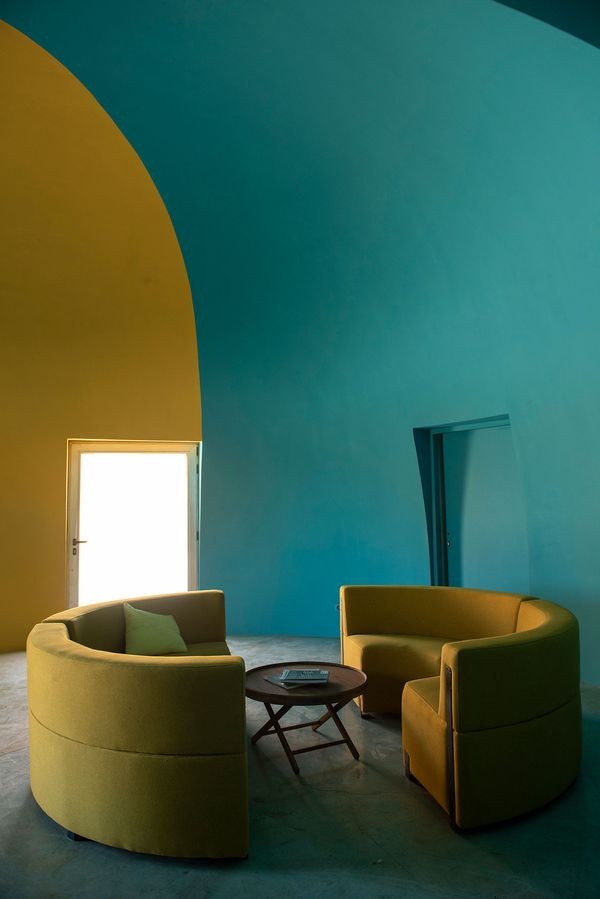
Inside, the design language continues. Interiors are treated with the same chromatic sensibility, using variations of exterior colours in walls, furniture, and decor that align the experience of the occupier with the environment outside. Furniture pieces were produced regionally or custom-designed by local craftspeople, further embedding the project in the island’s cultural production. This careful attention to material continuity melds utility with narrative, shaping an experience where the built environment feels both comfortable and conceptually rich.
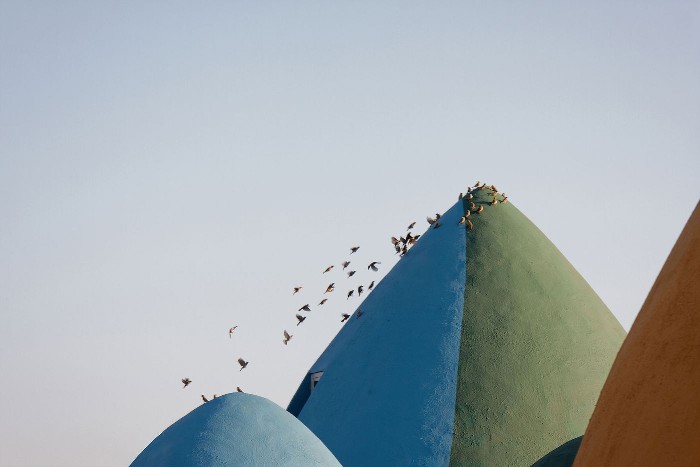
Photo: Peyman Barkhordari
Majara’s ambition was never solely architectural, it was cultural. Its design responds to a collective opportunity: to transform how Hormuz is experienced by both its own people and the wider world. The project sits within a broader initiative called “Presence in Hormuz,” which began with smaller interventions such as the Rong Cultural Centre (a dual-dome structure with a cafe, visitor centre, and stepping seats for public gatherings). These earlier steps established a precedent for architecture as a social tool, a way to create public space, invite cultural exchange, and host local culinary traditions within built form.
In Majara, this philosophy blooms in full. Visitors can stroll through craft studios where local handiworks are showcased, meet artisans at workshops, share meals under shaded courtyards, participate in cultural exchange events, or attend film and art screenings at temporary spaces like Ozar, a mobile media structure born from repurposing an old boat fragment. Together, these components foster interaction between islanders and outsiders, breaking down the barriers of passive tourism and inviting travellers into the rhythms, narratives, and daily life of Hormuz itself.
Additionally, the residence includes flexible community spaces like Typeless, a hub for ongoing monitoring and programming aimed at ensuring that tourism growth remains balanced and beneficial to residents. Rather than a static resort, Majara positions itself as an adaptive cultural organism, capable of evolving with the community it serves.
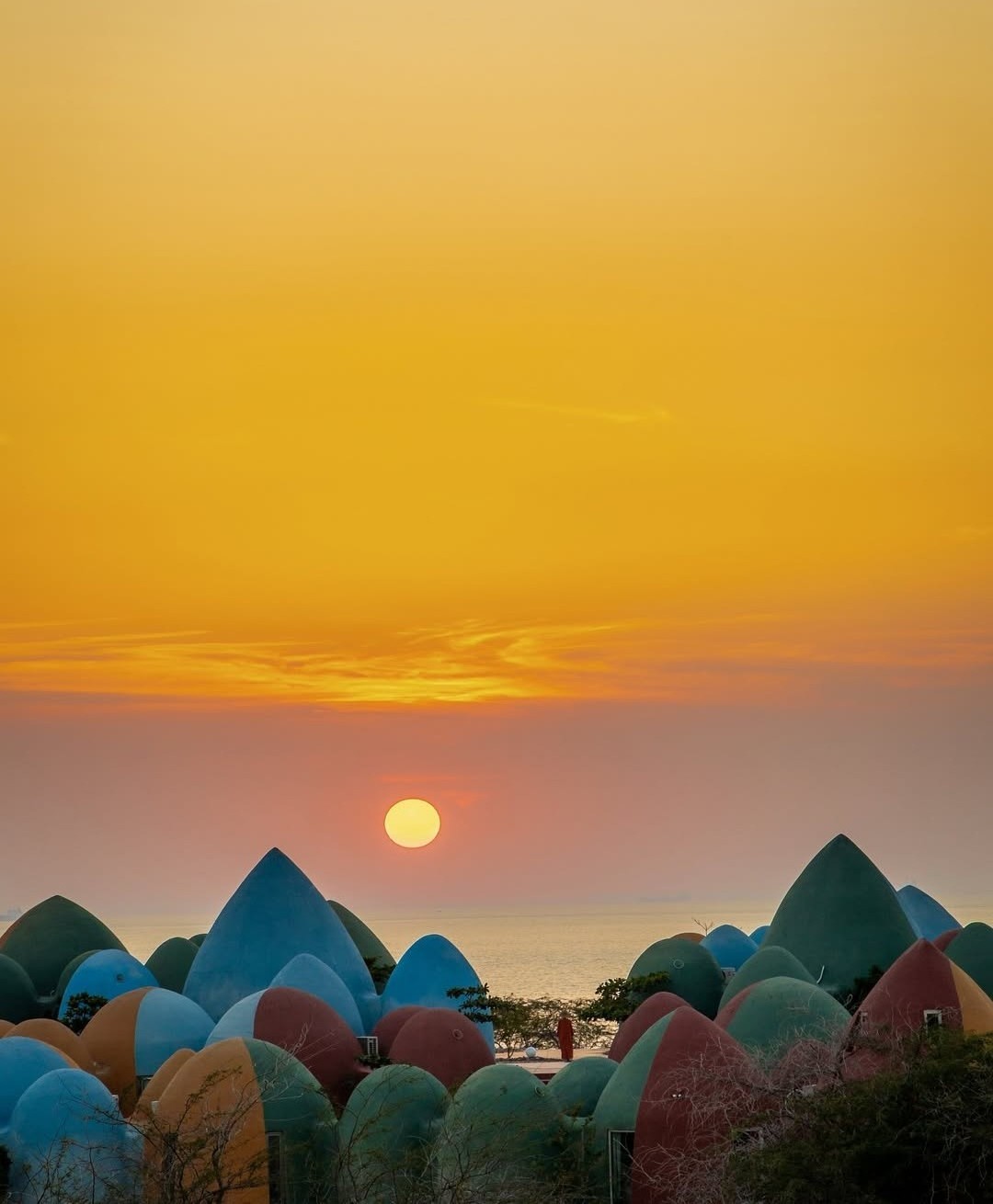
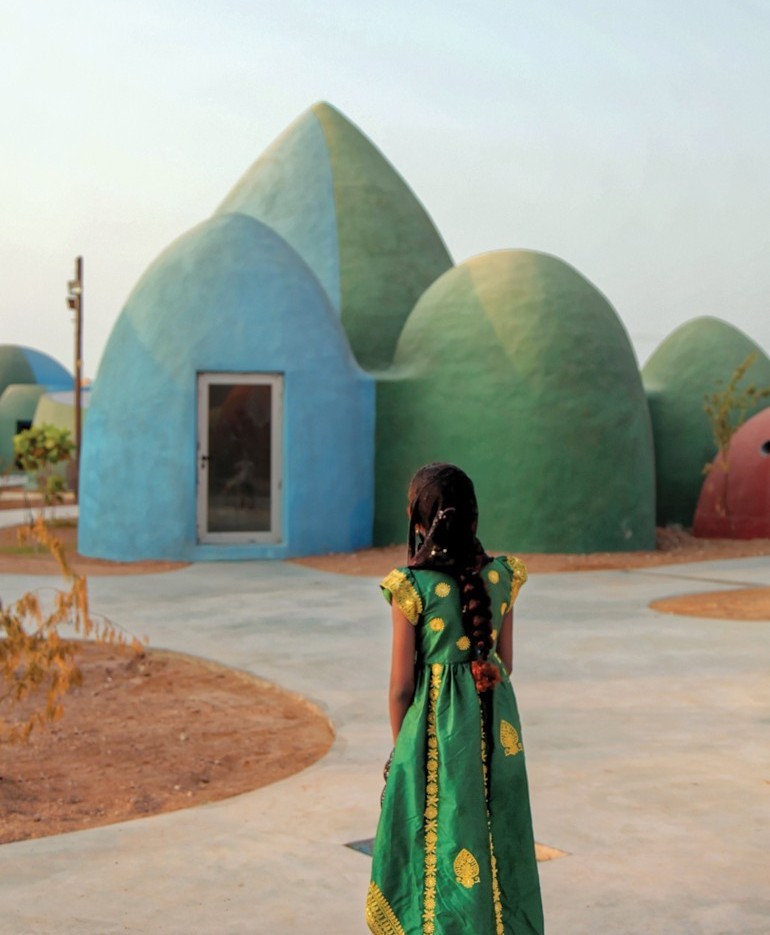
Photo: Soroush Majidi
Majara’s innovation has not gone unnoticed. Since its opening, it has received international acclaim and numerous architectural awards that underscore both its design excellence and its social impact:
2025 Aga Khan Award for Architecture
Recognised as one of the most prestigious global honours in architecture for projects that address the needs and aspirations of communities in societies with a significant Muslim presence. The jury celebrated Majara’s ability to respond meaningfully to its landscape, cultural context, and social fabric.
ArchDaily Building of the Year (2021)
A coveted people’s choice award that highlights the project’s resonance with a worldwide online architecture community.
Golden Award at Taipei International Design Award
Recognising Majara’s unique contribution to contemporary design.
2nd Prize at the Memar Award (Public Buildings Category)
Celebrating projects that meaningfully serve community functions.
Createurs Design Award (Best Hospitality Project)
Highlighting Majara’s innovative approach to hospitality architecture.
These accolades position Majara not as a niche regional curiosity, but as a globally relevant model for sustainable, culturally integrated architecture, one where creativity fuels social transformation.
To arrive at Majara is to step into a narrative woven from colour, light, and hospitality. The first glimpse of the domes from a sea or hilltop vista substantiates the metaphor of “woven earth” a landscape that is neither wild nature nor conventional built form, but a symbiotic fusion of both. The experience unfolds not in grand gestures but in intimate discoveries: the way sunlight dances across undulating earthen curves; how shaded pathways cool the body and calm the mind; the soft echoes of voices in communal courtyards; the tactile warmth of regional furniture crafted by local hands; and the sense of belonging that arises from shared meals, cultural exchange, and spontaneous encounters between visitors and residents.
Majara encourages travellers to slow down to see beyond postcards and Instagram moments, to engage with the textures, histories, and human stories embedded in every adobe curve. It is a place where architecture becomes a medium for cultural dialogue, where the earth itself is both canvas and collaborator.
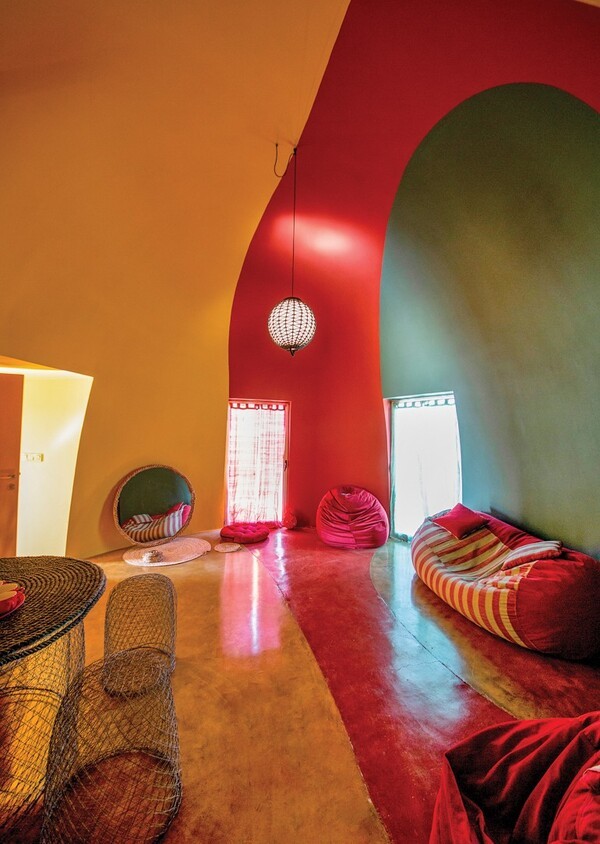
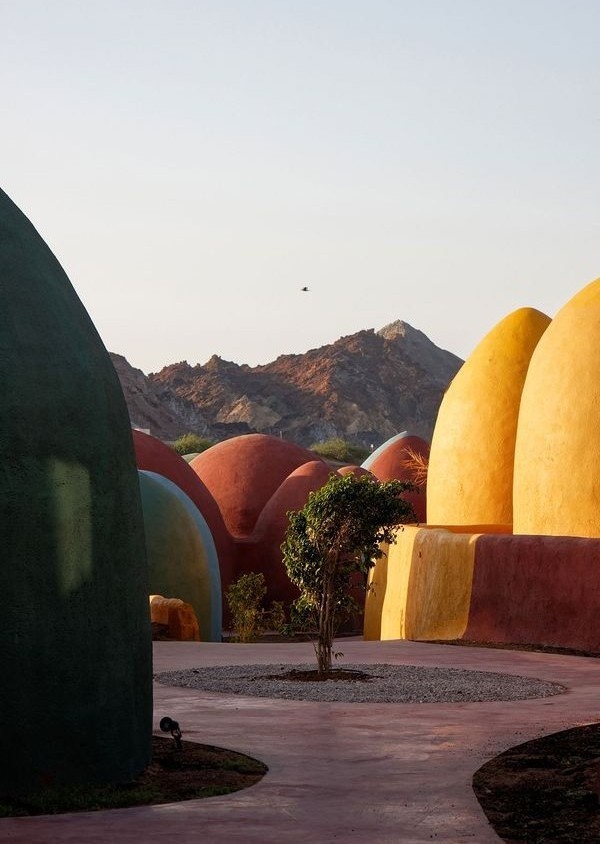
Photo: Tahmineh Monzavi
Photo: Peyman Barkhordari
Before concluding, it is essential to recognize that Majara Residence is not only an architectural achievement but also a carefully calibrated socio-economic strategy. Conceived during a period marked by international sanctions and economic stagnation in Iran, the project responds directly to financial constraints by redefining how resources are distributed and valued. Rather than investing heavily in imported materials or capital-intensive systems, the architects prioritized an adaptive design framework capable of evolving with shifting programmatic needs ensuring long-term relevance and flexibility. By sourcing materials locally, transportation costs were significantly reduced, while the construction process became deeply embedded within the island’s own material and cultural landscape. Most strikingly, the allocation of approximately 65% of the total budget to labour costs compared to the conventional 20% in typical Iranian construction projects transformed the development into an engine of economic participation.
This redistribution was not incidental; it was ideological. It positioned architecture as a tool for employment, skill transfer, and community resilience, allowing the financial investment to circulate within Hormuz rather than dissipate outward. In doing so, Majara demonstrates that sustainability is not merely environmental performance, but an economic and social commitment, one that rethinks how architecture can generate dignity, opportunity, and long-term local empowerment.
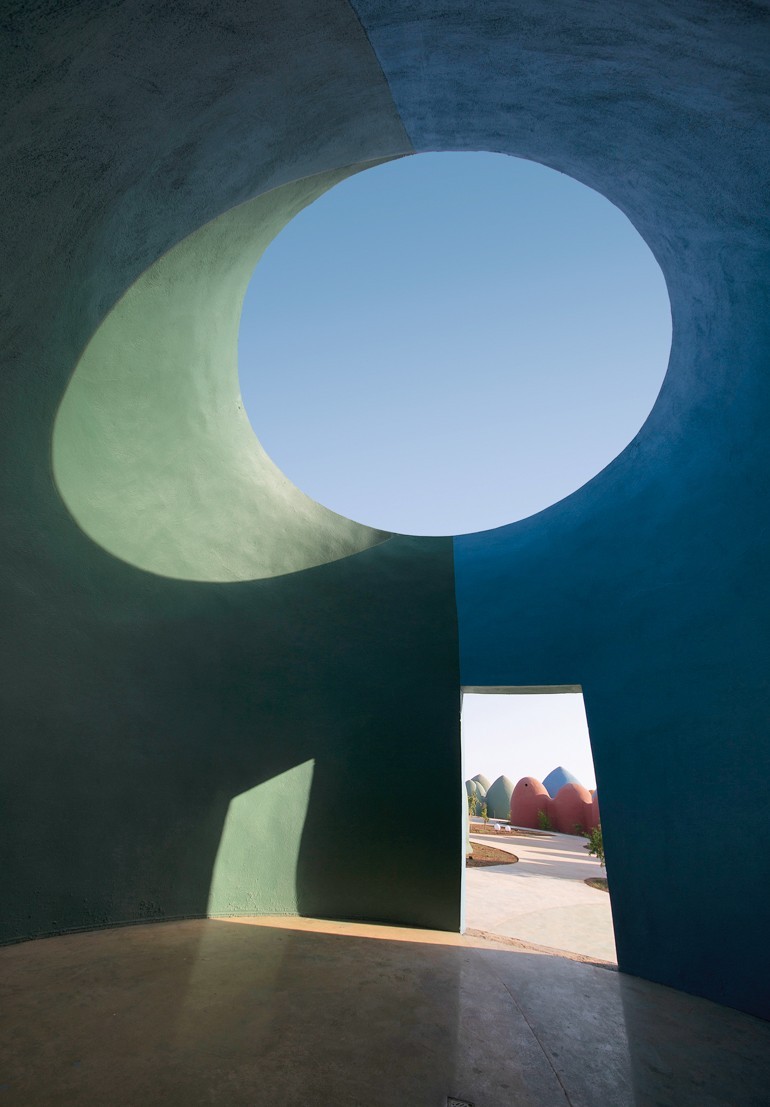
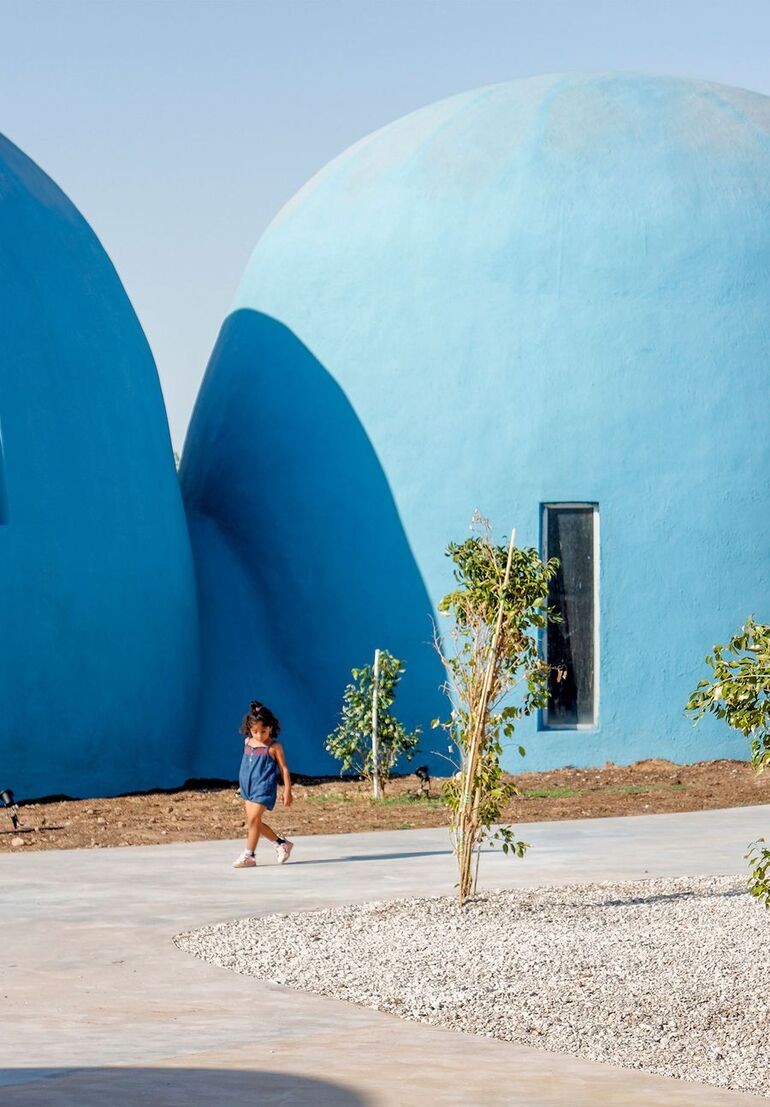
Photo: Tahmineh Monzavi
In a world where tourism often extracts wealth and imposes homogenized aesthetics upon fragile landscapes, Majara Residence stands as a compelling alternative: an architecture that listens to its environment, honours local culture, and places community empowerment at its core. It is neither monument nor resort in the usual sense, but a living network, a place that continues to evolve, adapt, and deepen its relationship with the people and land of Hormuz Island.
Travellers who choose to visit Majara do not merely witness beauty; they participate in it walking paths shaped by earth and intention, sharing spaces co-created with local hands, and experiencing firsthand how architecture can become a catalyst for social, economic, and cultural transformation. In every curve and colour, Majara tells a story of resilience, imagination, and hope, inviting each visitor to become part of that ongoing adventure.
This article is an original editorial analysis produced by [DIBA magazine]
Research and references are used for contextual accuracy.