
|
EN
Subscribe to our Newsletter
In 2026–2027, Color Blocking evolves from a stylistic technique into a structured visual language of identity, confidence, and creativity. Rooted in modern art and revived through contemporary designers, this approach uses bold, contrasting color fields to express individuality across runway collections and everyday styling, redefining how color communicates meaning in fashion.
By the Editorial Staff
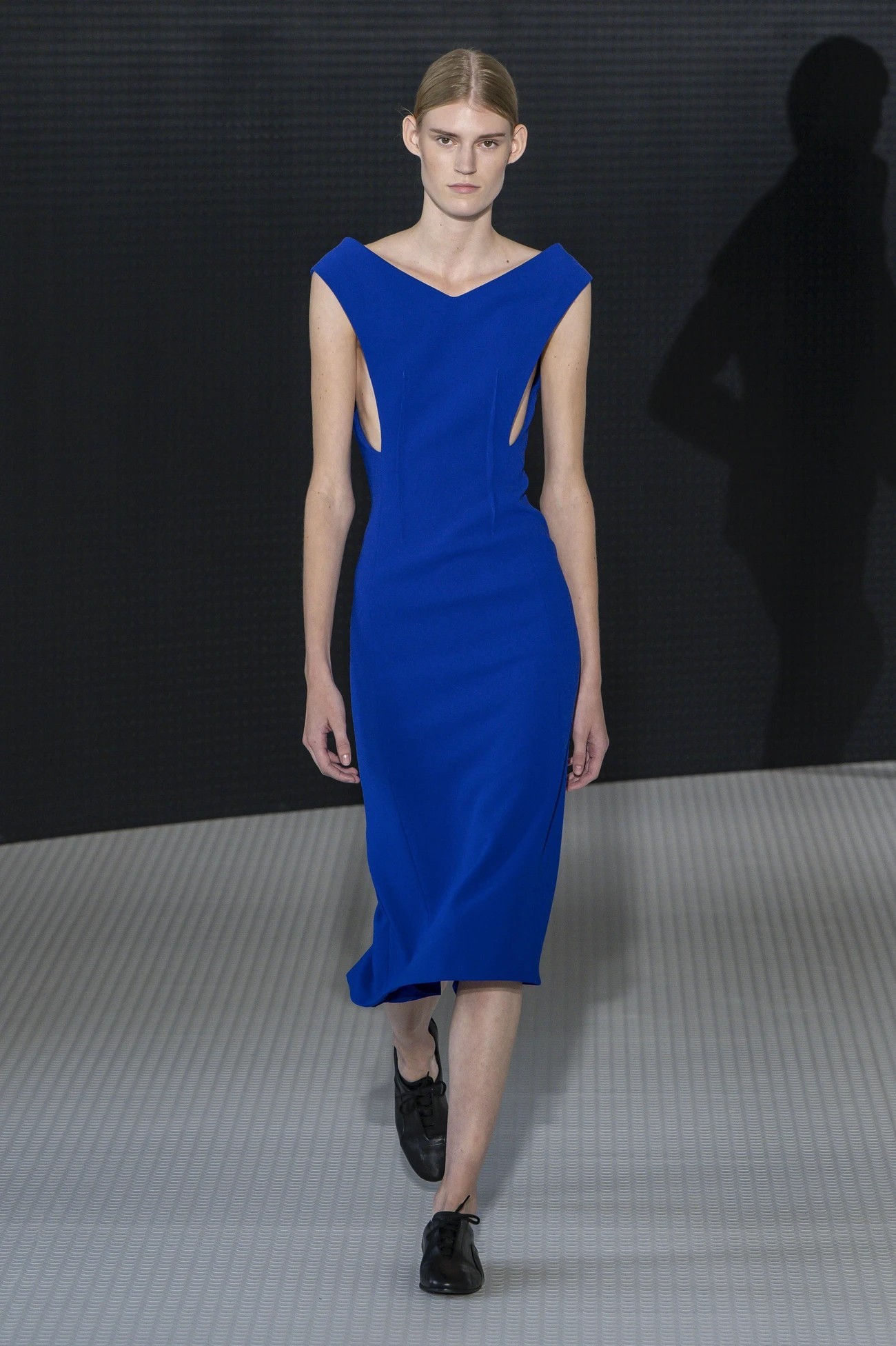
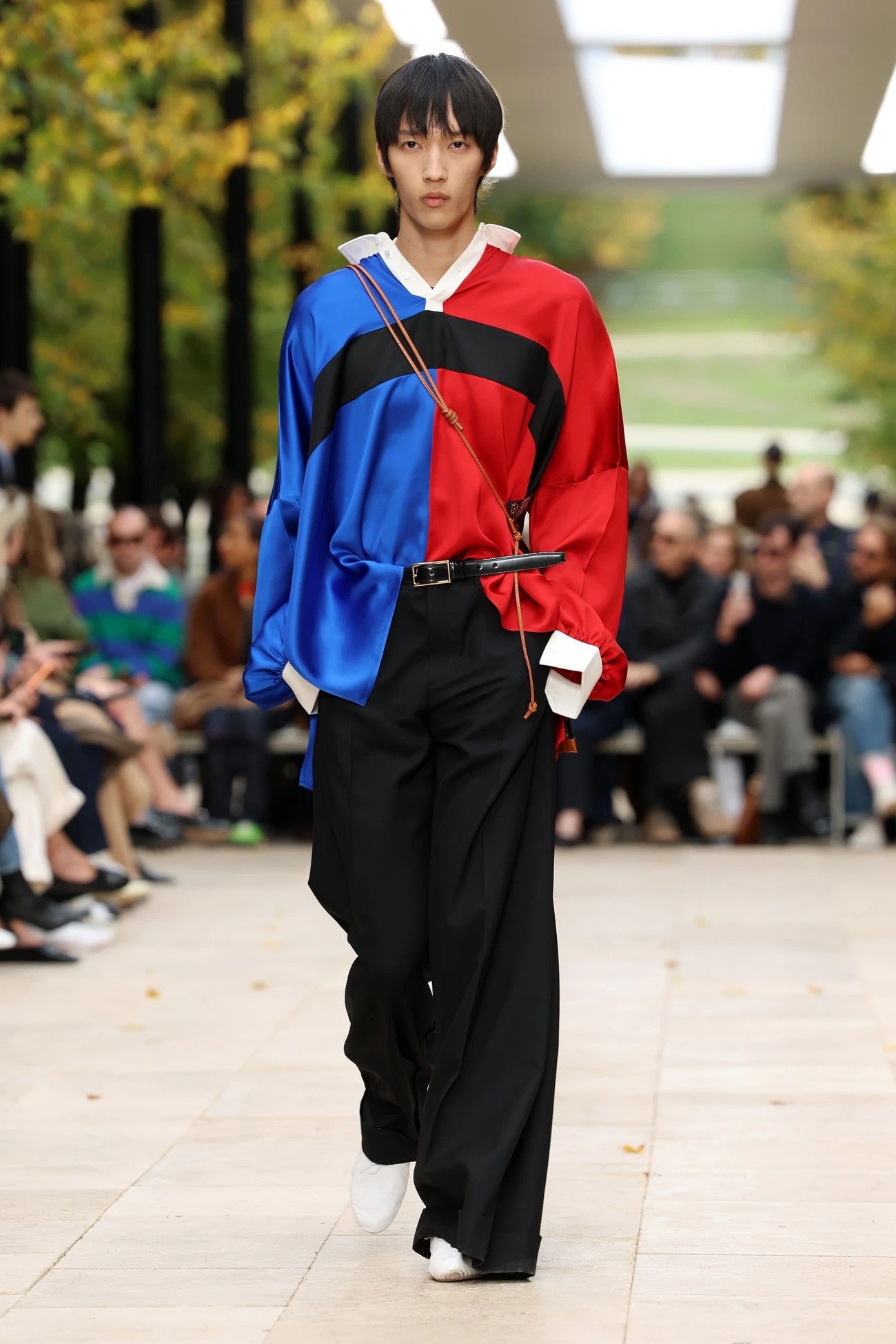
Color Blocking in 2026–2027 is no longer a decorative styling trick; it has evolved into a disciplined visual system that shapes how identity, structure, and confidence are expressed through color. As fashion moves toward sharper silhouettes and clearer visual statements, color blocking becomes a strategic language rather than a spontaneous aesthetic choice.
This editorial framework explores how Color Blocking operates today: historically grounded, culturally charged, and architecturally precise supported by contemporary brand case studies.
Jil Sander SS26
Photo: Getty Images
Celine SS26
Photo: Getty Images
Color Blocking is no longer understood as a playful or decorative approach to dressing. At its core, it is a deliberate visual system based on the juxtaposition of distinct, solid color fields placed side by side without gradients, tonal transitions, or optical blending. Each color retains its autonomy, creating tension, clarity, and rhythm within the composition. Rather than dissolving into harmony, colors confront one another, producing immediacy and confidence. This structural understanding of Color Blocking rooted in separation and contrast is well documented in both fashion and visual theory, where color operates as form rather than surface .
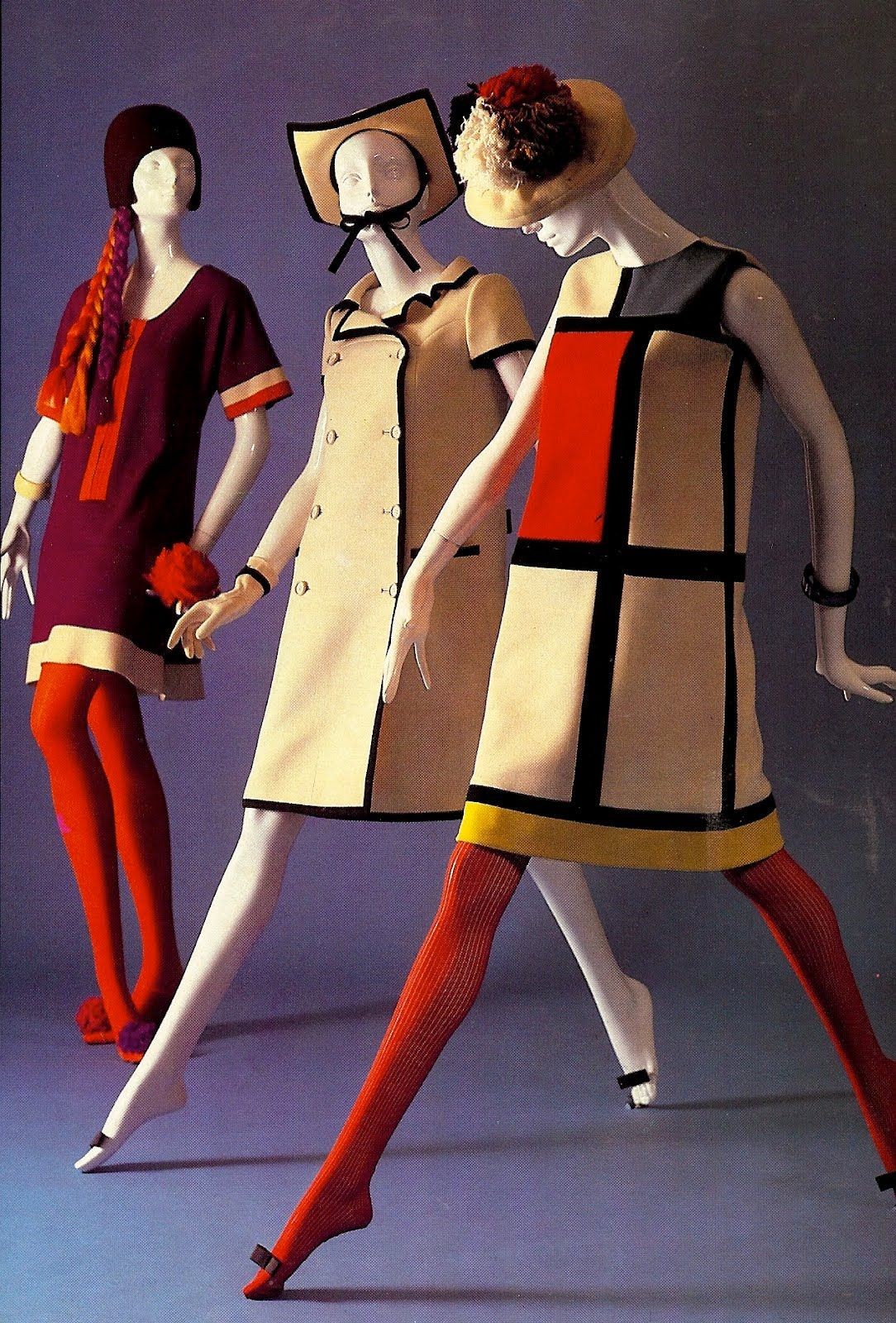
Yves Saint Laurent’s iconic Mondrian dresses were inspired by Piet Mondrian’s visual grammar
Photo: Pinterest
The intellectual logic behind Color Blocking originates in early modernist art, particularly the work of Piet Mondrian, whose grid-based compositions reduced visual language to primary colors, sharp lines, and strict geometry. These principles rejected ornamentation in favor of structure and clarity. Fashion absorbed this logic decisively in 1965, when Yves Saint Laurent translated Mondrian’s visual grammar into his iconic Mondrian dresses marking a turning point where color became architectural rather than decorative.
This moment established Color Blocking as a conceptual design language within fashion, one that continues to inform contemporary practice.
At its foundation, Color Blocking is defined not by trend cycles but by a set of consistent visual rules that govern its effectiveness:
-Bold, pure, high-contrast hues that resist subtlety and demand immediate visual recognition
-Clear separation between color fields, avoiding gradients, fades, or tonal blending that would weaken structural clarity
-Limited palettes, typically two or three dominant colors, allowing hierarchy and rhythm to emerge
-A focus on silhouette and construction, where color reinforces form rather than decorates it
These characteristics position Color Blocking as a language of decisiveness. Ambiguity dilutes its impact; clarity amplifies.
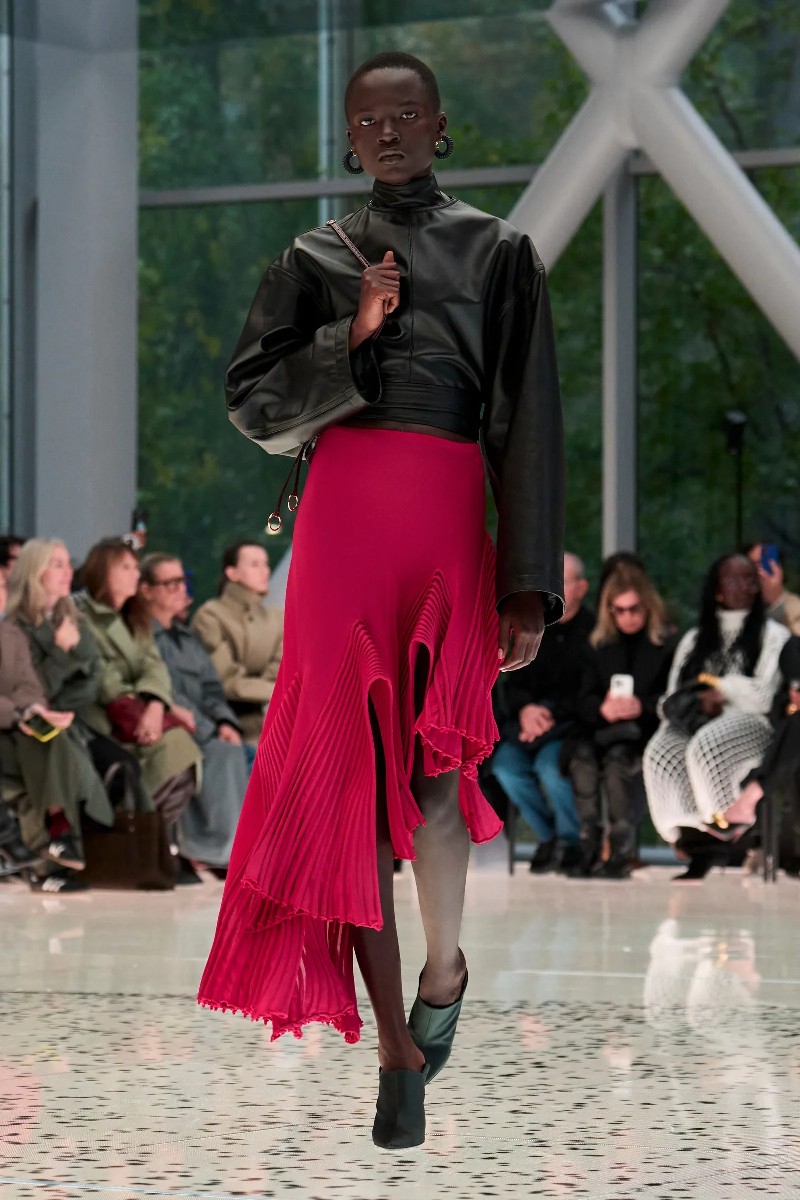
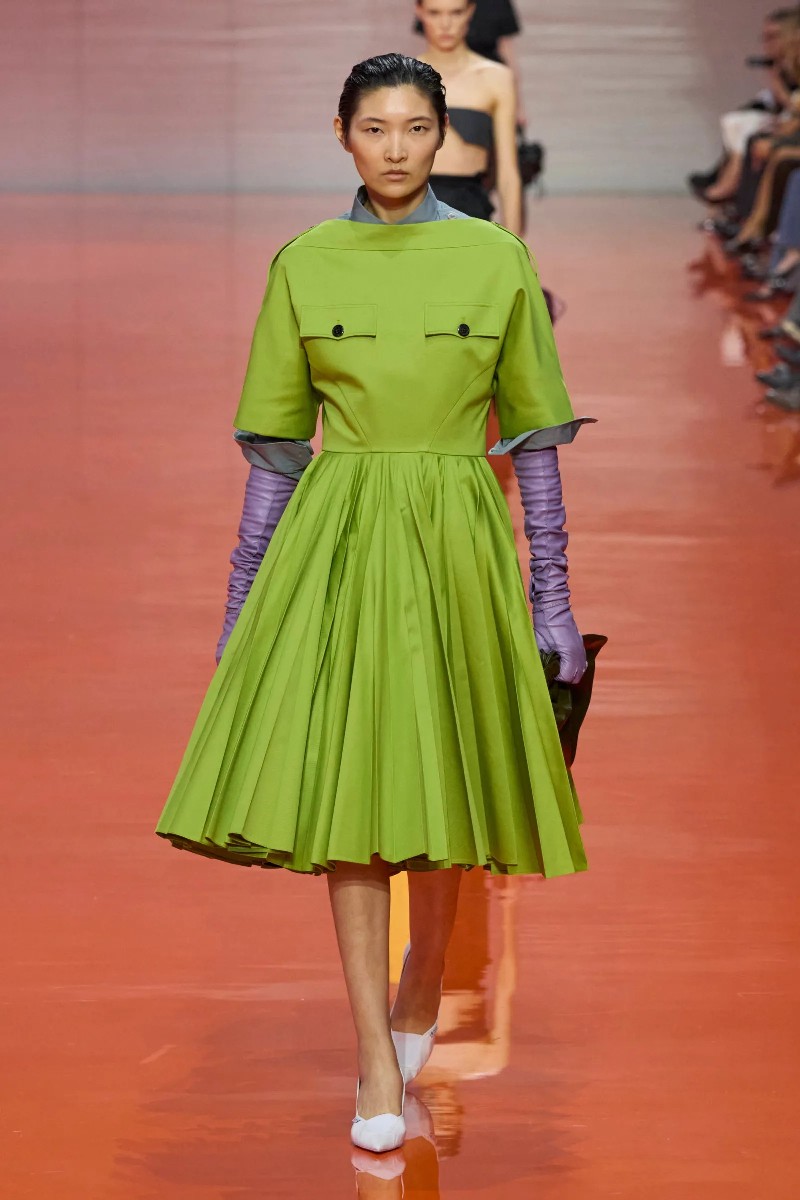
Alaïa SS26
Photo: Courtesy of ALAÏA
Prada SS26
Photo: Launchmetrics.com/spotlight
Spring/Summer 2026 fashion weeks confirm that Color Blocking has re-emerged not as nostalgia, but as a refined response to the industry’s demand for visual precision. Trend analyses identify it as one of the defining directions of the season, with designers favoring sharp chromatic contrasts over blended palettes. Unexpected pairings of acidic yellow against cobalt blue, saturated red disrupted by soft neutrals signal a move toward visual confidence and emotional clarity. Color is no longer secondary to form; it actively constructs it
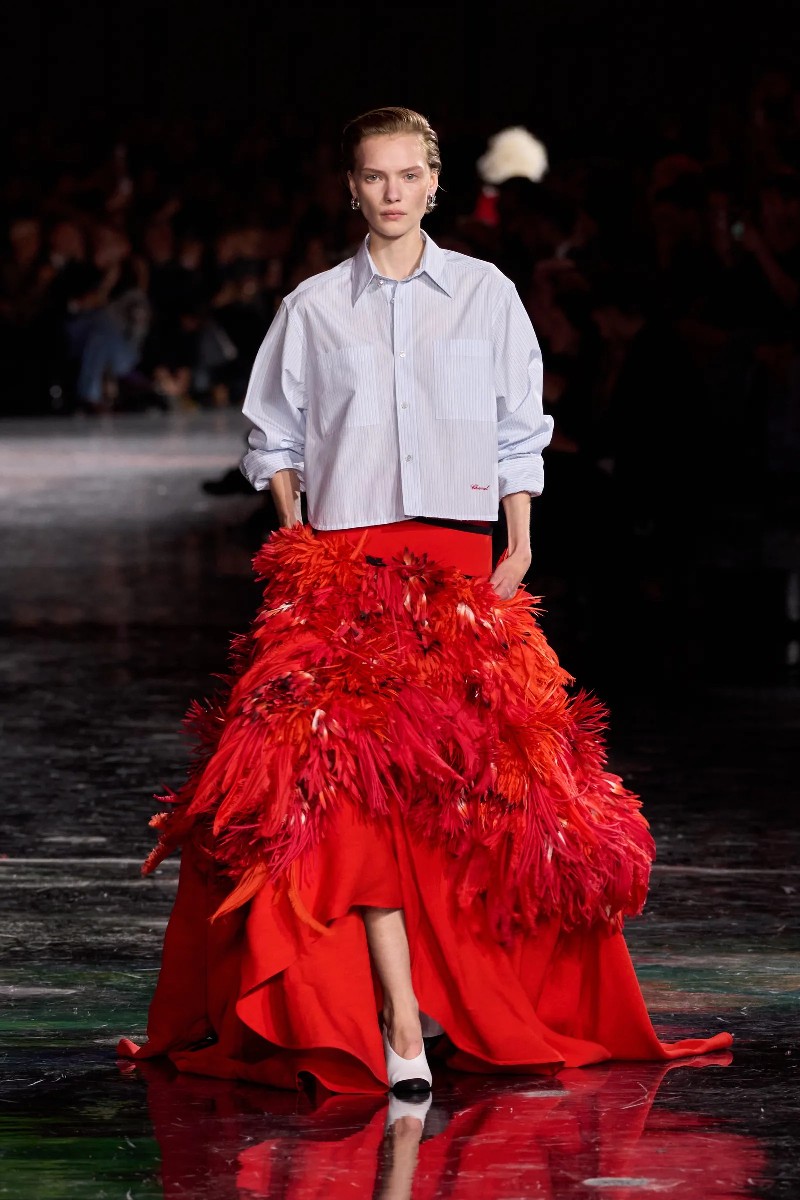
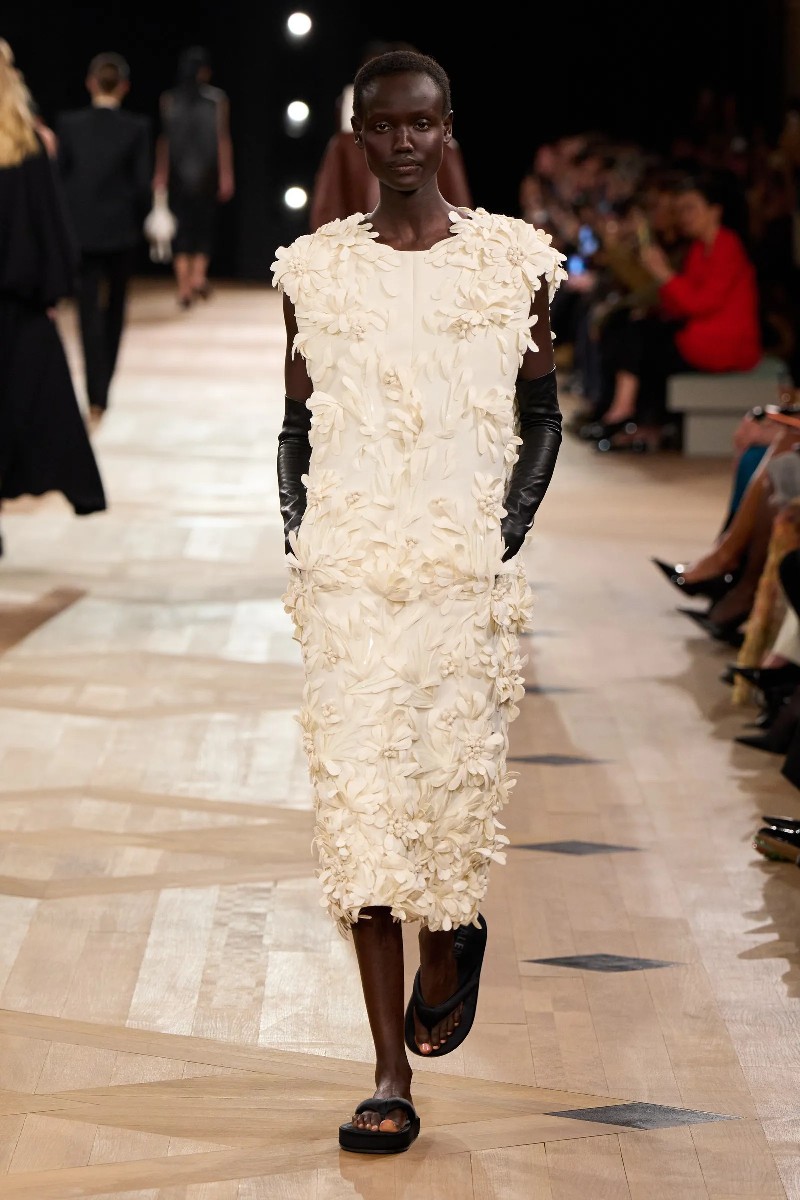
Chanel SS26.
Photo: Carlo Scarpato
Balenciaga SS26.
Photo: Launchmetrics.com/spotlight
The renewed prominence of Color Blocking reflects broader cultural shifts toward self-definition and legibility. In an era shaped by visual overload and algorithm-driven aesthetics, fashion gravitates toward systems that communicate instantly and without ambiguity. Color Blocking functions as visual architecture organizing the body into readable segments and reinforcing identity through contrast rather than excess. Trend forecasting platforms emphasize its role in restoring control, confidence, and emotional clarity to contemporary dressing .
Guidelines for Successful Color Blocking in 2026–2027
Modern Color Blocking operates under a refined logic that balances intensity with control:
-Neutral tones such as beige, gray, black, or white act as stabilizing anchors
-Contrasting separates create stronger impact than blended or tonal outfits
-A common formula emerges: one dominant statement color supported by two grounding tones
When intention is visible, Color Blocking reads as confidence. When random, it reads as indecision, a distinction increasingly important in contemporary fashion discourse.
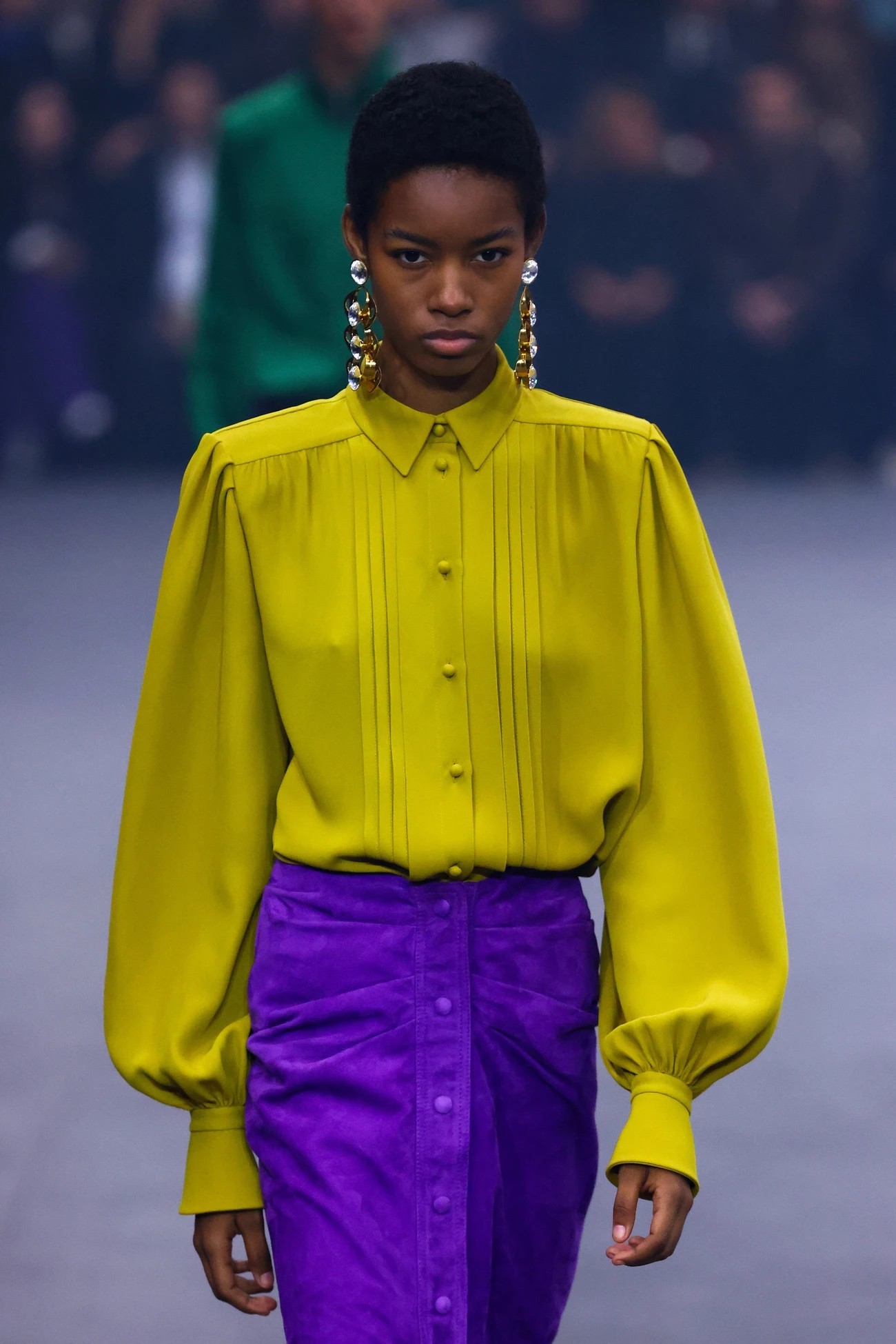
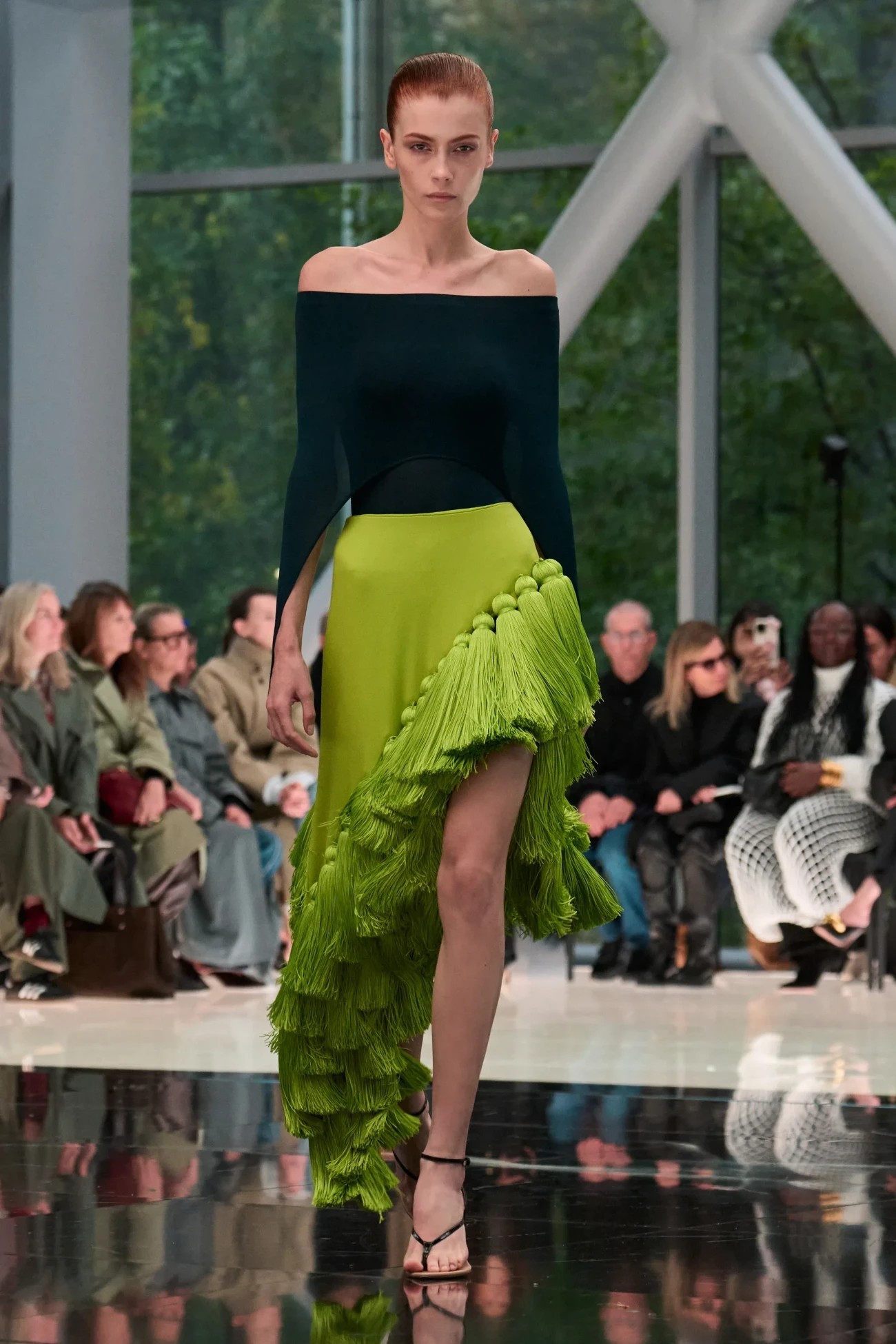
Valentino SS26
Photo: Getty Images
Alaïa SS26
Photo: Alaïa
While Color Blocking commands attention on the runway, its power lies in adaptability. Tailored separates, structured outerwear, accessories, and even beauty looks now incorporate bold color divisions to express personality without excess. A navy trouser paired with a bright yellow blouse and a red jacket demonstrates how color alone can articulate identity. Styling, in this context, becomes a framework color does the speaking .
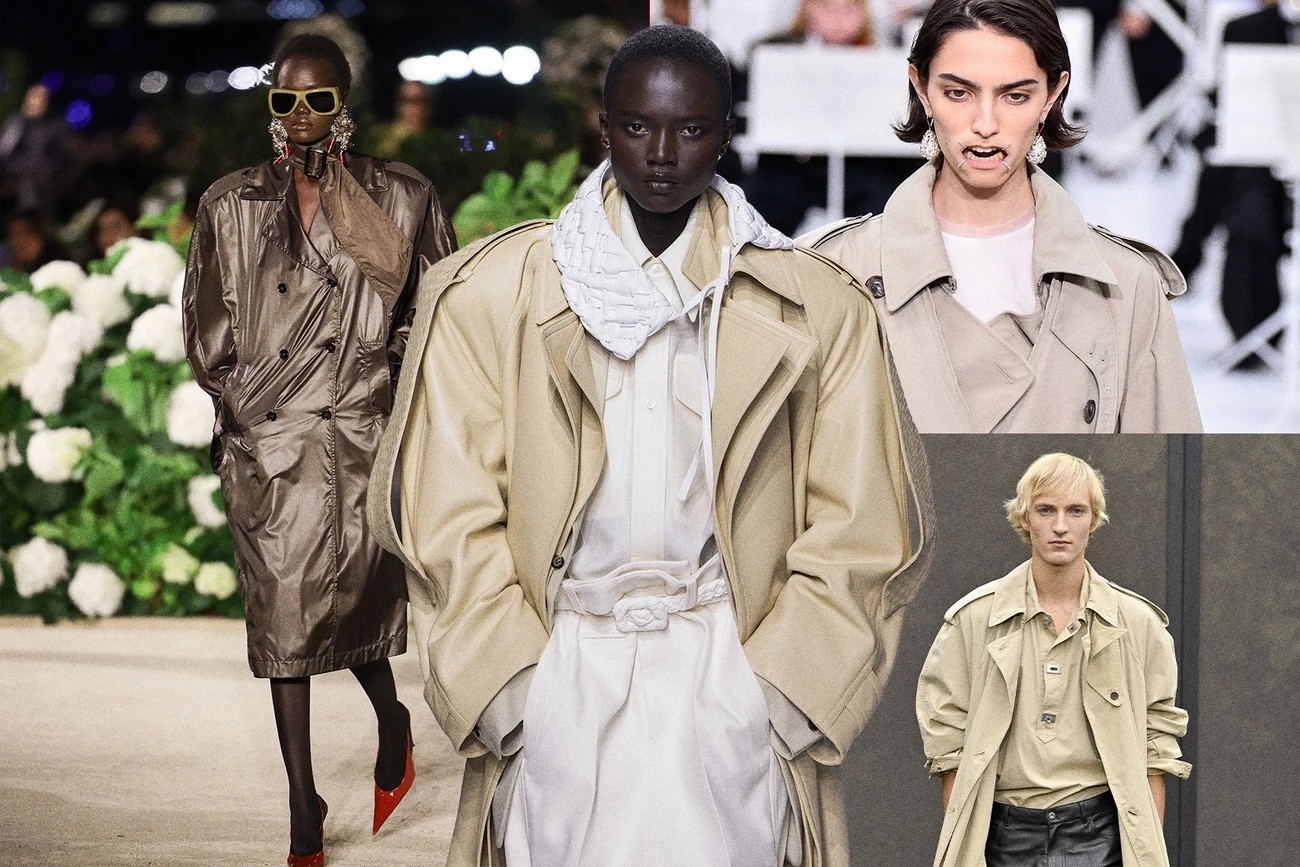
Photo: Pinterest
In 2026–2027, Color Blocking is no longer a fleeting trend; it is a chromatic discipline. A visual language that negotiates structure, identity, and emotional presence through clarity and contrast. When executed with intention, it transcends gender, occasion, and season, functioning equally in everyday dressing, formalwear, and avant-garde fashion. In an era defined by visual precision and self-definition, Color Blocking remains one of fashion’s most direct and articulate tools.
This article is an original editorial analysis produced by [DIBA magazine]
Research and references are used for contextual accuracy.