
|
EN
Subscribe to our Newsletter
In a world where image production moves faster than thought, returning to the past no longer signals nostalgia, it signals pause. Vintage, in this sense, is not an attachment to oldness nor a desire for repetition, but a deliberate method of rereading visual history and creating critical distance from the present. Here, the past functions not as decoration, but as a way of thinking.
Vintage as Method, Not Market
In a world where images are produced faster than thought itself, turning toward the past no longer signals nostalgia, it signals resistance. Vintage, in this sense, is not an affection for age, nor a sentimental attachment to old objects. It is a deliberate interruption. A slowing of perception. A refusal to accept the present as visually self-evident.
When detached from market logic, vintage ceases to be a category of consumption and becomes a method of thinking. Rather than chasing the “new,” this method attends to repetition: to forms, gestures, and visual structures that reappear across time, each iteration carrying altered meanings. From this perspective, the past is not a warehouse of styles but an archive of visual intelligence.
Vintage, understood this way, is not about faithful reconstruction. It does not seek authenticity through imitation. Instead, it introduces distance, historical, cultural, and perceptual. This distance makes comparison possible: between what an image once meant, what it appears to mean now, and what has been erased or naturalized in between. Vintage operates here as an analytical tool, not as a collectible object.
Within this framework, physical access becomes secondary. Ownership is irrelevant. What matters is visual literacy: the capacity to read images within their original conditions of production, circulation, and power, and to reactivate them under new conditions. For illustrators, painters, and contemporary image-makers, working with vintage does not mean possessing the past. It means engaging with collective visual memory.
Here, vintage functions as language rather than commodity.
A way of thinking through images, not of purchasing them.
In certain cultural contexts, this understanding of vintage is not marginal, but deeply embedded. These cultures do not treat the past as something to be overcome or discarded. Instead, they treat it as active material, something to be interrogated, rewritten, and made productive in the present.
Japan offers one of the clearest examples. In Japanese visual culture, the rereading of historical imagery, from ukiyo-e prints to early twentieth-century commercial graphics, is integral to contemporary image production. Rather than indulging in nostalgic revival, Japanese illustrators deconstruct older visual systems and recombine them with precision. Perspective, line, flatness, and symbolism are treated as modular components rather than sacred forms. Vintage here operates as a temporal strategy: a simultaneous respect for the archive and a radical freedom in reauthoring it.

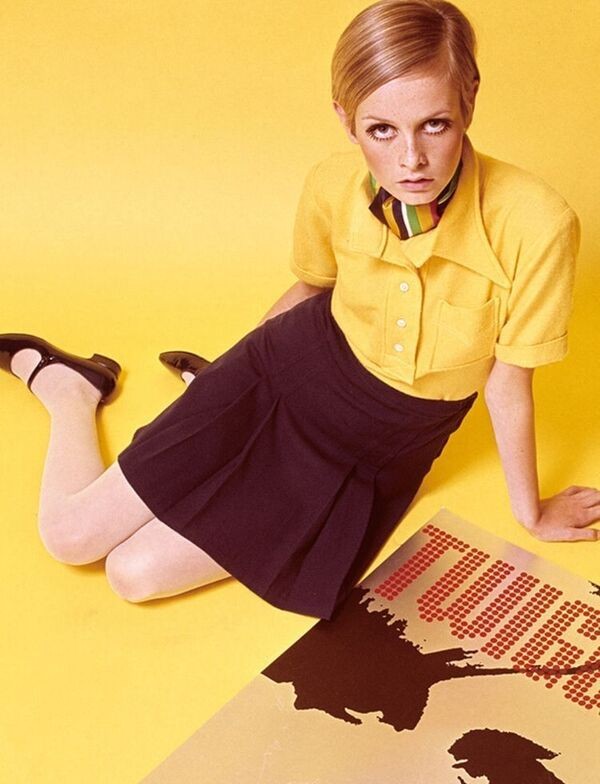
In Germany, particularly in Berlin, vintage is closely tied to archival practice and historical responsibility. After repeated political and ideological ruptures, German visual culture approaches the past with analytical caution rather than affection. Illustrators and graphic artists frequently draw on nineteenth- and early twentieth-century visual languages, not to beautify them, but to expose the mechanisms of ideology, authority, and collective memory embedded within them. This form of vintage is conceptual, critical, and explicitly anti-nostalgic.
France, especially Paris, understands vintage through continuity. Within the French tradition of illustration, poster design, and book culture, the past has never fully disappeared. From Belle Époque advertising to mid-century editorial illustration, historical reference operates as a form of intellectual refinement. Vintage here is neither ironic nor confrontational; it functions as a precise visual vocabulary, where citation signals cultural literacy rather than emotional longing.
In Britain, particularly London, vintage is inseparable from irony, class consciousness, and social critique. British illustrators often draw on Victorian engraving, early mass advertising, or postwar graphic design to expose the contradictions of contemporary life. These visual references are rarely neutral. They are loaded with questions of hierarchy, power, and identity. The past becomes a distorted mirror through which the present is rendered visible.
Across all these contexts, one principle remains consistent: vintage does not require physical access. What it requires is analytical access. The ability to read an image’s temporal layers, to recognize its ideological function, and to understand how it can be reactivated under different historical conditions.
For contemporary illustrators and painters, vintage as method means:
– working with memory rather than objects
– using the past to generate critical distance
– transforming image history into a tool for thought rather than decoration
Even in the United States, despite its intensely market-driven image culture, vintage has been reclaimed as method in certain artistic communities. In cities such as New York and Los Angeles, illustrators and painters turn to advertising archives, pulp magazines, and forgotten commercial languages not to aestheticize them, but to slow down visual consumption. For these practitioners, vintage becomes a form of resistance against the endless demand for novelty and immediacy.
Photo by: Getty Image
Understood this way, vintage is neither regression nor nostalgia. It is not about retreating into the past, nor about romanticizing what has already been consumed.
Vintage is a discipline of looking.
A way of slowing the present in order to see it more clearly.
This article is an original editorial analysis produced by [DIBA magazine].
Research and references are used for contextual accuracy.