
|
EN
Subscribe to our Newsletter
The Brutalist does not simply depict architecture; it constructs a visual language where power is spatial, the body is regulated, and clothing operates as a secondary architecture. This essay reads The Brutalist as a study of form, discipline, and scale, where concrete, tailoring, and silence converge to produce an image of modern authority that continues to shape contemporary fashion and visual culture.
By the Editorial Staff
January 16, 2026
The Brutalist, 2024
Photo: IMDb
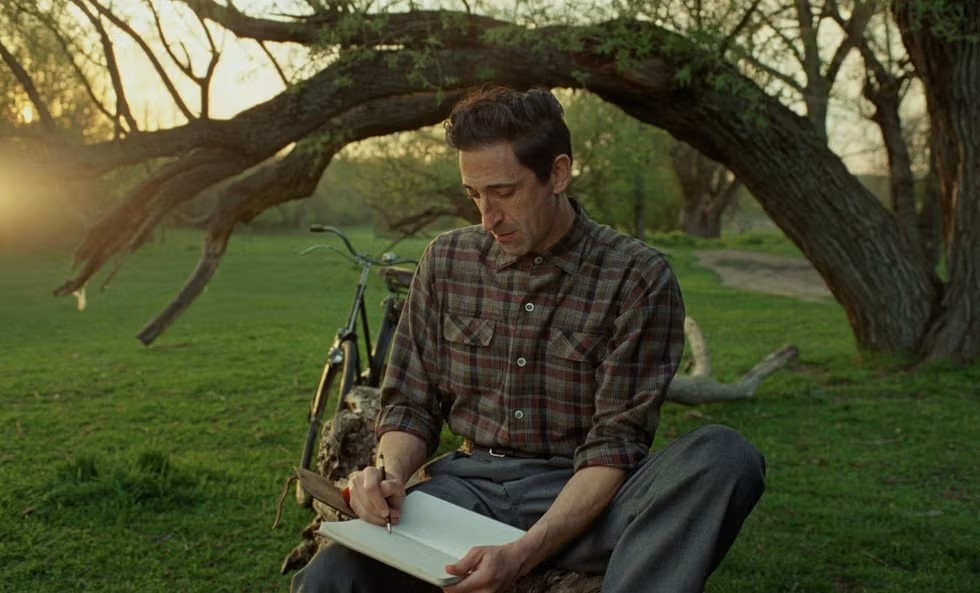
The Brutalist is not simply a film about buildings or architectural history; it is a film about how form becomes authority. From its opening frames, the world presented unfolds not as a neutral setting but as a disciplinary environment where space, material, and body are bound together in a visual contract that governs how the characters move, exist, and are seen. In this cinematic language, power is spatial and corporeal, not narrative or symbolic.
Concrete in The Brutalist is not backdrop , it is governor. Walls rise without ornamentation, light is selective, and scale operates as force. This logic mirrors the historical principles of Brutalist architecture, a movement that emerged after World War II and was often framed by architects as an expression of structural honesty, functional clarity, and moral rigor.
Yet the film’s core insight is that architecture alone cannot discipline the modern subject. The body must also be structured, and this is where clothing enters, not as decoration or fashion in the commercial sense, but as architecture worn.
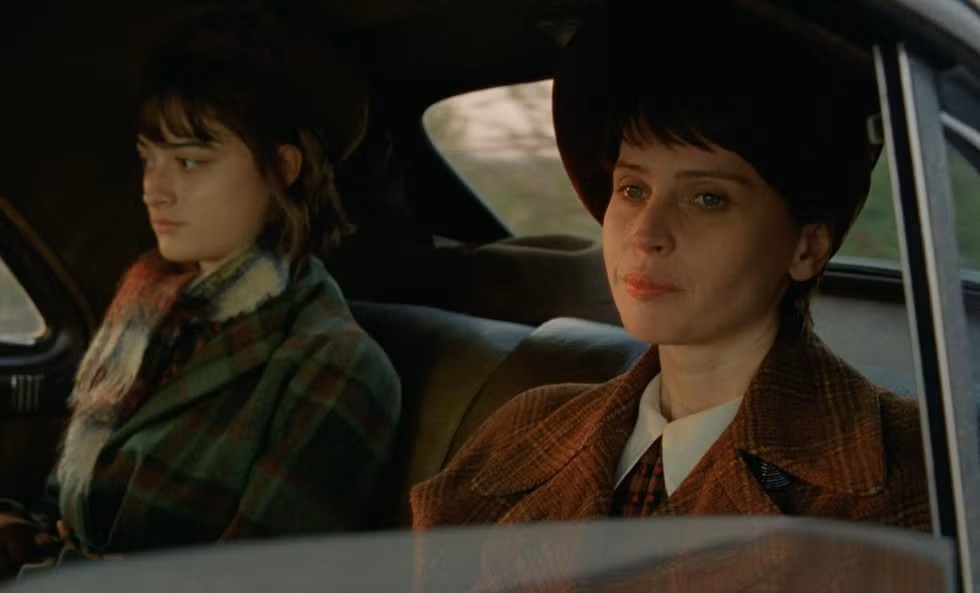
In The Brutalist, garments do not drape the body, they regulate it. Sharp shoulders, rigid silhouettes, and controlled proportions are not aesthetic choices but extensions of the built environment, intentionally mirroring the surrounding concrete.
Tailoring here functions much like structural material: heavy, purposeful, resistant to softness. The dressed body becomes an extension of the built form, reinforcing the idea that modern power functions through alignment, between space, material, and flesh.
The Brutalist, 2024
Photo: IMDb
This synthesis of body and environment recalls architectural theorist Michel Foucault’s notion of disciplinary space: spaces designed to shape behavior and internalize authority, discussed in works like Discipline and Punish. Foucault argued that power is embedded in the very structures in which we live rather than simply imposed from without. In The Brutalist, clothing performs a similar function. Fabric does not express individual identity; it organizes visibility.
Materiality becomes central to this system. While concrete dominates the film’s visual landscape, its architectural logic extends into textiles. Wool, felt, heavy cotton, and structured synthetics replace softness with resistance. Texture becomes ideological: smoothness is purposefully avoided, and surfaces that invite friction are embraced. These material decisions echo the ethos of post-war modernism, where ornament was rejected in favor of function, weight, and permanence.
The body, consequently, is measured. Movement is curtailed. Posture is controlled. Even intimacy feels orchestrated, framed, contained, delayed. The film suggests that modern authority does not need to shout: it stands still and occupies space with certainty and restraint.
The visual grammar of The Brutalist resonates far beyond architecture. It has left a profound imprint on contemporary fashion. Designers in the last decade have repeatedly referenced Brutalist principles: exaggerated proportions, architectural tailoring, neutral palettes, and garments that impose form rather than follow the body. This influence is not one of imitation but of structural thinking, where clothing is conceived as a systemic language rather than embellishment.
From brands like Balenciaga, Rick Owens, and Yohji Yamamoto to avant-garde runway shows that foreground silhouette over decoration, the legacy of Brutalist thinking in fashion emphasizes form, function, and discipline. It is visible not as stylistic copy, but as a shared vocabulary of structure over ornament.
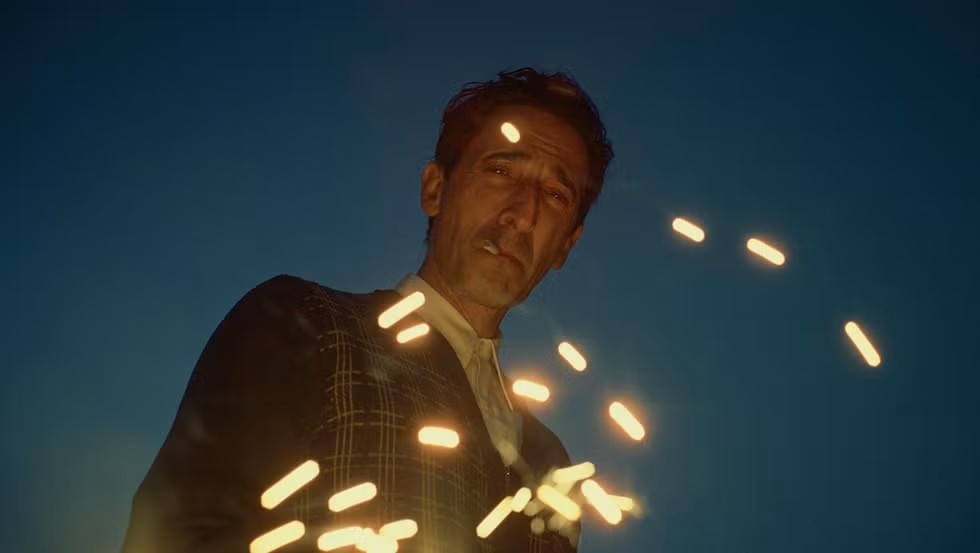
In this sense, The Brutalist functions less as a conventional narrative and more as a manual of visual power. It teaches that authority is built not through excess, but through reduction; not through beauty, but through coherence. Space, clothing, and body align to produce images that resist time, trends, and sentimentality.
The Brutalist, 2024
Photo: IMDb
The film’s endurance lies in its refusal to appease or entertain solely. Like the buildings it evokes, it demands endurance, attention, and submission to form. It reveals a truth central to modern visual culture:
What structures us ultimately dresses us.
This article is an original editorial analysis produced by [DIBA magazine].
Research and references are used for contextual accuracy.