|
EN
Subscribe to our Newsletter
Chaharef is an independent Persian design studio founded by Iranian architect and designer Forouzan Farhadi in Tehran. Operating at the intersection of architecture, craft, and functional art, the studio creates bespoke furniture that embodies spatial precision and material poetry. Defined by a dialogue between thread and metal, softness and structure, Chaharef reimagines furniture as architectural sculpture, objects that balance conceptual rigor with tactile intimacy.
By Zara Saberi
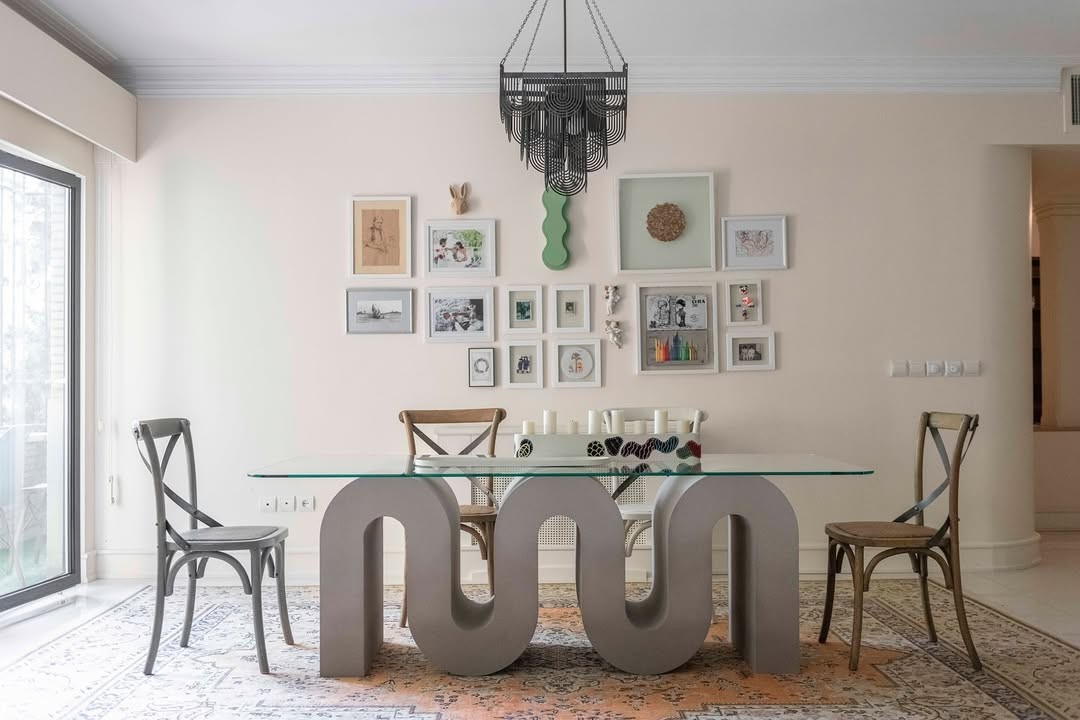
Photo: Courtesy of Chaharof
In a design landscape saturated with mass production and aesthetic repetition, true authorship has become rare. Chaharef emerges from Tehran with a distinct architectural voice, one that approaches furniture not as a product, but as a proposition. Founded and led by architect Forouzan Farhadi, the studio operates less like a conventional atelier and more like a spatial laboratory, where each object is conceived with the discipline of architecture and the sensitivity of craft.
At first glance, Chaharef introduces itself simply as “Custom Furniture by Architects.” Yet beneath this concise declaration lies a deliberate positioning. These are not decorative pieces designed to fill space; they are objects shaped by structural logic, proportion, and conceptual depth. The studio’s identity unfolds within a poetic tension, between thread and metal, a phrase that captures both material contrast and philosophical intent.
Thread suggests tactility, intimacy, and the human hand; metal evokes precision, endurance, and architectural clarity. In Chaharef’s work, these forces do not compete, they converse. Soft narratives are anchored by structural discipline, and industrial strength is tempered by warmth. The result is furniture that reads as functional sculpture: pieces that inhabit space with the authority of architecture while retaining the immediacy of craft.
Rather than following trends, Chaharef constructs its own language, one where material duality becomes a framework for exploring balance, resistance, and harmony in contemporary Persian design.
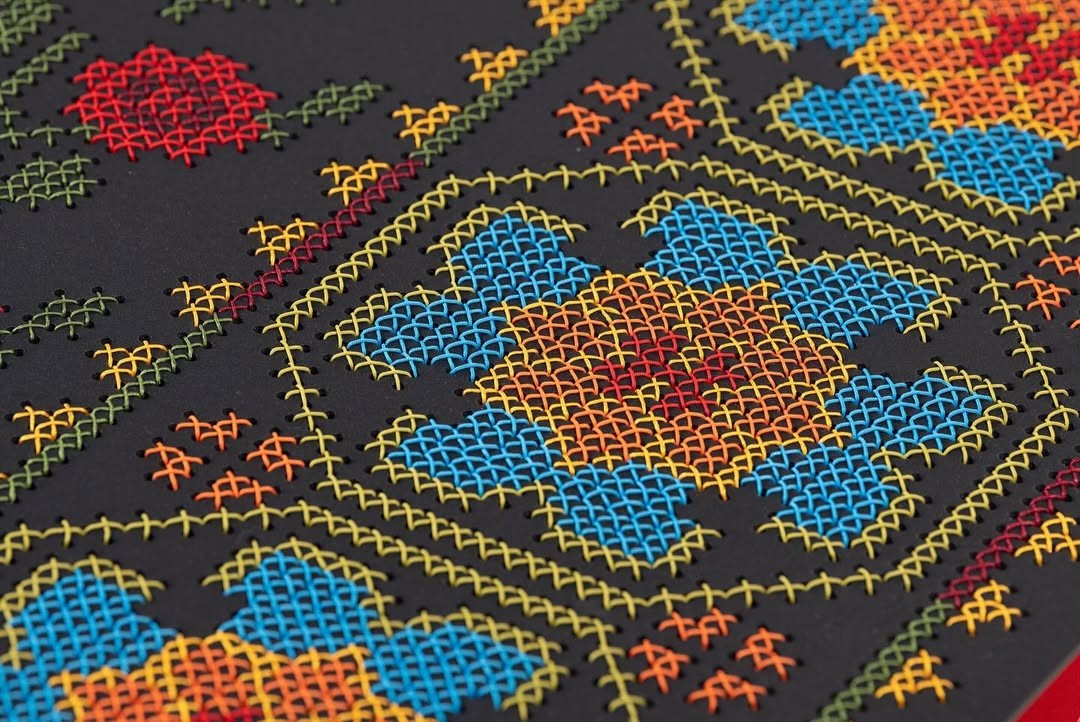
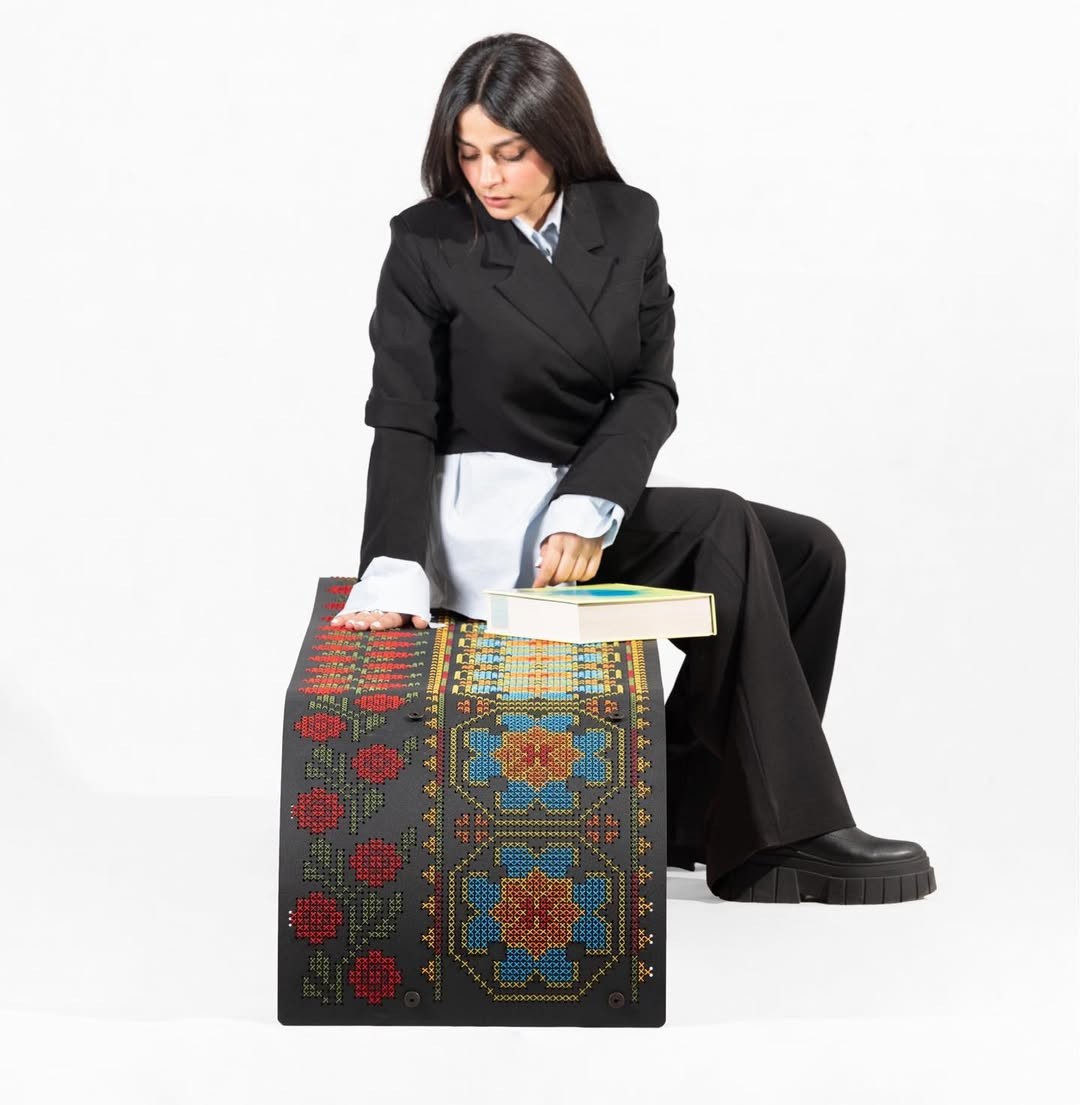
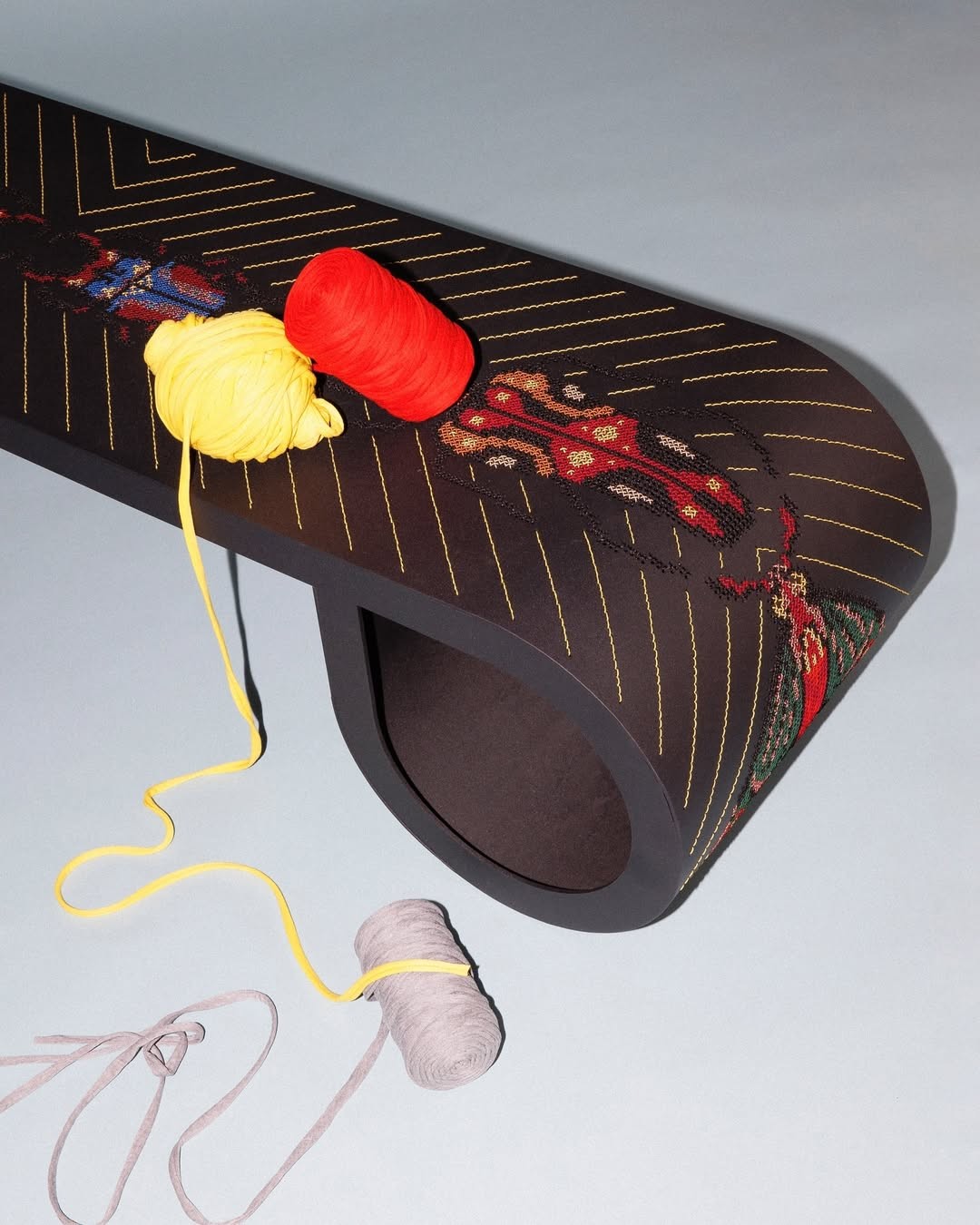
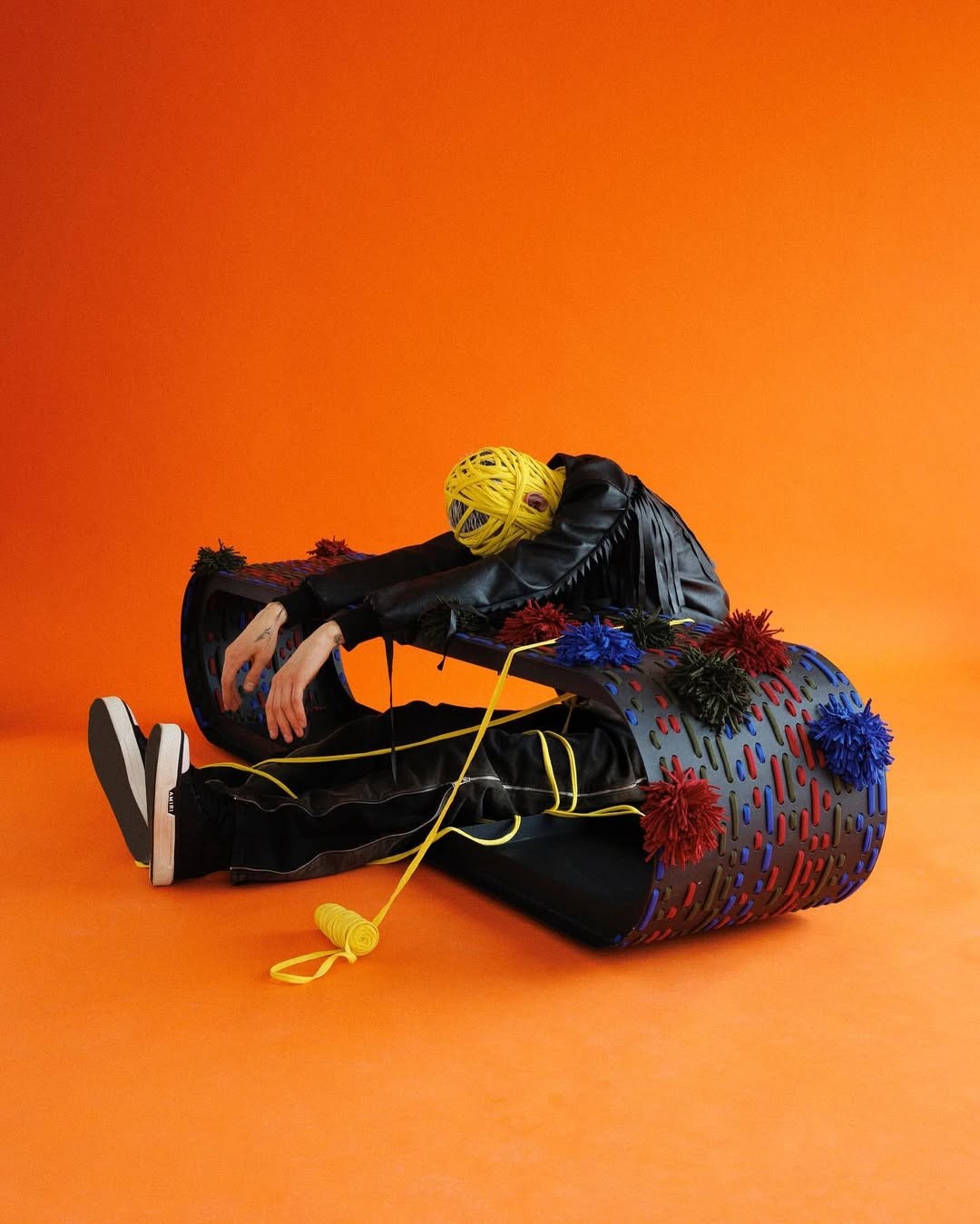
The Farshineh Bench
Dimensions: 250*48*35
Material: Metal & Thread
Photo: Courtesy of Chaharof By ph.design.photography
The term “FARSHINEH” refers to carpets featuring patterns inspired by traditional hand-woven or machine-made Iranian rugs, often characterized by vibrant floral motifs.
This bench reinterprets those ornamental traditions through a contemporary approach, combining intricate needlework with the structural strength of metal. The contrast between textile delicacy and industrial rigidity creates a refined dialogue between softness and structure.
Beyond its poetic positioning, Chaharef’s distinction lies in methodology. Unlike conventional furniture brands, the studio approaches each piece through an architectural framework, beginning with structure, proportion, and spatial logic before surface articulation. The declaration “Custom Furniture by Architects” is not branding rhetoric; it reflects a process grounded in construction principles and conceptual clarity.
The notion of operating “between thread and metal” becomes tangible in execution. Textile elements are not merely decorative layers but structural participants that introduce flexibility, tactility, and human scale. Metal components, conversely, establish load-bearing clarity and visual discipline. Their interaction generates controlled tension, softness suspended within precision.
This material dialogue forms the core of Chaharef’s philosophy. Rather than treating furniture as isolated objects, the studio conceives each piece as an inhabitable structure, scaled-down architecture where engineering and emotion coexist. The result is not simply custom furniture, but spatial instruments that negotiate balance between intimacy and rigor.
Unlike typical furniture brands that begin with carpentry or upholstery traditions, Chaharef’s origin lies in architecture and spatial design. This foundation shapes every piece: furniture born not merely to fill a room but to inhabit and dialogue with space.
Architecture, at its core, is about integration of materials, forces, light, and life. Chaharef harnesses this core by asking questions seldom posed by conventional furniture design:
How does a piece sit within space?
How does it engage human presence?
Can furniture be both art and utility?
These questions move Chaharef beyond conventional furniture design into the realm of architectural objects, pieces that anchor spaces without dominating them, yet possess unique visual presence.
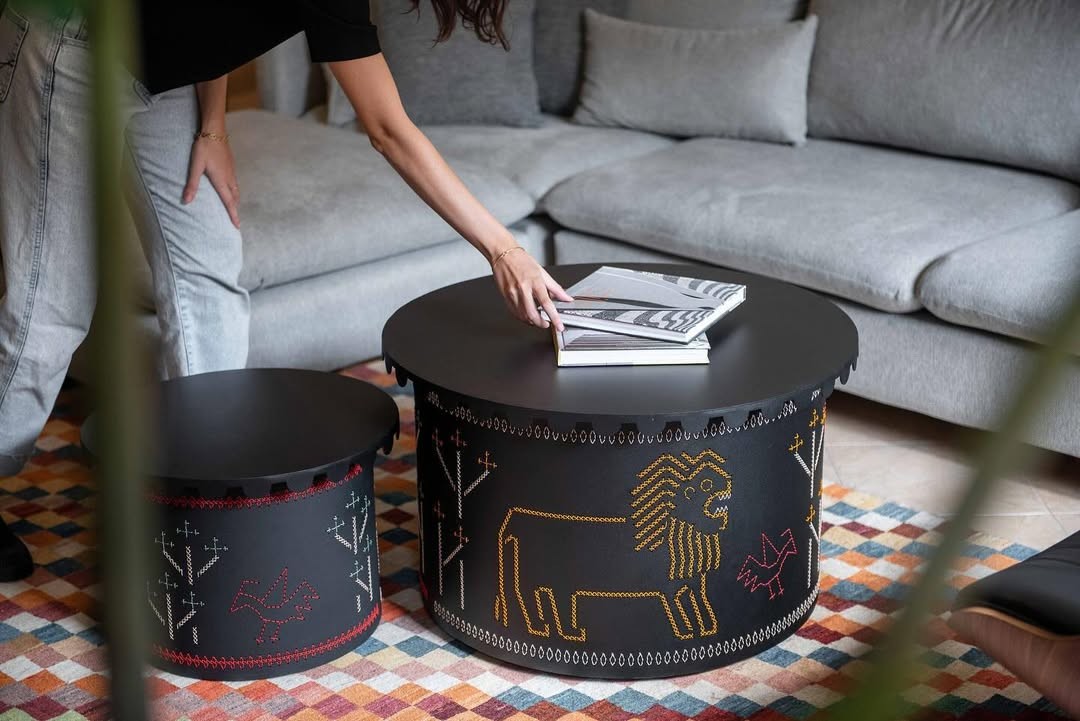
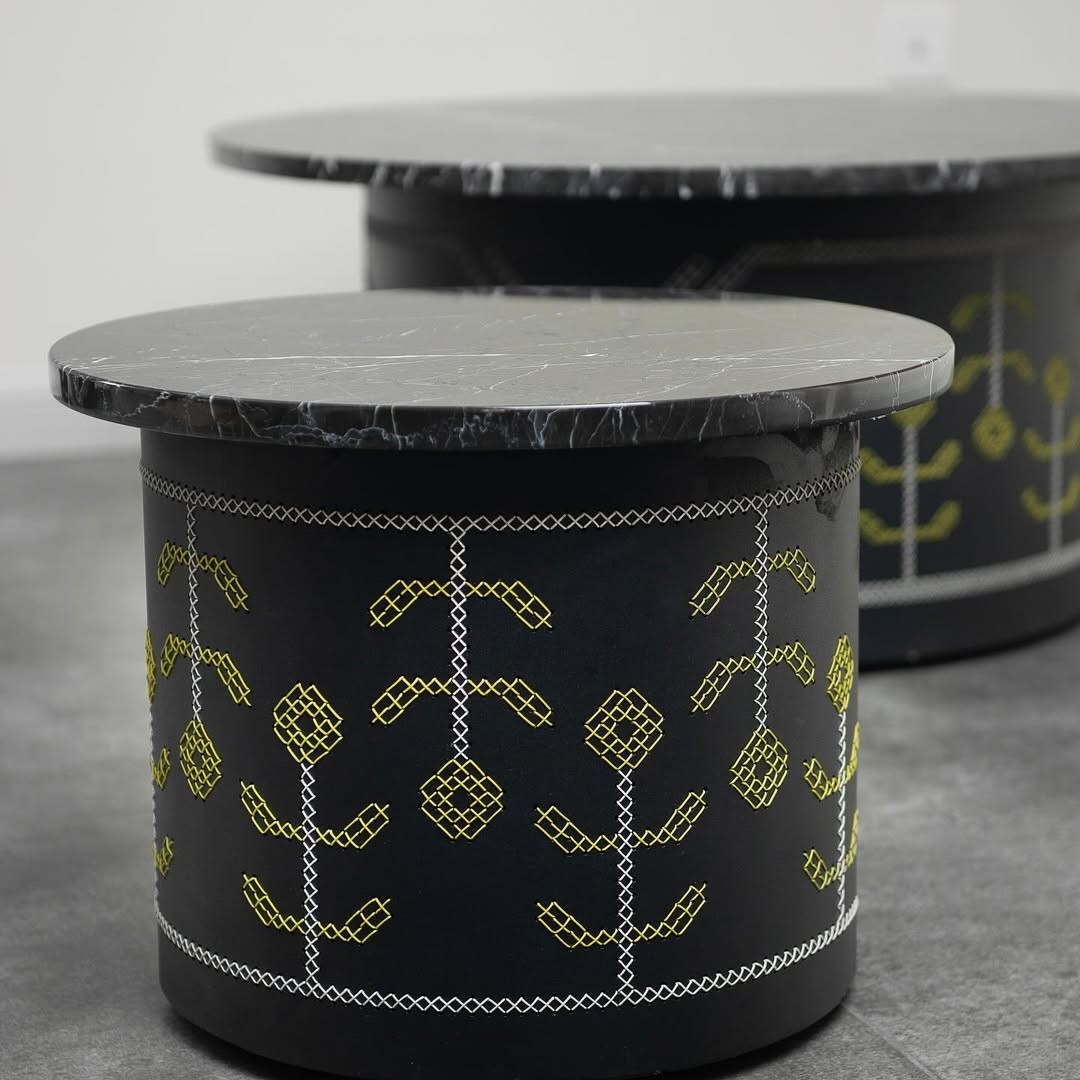
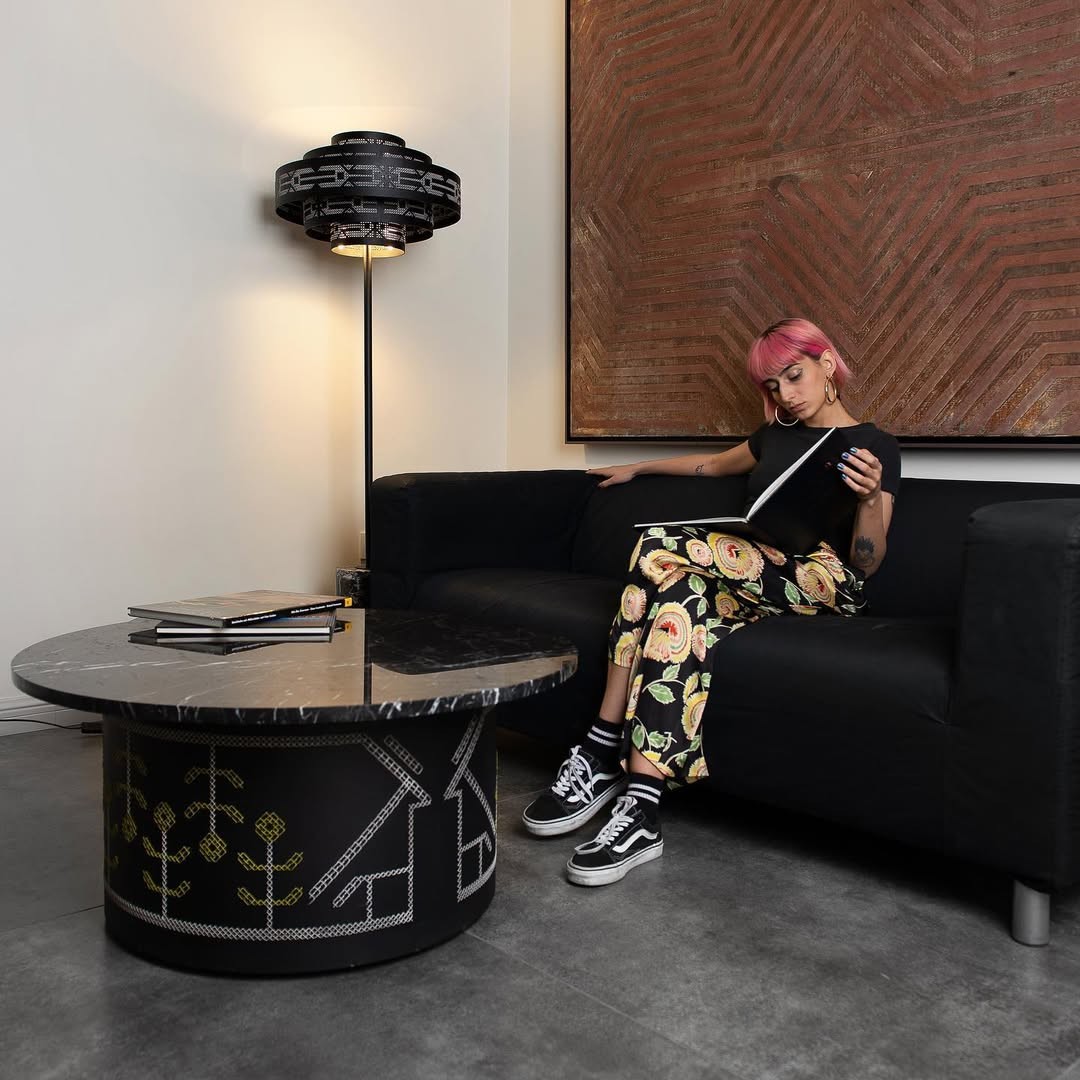
Lion Coffee Table
Material: Metal and thread
Flower Coffee Table
Material: Metal, stone and thread
Chaharof In Collaboration with: @r.a.n.d.o.m.studio
Photo: Courtesy of Chaharof By ph.design.photography
The needlework on this table is inspired by motifs from Qashqai handwoven textiles in Iran.
The lion, long one of the most popular animal figures in Qashqai art, has appeared in both name and image across various objects and surfaces, including paper, pottery, stone, plaster, fabric, and carpets. One remarkable aspect of these designs is their stylized, non-realistic forms and the prominent role of women in their creation.
The thread in Chaharef’s designs is not always literal fabric; instead, it is a metaphor for tactile storytelling, woven lines, visual rhythm, and detail that resonates with touch and memory. This concept borrows from rich traditions of Persian textiles and handicrafts, where surfaces tell stories through pattern and making.
Whether it’s the suggestion of weave, loop, stitch, or softly contoured silhouettes, thread represents the human element of design emotion, warmth, and narrative. Use of textiles or texture in furniture invites intimacy: a bench or pouf becomes a place of pause, a moment in space that feels lived in and warm.
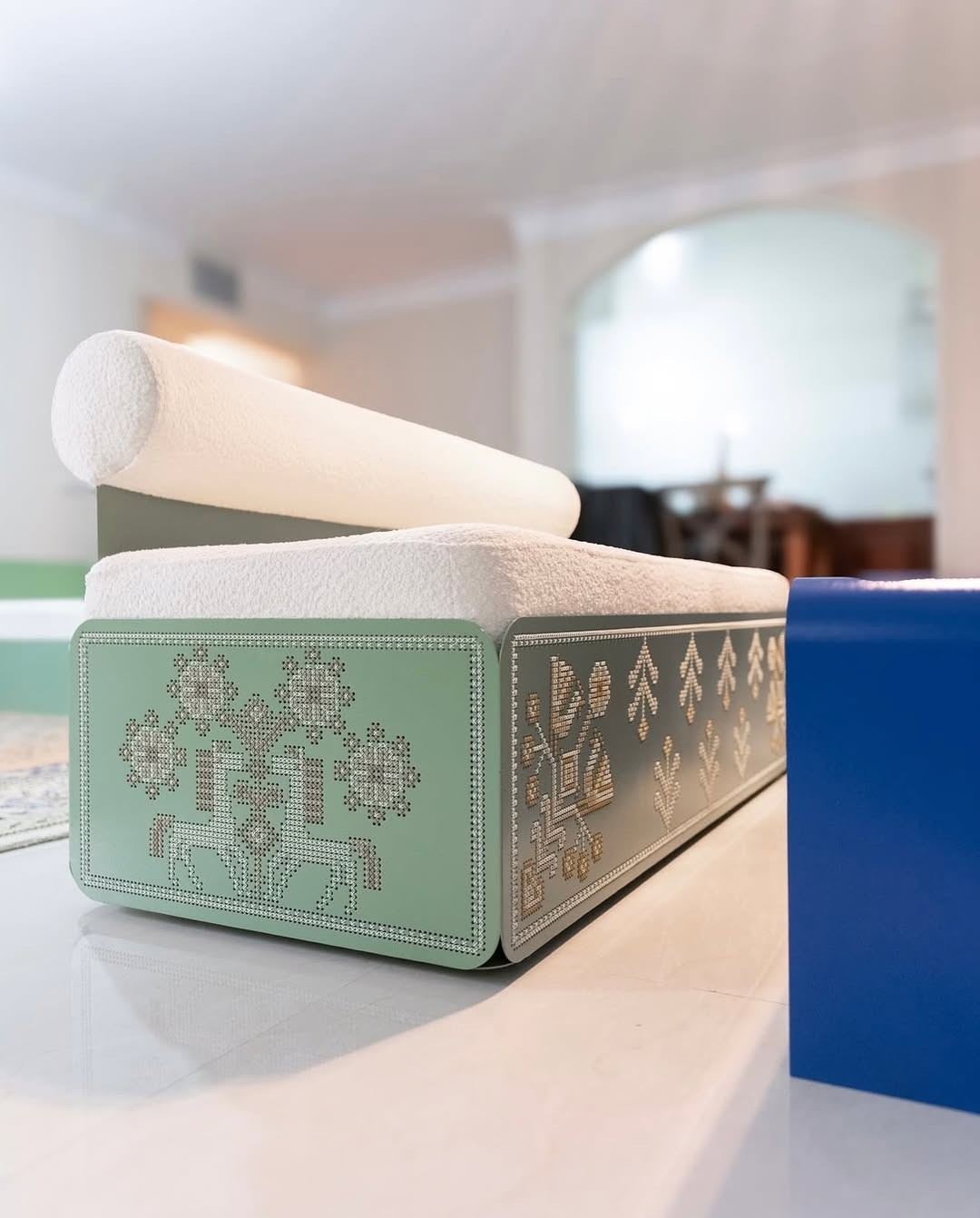
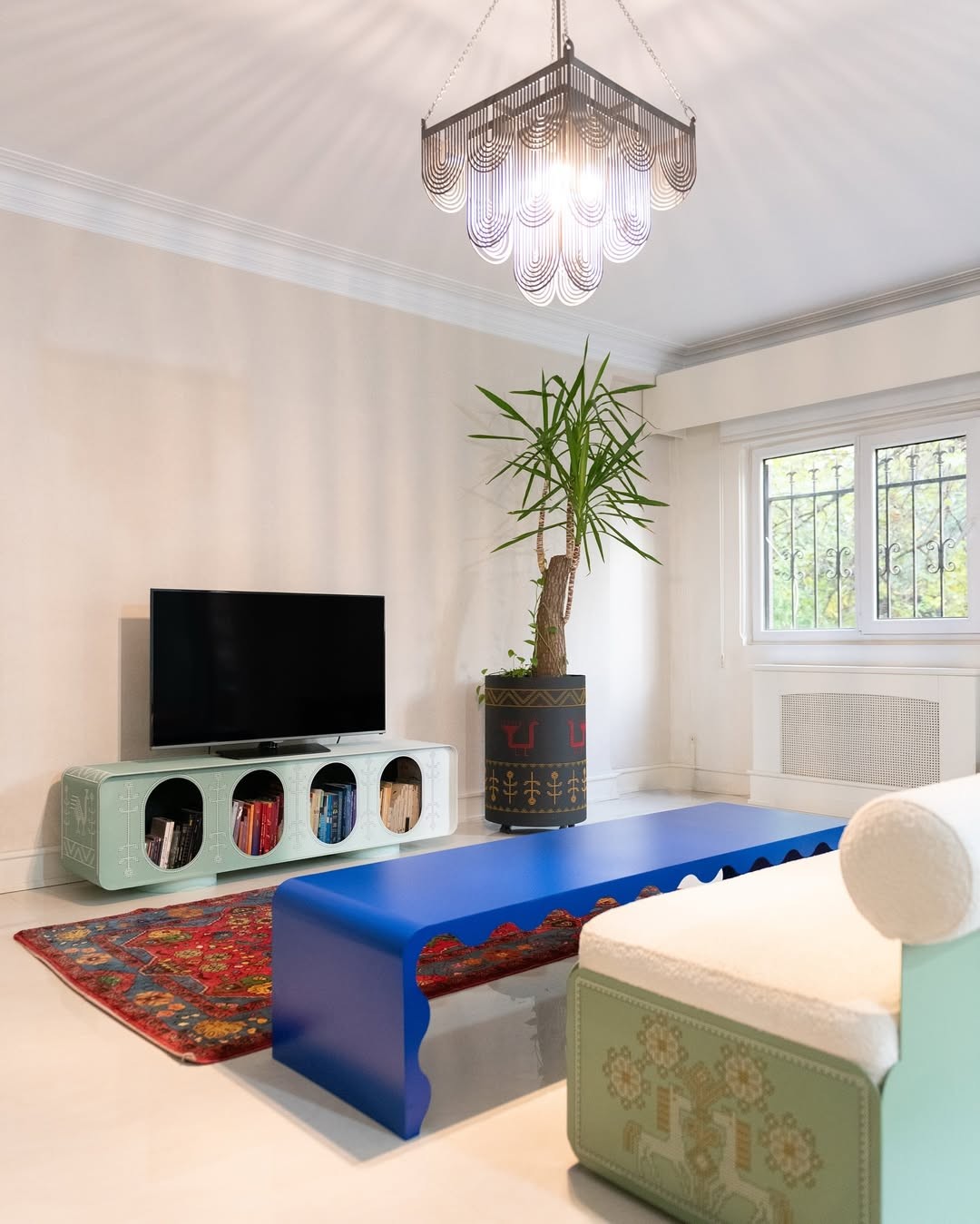
In contrast, metal serves as the backbone of Chaharef’s visual language. Metal frames, angular bases, and precise lines offer a structural clarity reminiscent of architectural frameworks. This material is where the studio’s architectural roots show most clearly rigid yet expressive, bold yet refined.
Metal at Chaharef is not cold or industrial for its own sake. Instead, it’s tempered in balance with softer elements creating pieces that stand strong in space while inviting interaction. Benches, mirrors, lighting fixtures, and consoles all carry this underlying structural logic, expressed with visual finesse.
This pairing of thread's organic warmth with metal’s structural confidence allows Chaharef to explore spaces and forms that are both contemporary and emotionally resonant.
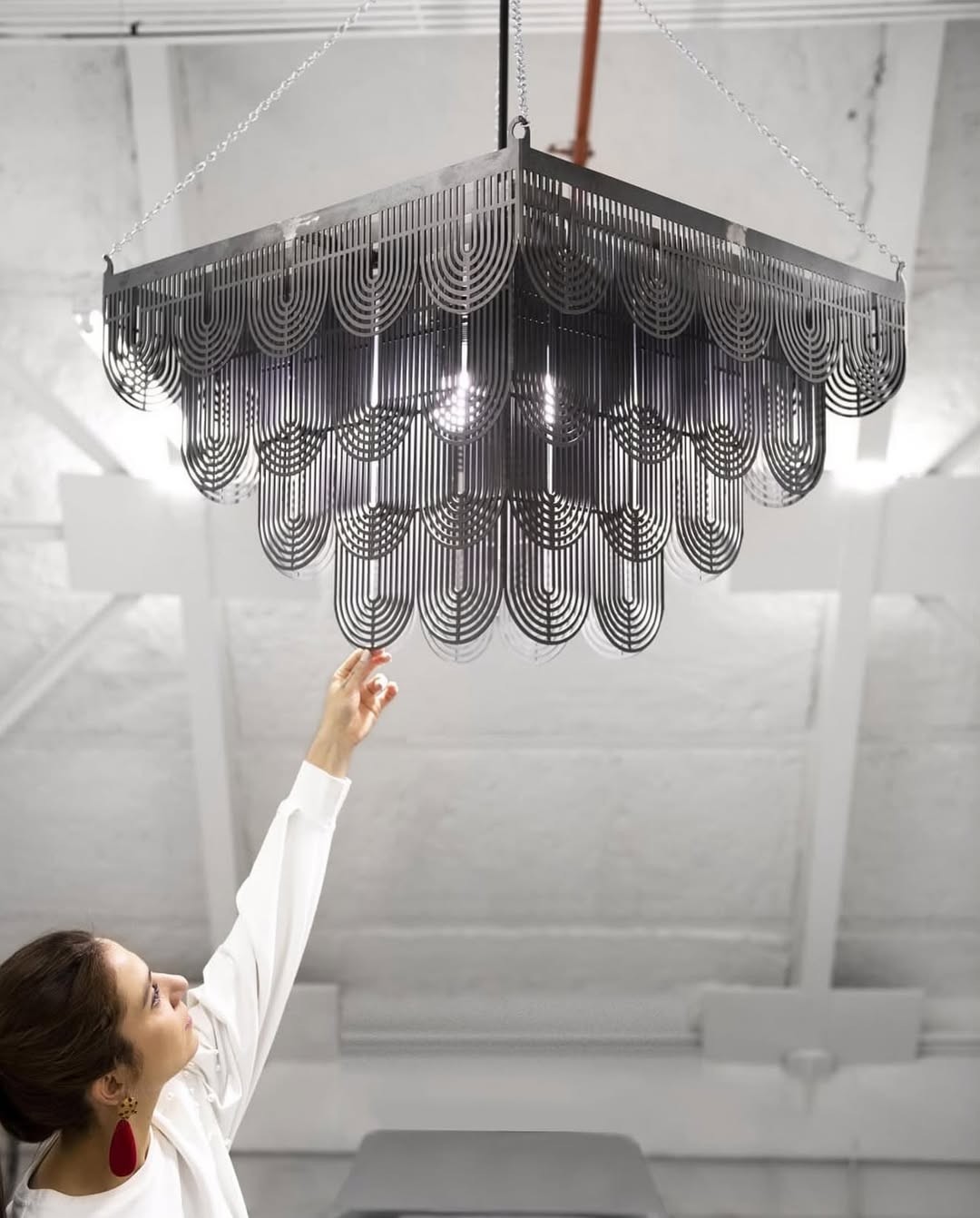
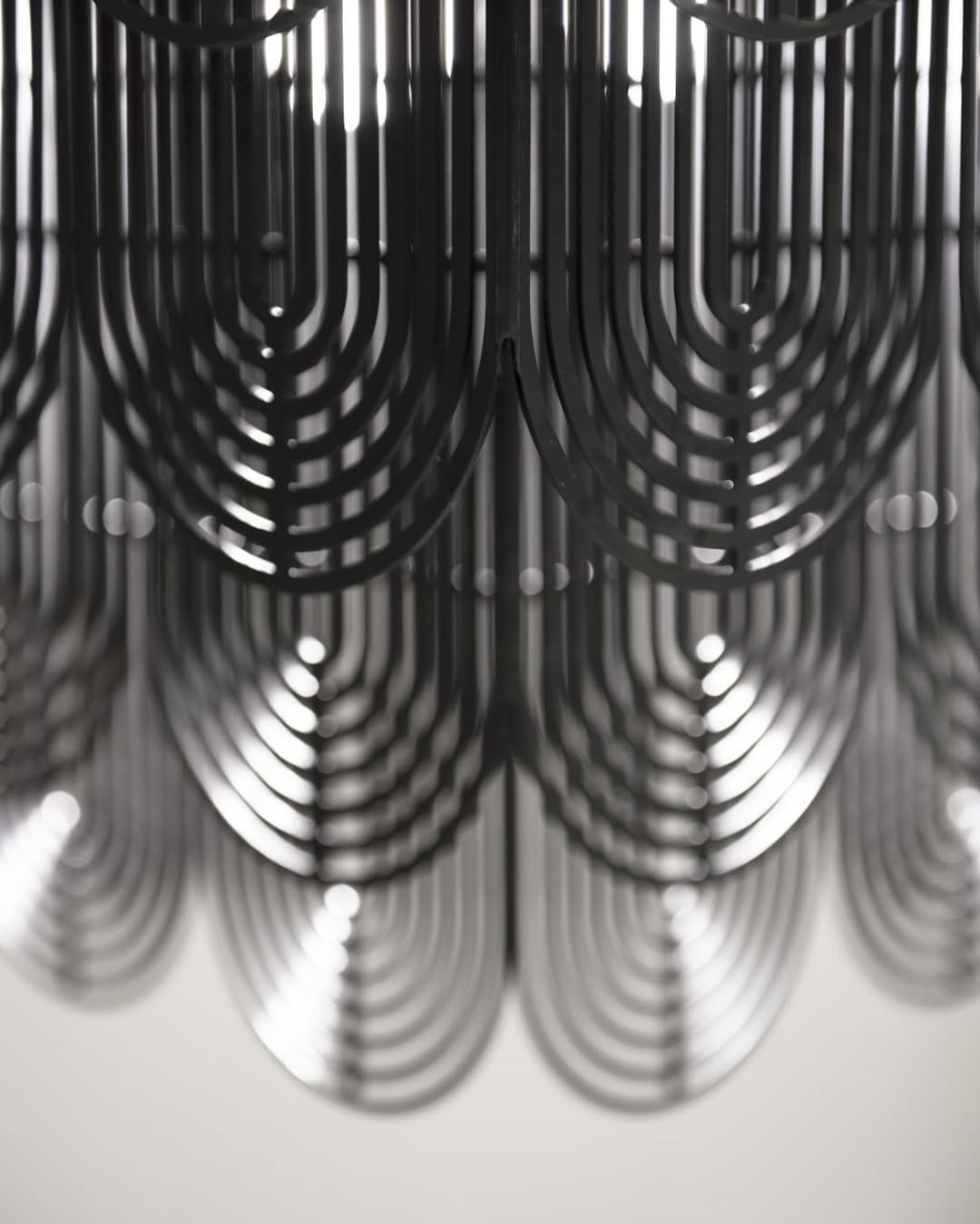
The Metal Ceremony Chandelier
Dimension : 75x75x48
Chaharof In Collaboration with: @r.a.n.d.o.m.studio
Photo: Courtesy of Chaharof By ph.design.photography
This metal chandelier was inspired by the SLAMP Ceremony Pendant Light by BRUNO RAINALDI. “The ceremony is an opulent lamp, an ode to femininity that conjures up the image of the brush of a skirt, a pearl choker, drapery on decoltè.
Chaharef’s website categorizes its work into familiar furniture typologies: bench, chair, pouf, mirror, lighting, and decorative accessories yet the result is anything but standard. Each category reveals a design lens that treats objects not as commodities, but as expressive artefacts that elevate space.
Benches and seating are perhaps the clearest expression of Chaharef’s material philosophy. These pieces of functional seating with sculptural lineage embody the play between comfort and formality. Seating becomes a statement, not merely an object to sit on.
Chairs and poufs often act as accents within interiors but at Chaharef they hold their own as focal pieces. A pouf here might suggest plush invitation, while a chair’s silhouette plays with archetypes minimal yet expressive.
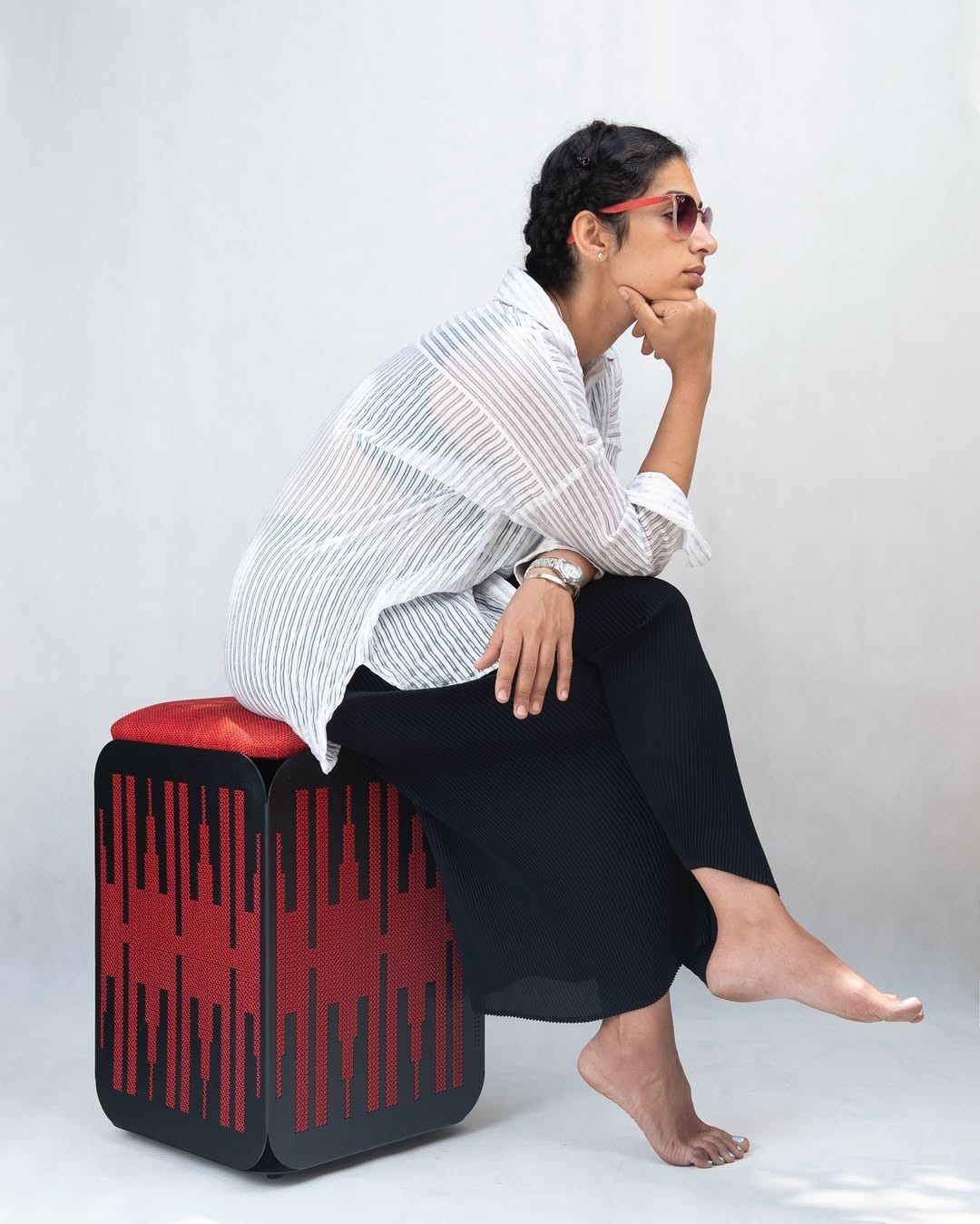
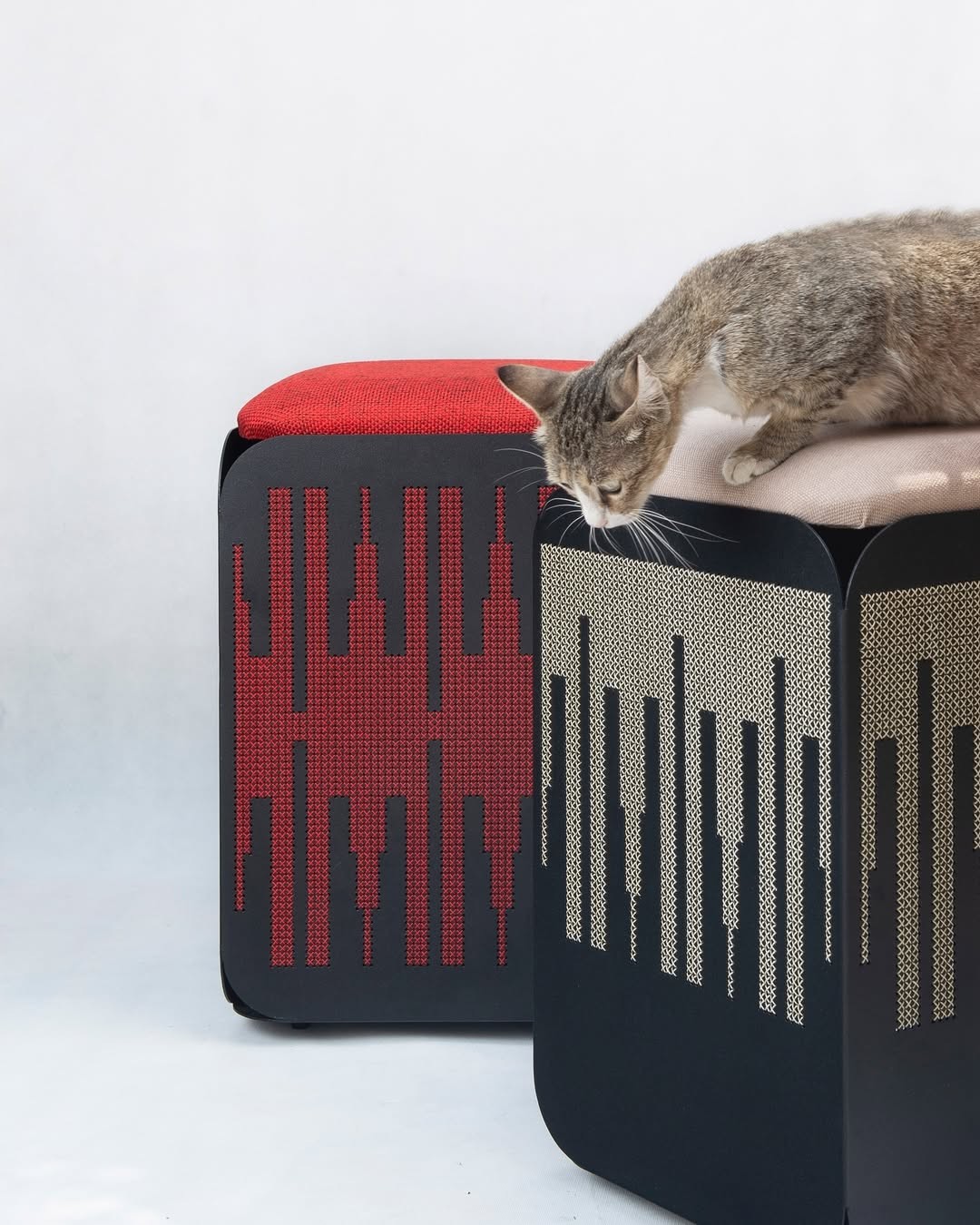
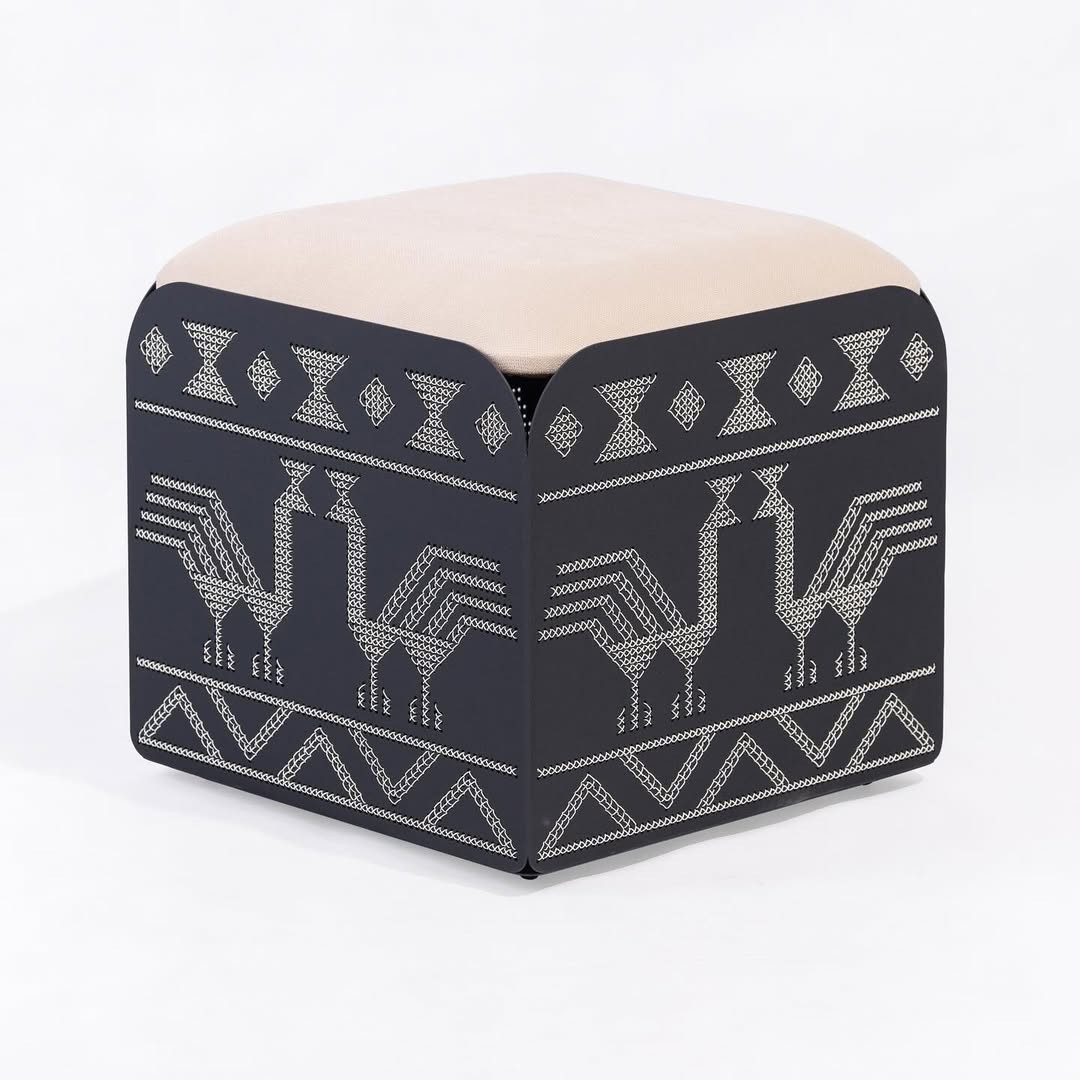
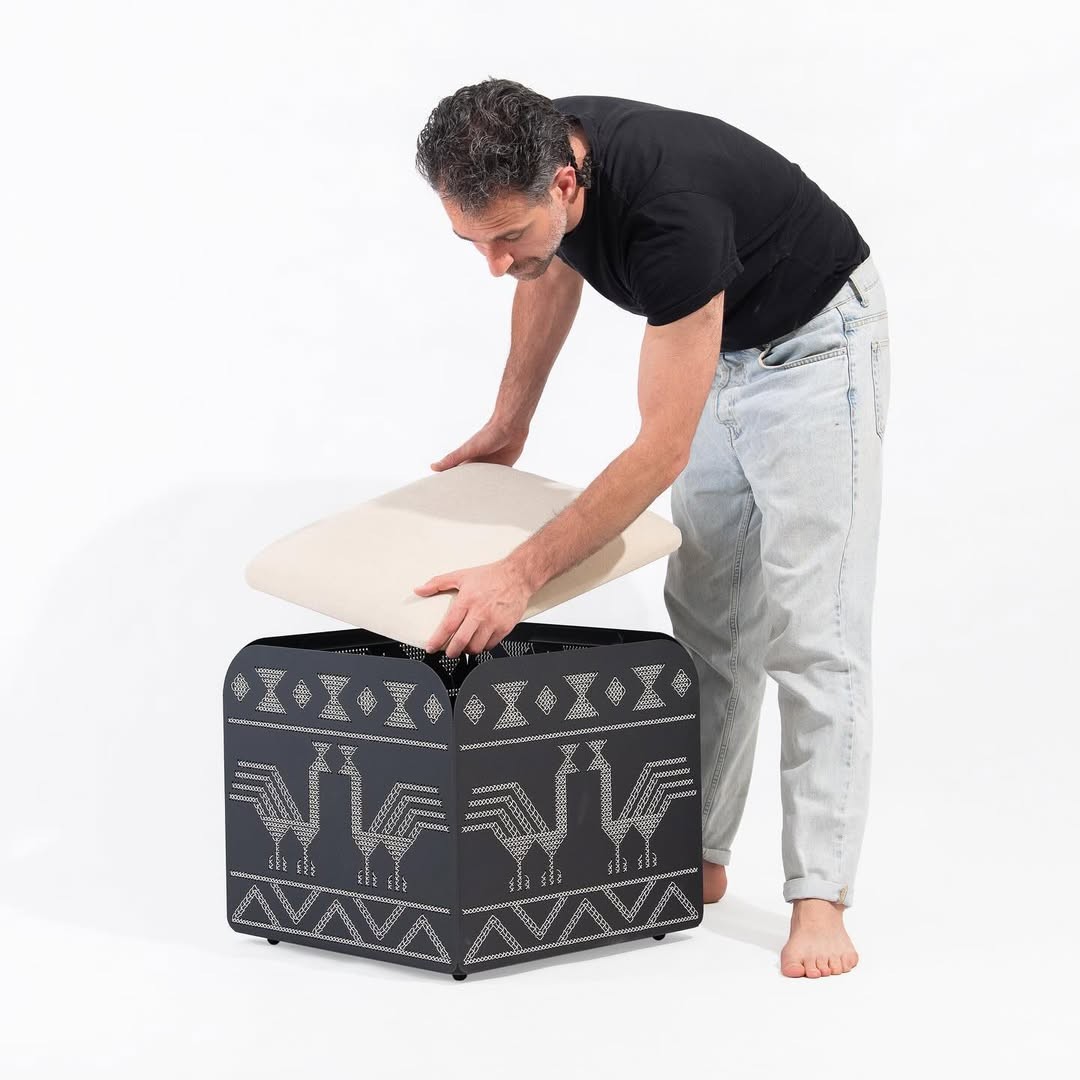
Choqa Pouf
Chaharof In Collaboration with: @r.a.n.d.o.m.studio
Photo: Courtesy of Chaharof By ph.design.photography
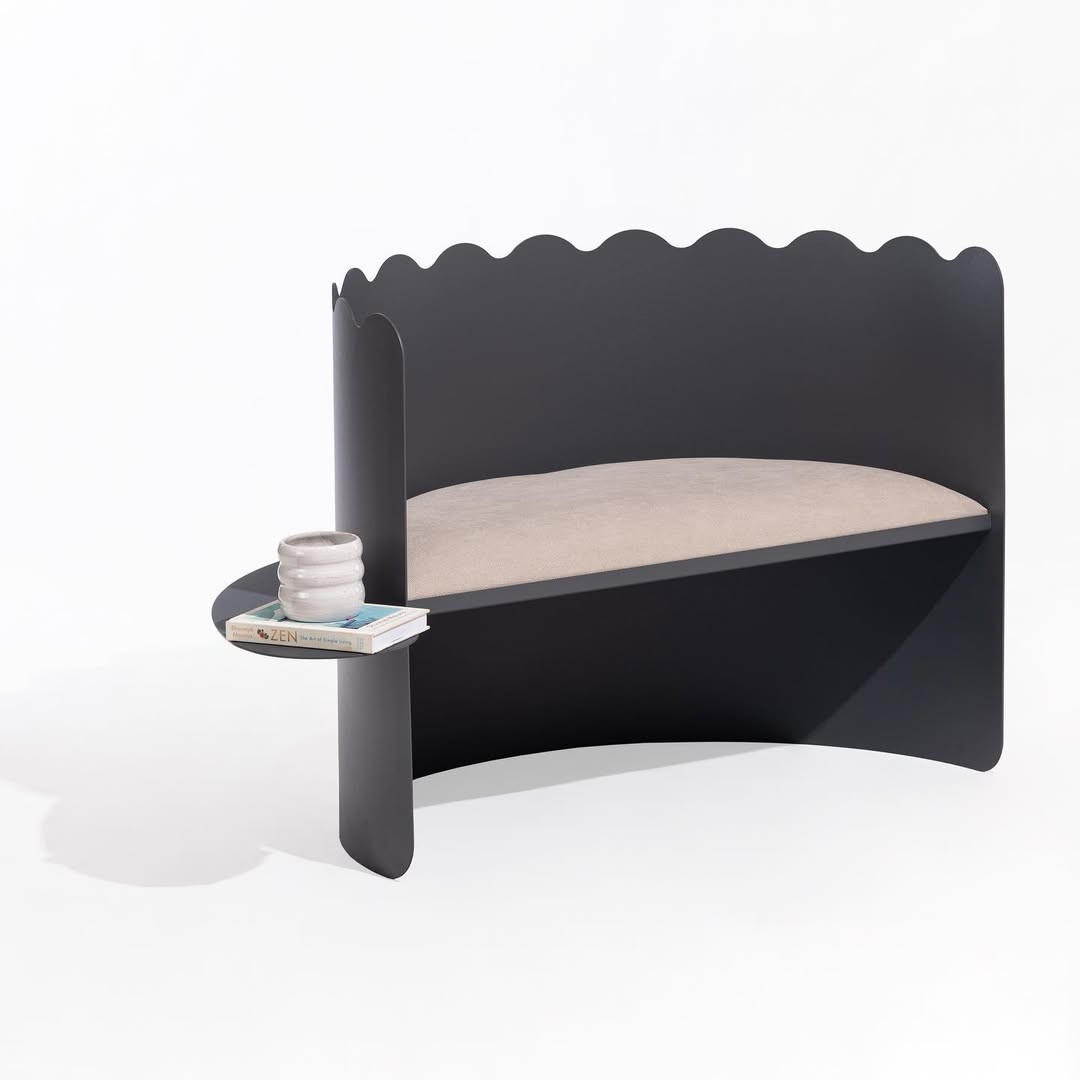
The Wave Loveseat
Dimensions: 100*80*45 cm
Material: Metal
Photo: Courtesy of Chaharof By ph.design.photography
Lighting installations, from floor lamps to chandeliers, extend Chaharef’s architectural ethos into vertical space. These are not mere sources of illumination but spatial sculptures, casting patterns of light and shadow that change throughout the day.
Mirrors and consoles further extend the studio’s aesthetic language where functional needs meet expressive design. Mirrors reflect both light and material narrative, while consoles stand as bridging objects between art and furniture.
Every category on Chaharef’s site reflects a careful curation of form and function, underpinned by a unified visual language of contrast and harmony.
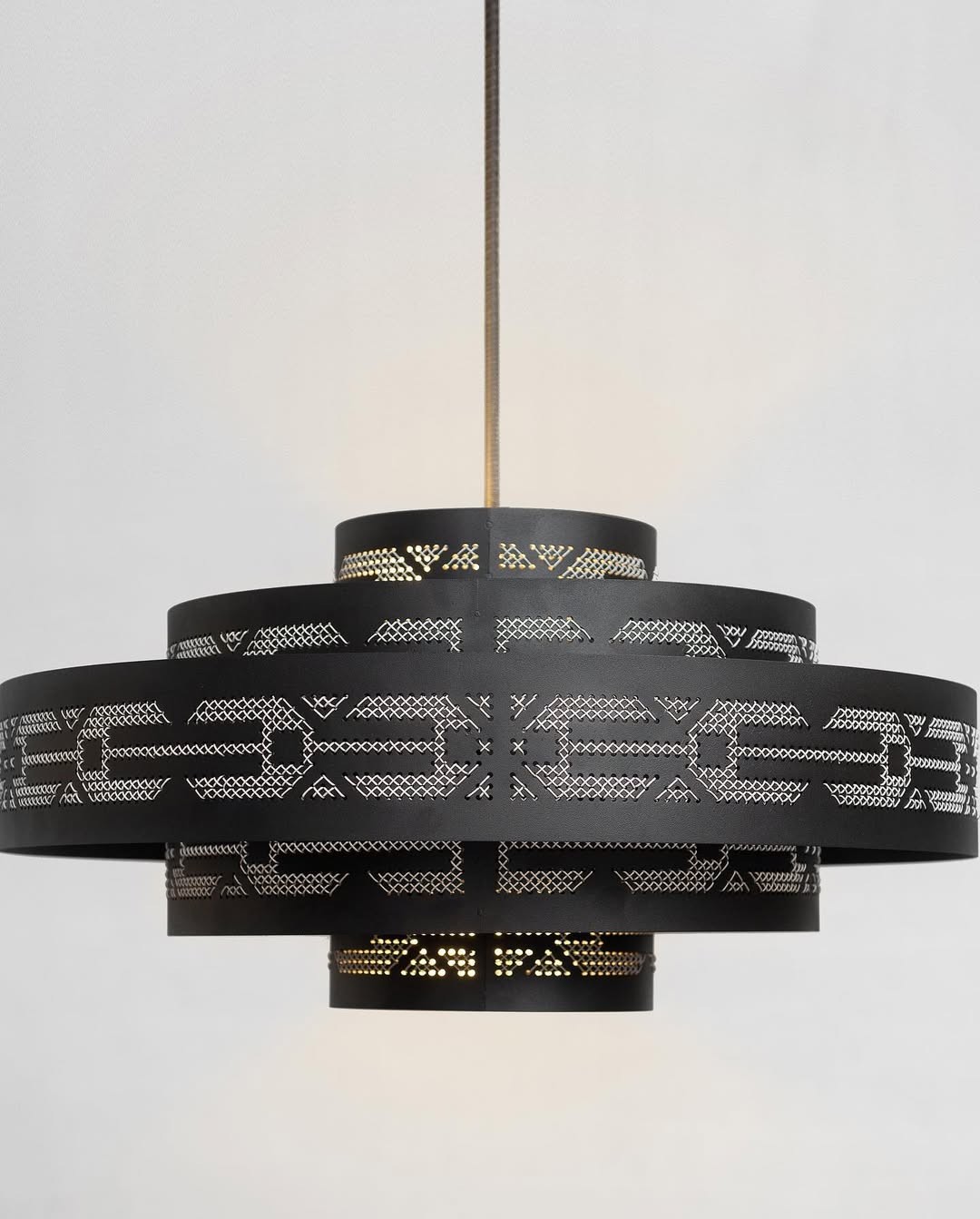
Scissors Floor Lamp & chandelier
Material: Metal, stone and thread
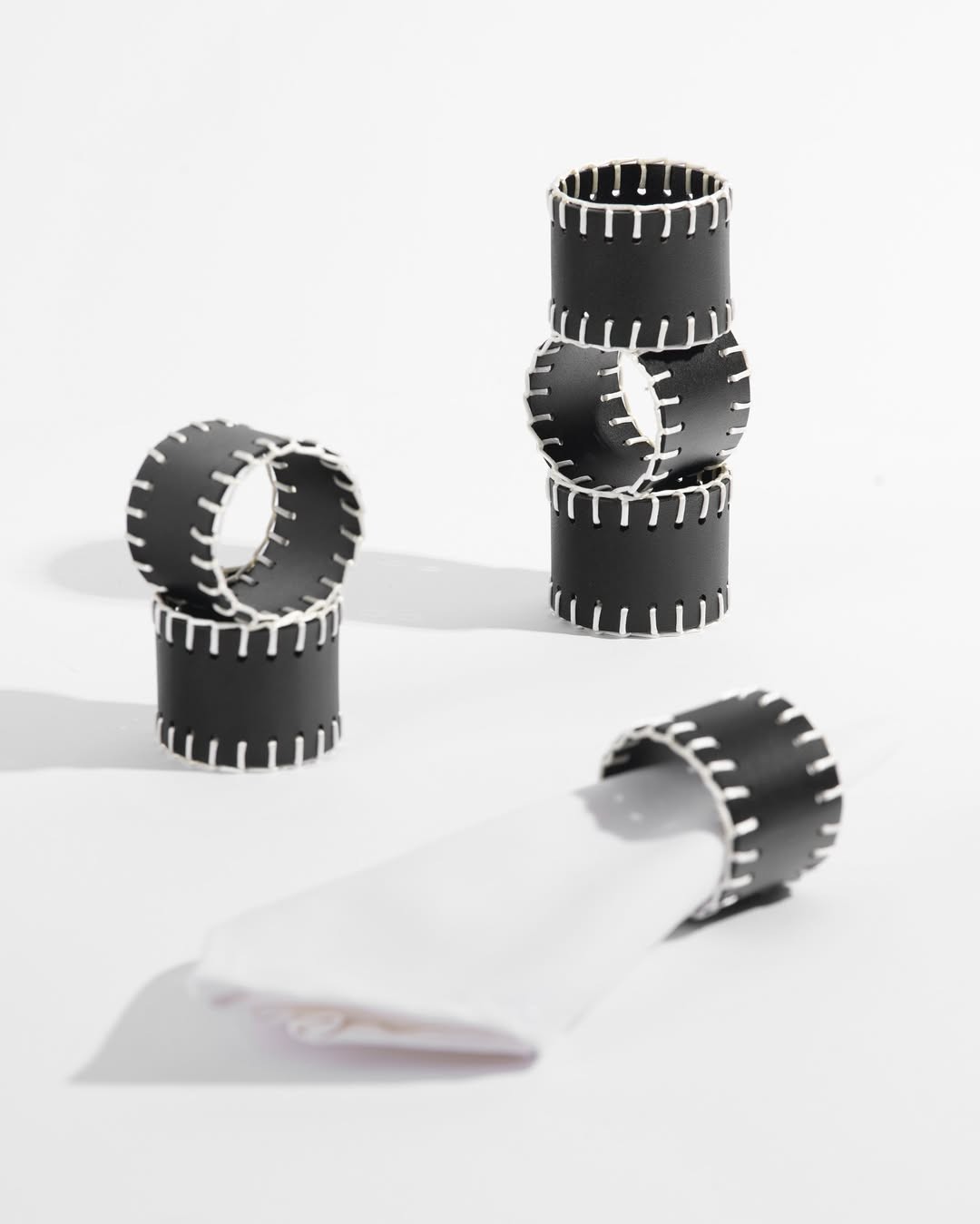
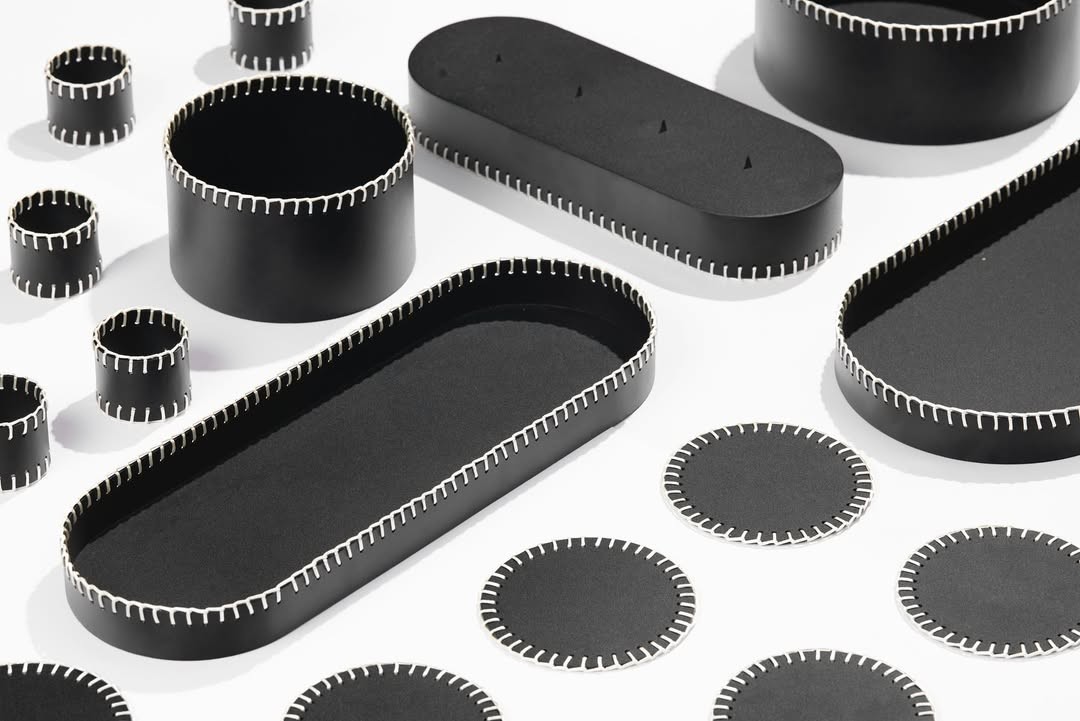
Edge Trays
Material : Metal
The “EDGE”collection consists of,Trays, Coaster, Napkin ring, Bowl, Candleholder
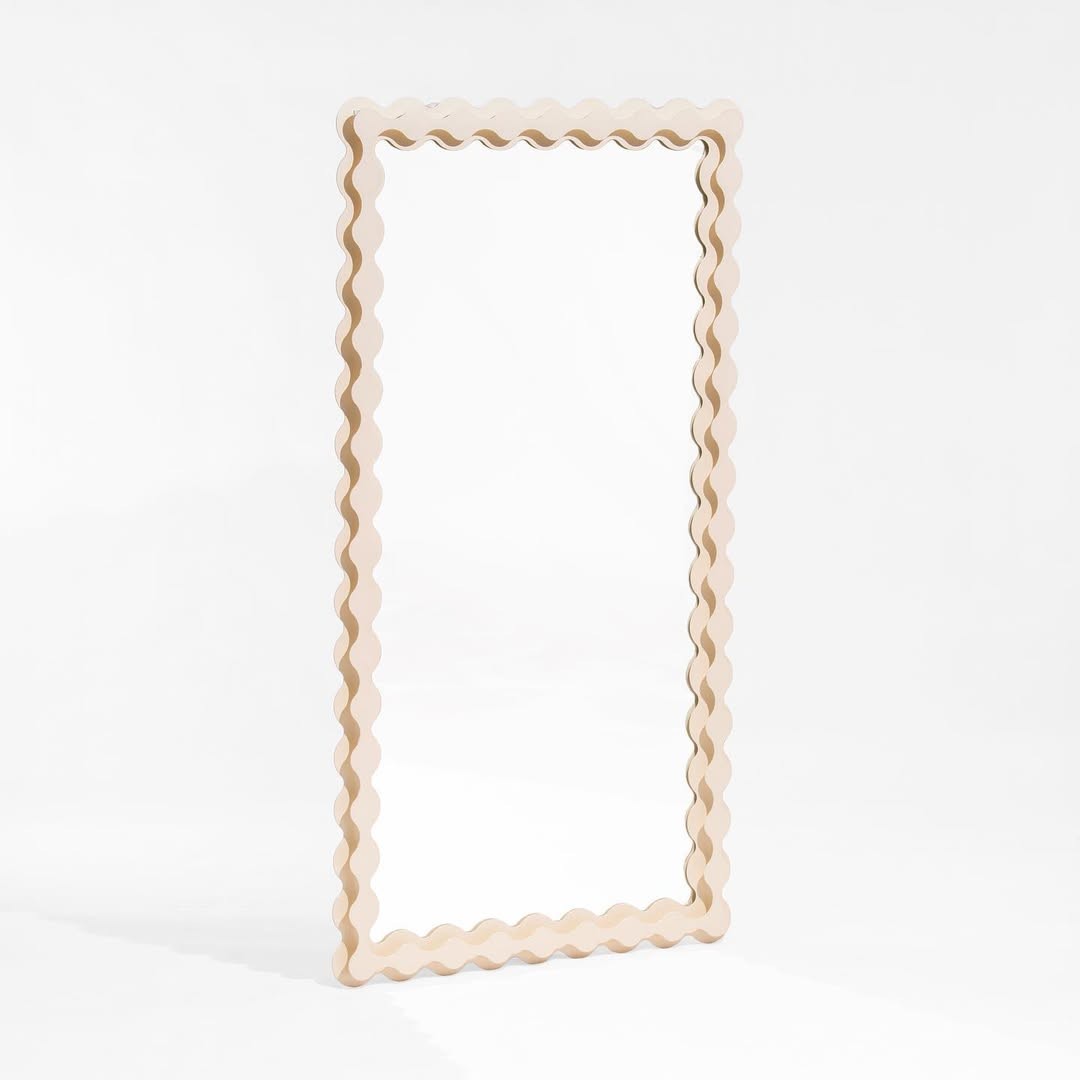
The Wave Mirror
Material: Metal
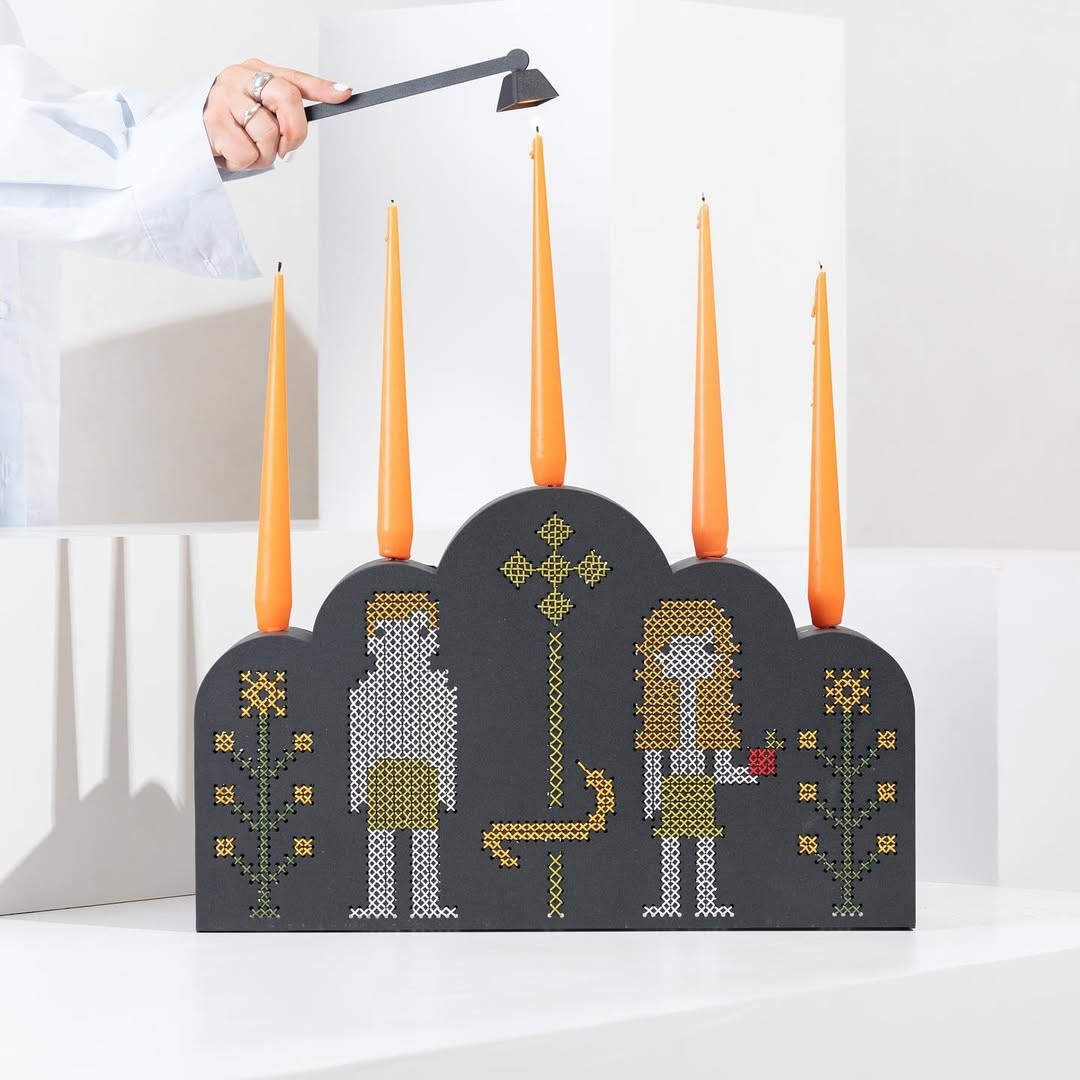
Adam & Eve CandleHolder, NeedleWork Version
Photo: Courtesy of Chaharof By @pooriahatami.photography and ph.design.photography
Beyond furniture and interior objects, Chaharef draws inspiration from Persian literature and mythology, particularly the Shahnameh. The studio incorporates motifs, patterns, and narratives from the epic tales of heroes, kings, and mythical creatures into its design language, bridging historical storytelling with contemporary aesthetics. This approach transforms functional objects into cultural artifacts, where each piece resonates with Persian identity while maintaining modern sensibilities. By referencing the Shahnameh, Chaharef not only honors Persian heritage but also adds a unique narrative dimension to its custom furniture and design pieces.
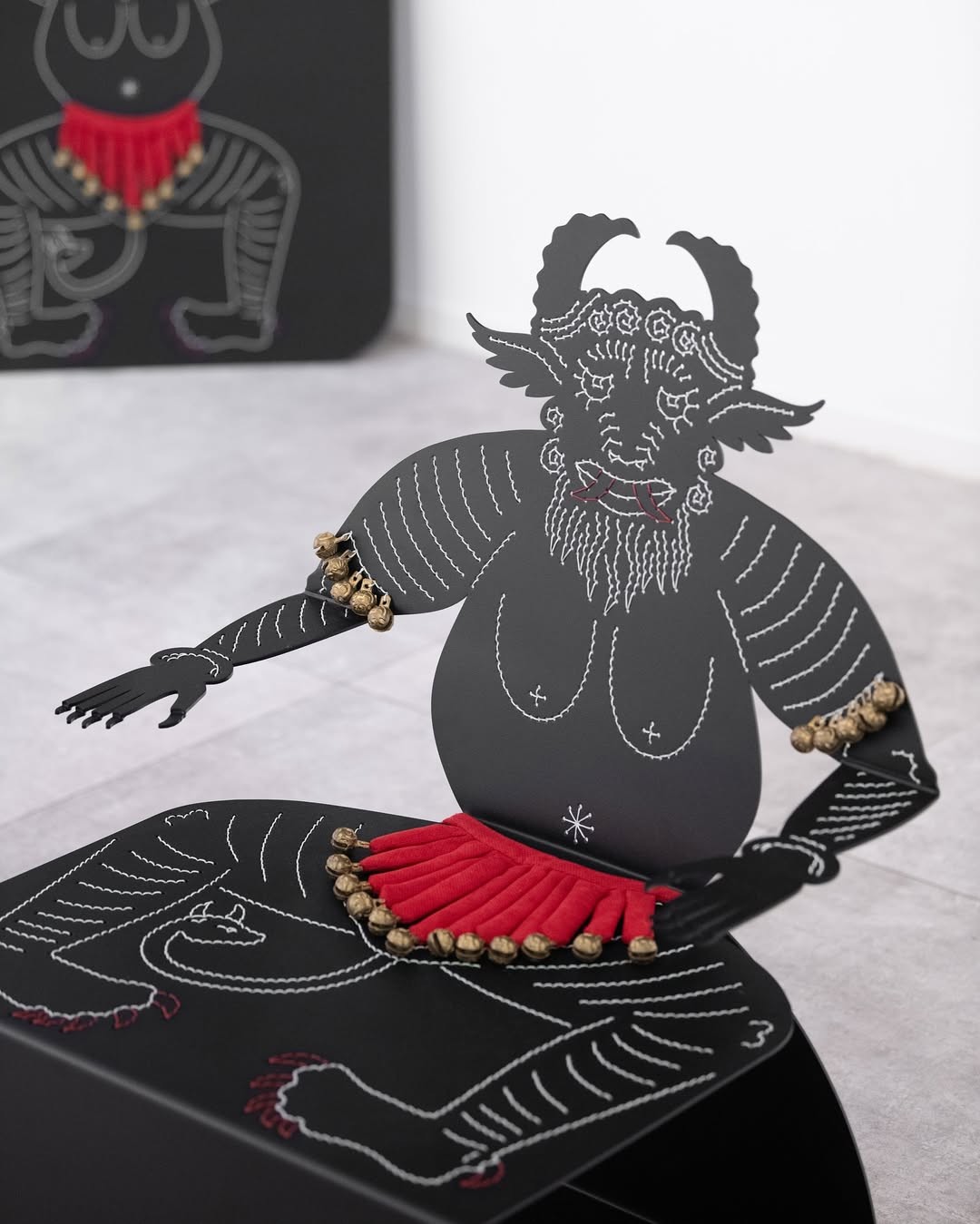
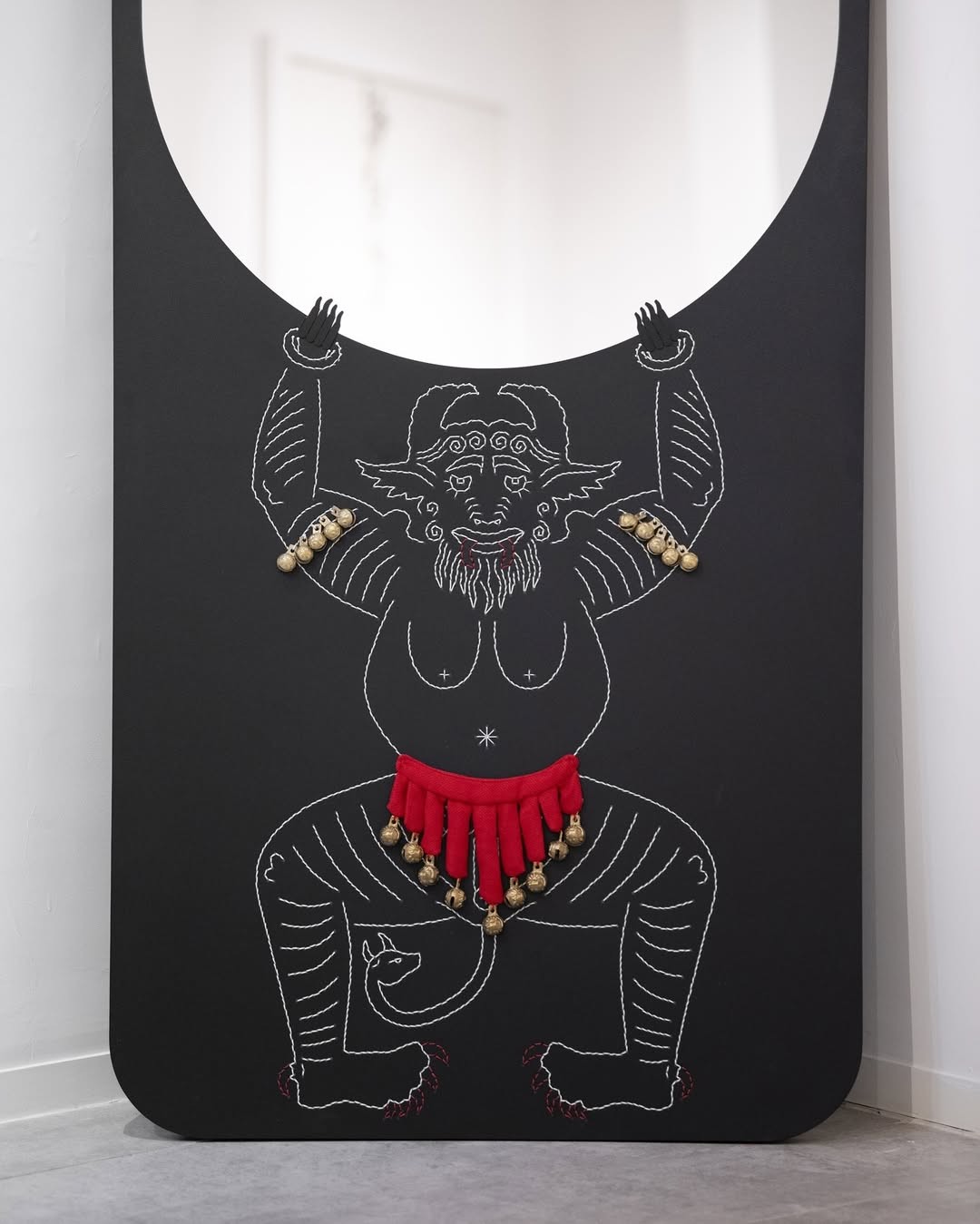
DIV Mirror
Dimensions:180*76 CM
Material: Metal & Thread
Photo: Courtesy of Chaharof By ph.design.photography
While Chaharef’s visual language is contemporary, there is a subtle resonance with Persian artistic sensibilities. Persian art from carpet weaving to metalwork and architectural ornament has long cherished intricate patterns, narrative depth, and harmony between elements.
Although Chaharef doesn’t replicate traditional motifs in overt ways, it embodies the spirit of Persian craft, a deep appreciation of balance, rhythm, and material dialogue. In this sense, their work feels culturally rooted yet globally relevant, offering a bridge from local heritage to international contemporary design.
This dual relevance is especially important in today’s global design conversation, where authenticity not imitation resonates most powerfully. Chaharef’s pieces are recognizably modern but carry a subtle cultural signature, making them compelling to audiences both inside and outside Iran.
Chaharef’s commitment to custom design suggests a view of furniture as an experience, not just a product.
Customization implies:
Attuning design to site and context
Respecting individual client needs
Extending the life of an object beyond trends
This philosophy aligns with a growing global shift in design culture toward slow design, longevity, sustainability, and meaningful creation. When furniture is crafted with intention, it becomes part of life’s narrative rather than a disposable asset.
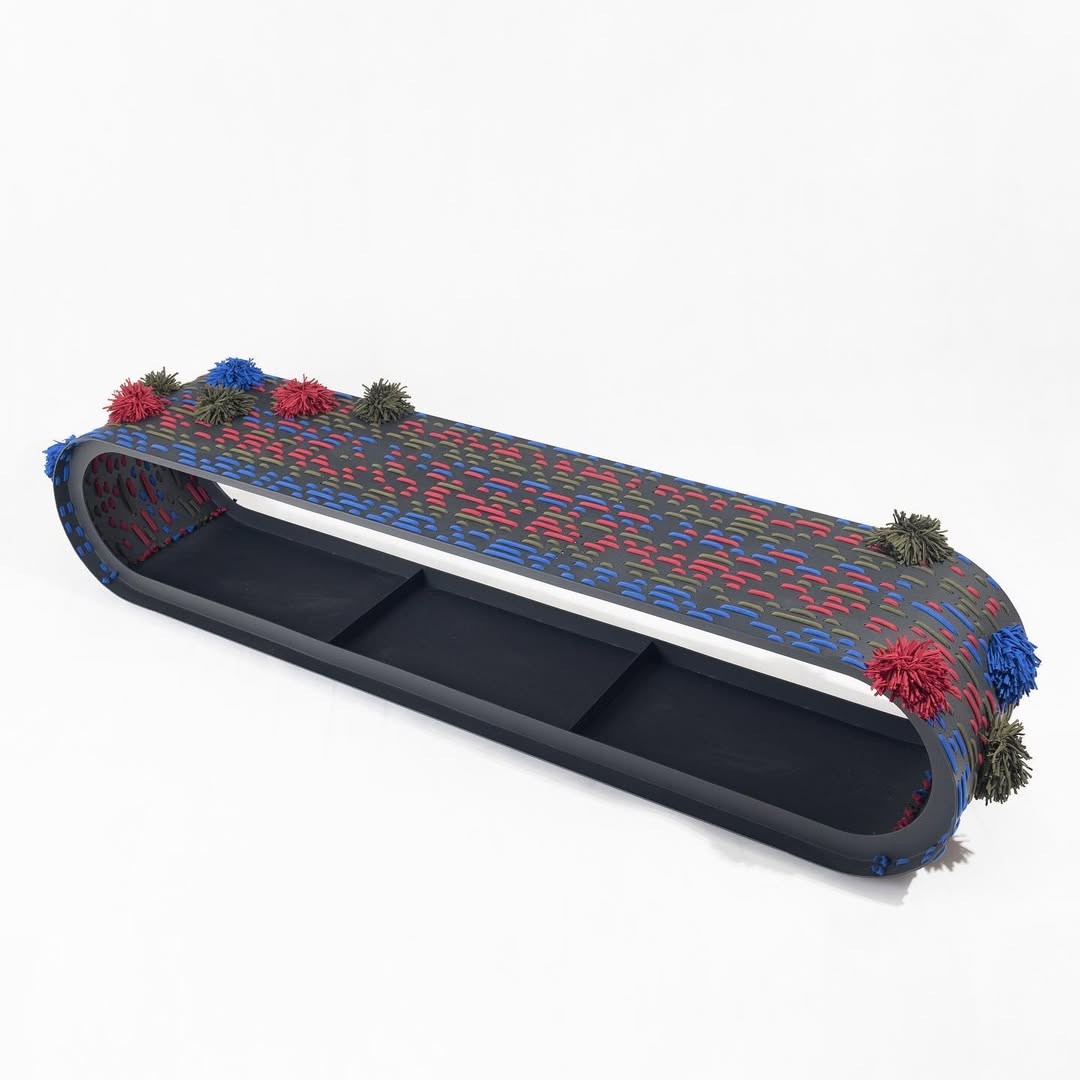

The Moss Bench
Dimensions: 200*40*42
Material: Metal & Thread
Photo: Courtesy of Chaharof By ph.design.photography
MOSSES are best known for those species that carpet woodland and forest floors , Providing a sense of calmness, moss is also crucial in maintaining and nurturing the ecosystem. This plant ally can be used as a symbol of abundance, growth, resilience, and tenacity.
Within the broader discourse of contemporary design, Chaharef occupies a position defined less by trend and more by authorship. Persian visual culture has historically manifested through textile mastery, architectural ornament, and geometric discipline. What Chaharef accomplishes is not the preservation of these traditions, but their transformation, relocating them from surface decoration into spatial presence.
Its work resists easy categorization. Neither purely collectible art nor conventional furniture, each piece functions as a calibrated architectural intervention. Structure is treated as narrative, material as language, and detail as intention. For collectors and interior architects seeking objects that shape atmosphere rather than simply occupy it, Chaharef offers forms that command space with quiet authority.
More significantly, the studio contributes to a broader redefinition of cultural design in a global context. At a time when many practices dilute identity for universality, Chaharef demonstrates that specificity can be strength. It proves that heritage, when distilled through rigor and restraint, can generate work that is both locally grounded and internationally resonant.
In an era saturated with repetition, Chaharef asserts clarity. Rooted in Persia’s material intelligence yet articulated through contemporary spatial thinking, the studio stands not between past and future, but within an ongoing continuum. Its work does not merely reference culture, it evolves it.
Written by Zara Saberi
Research and references are used for contextual accuracy.