
|
EN
Subscribe to our Newsletter
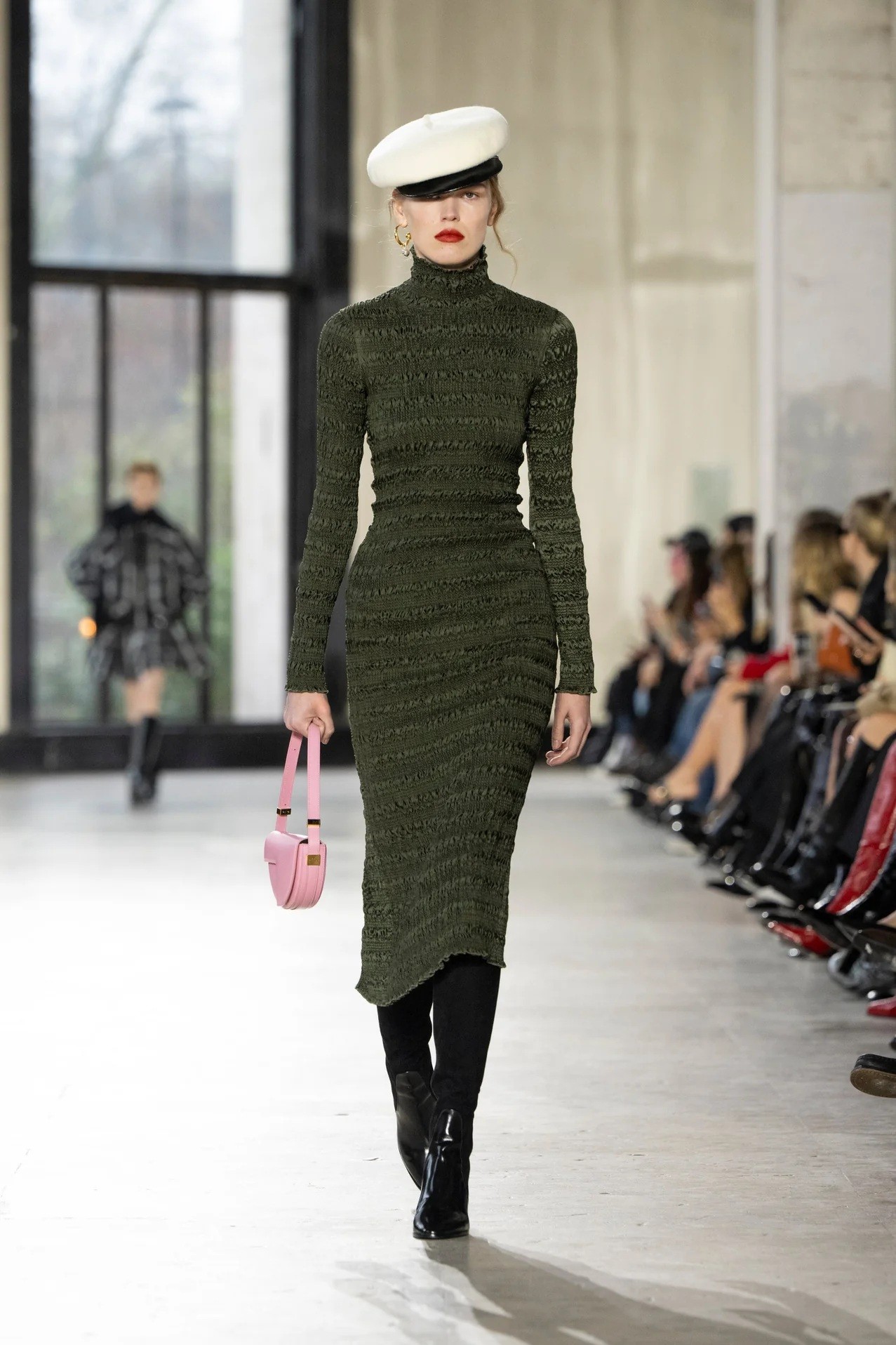
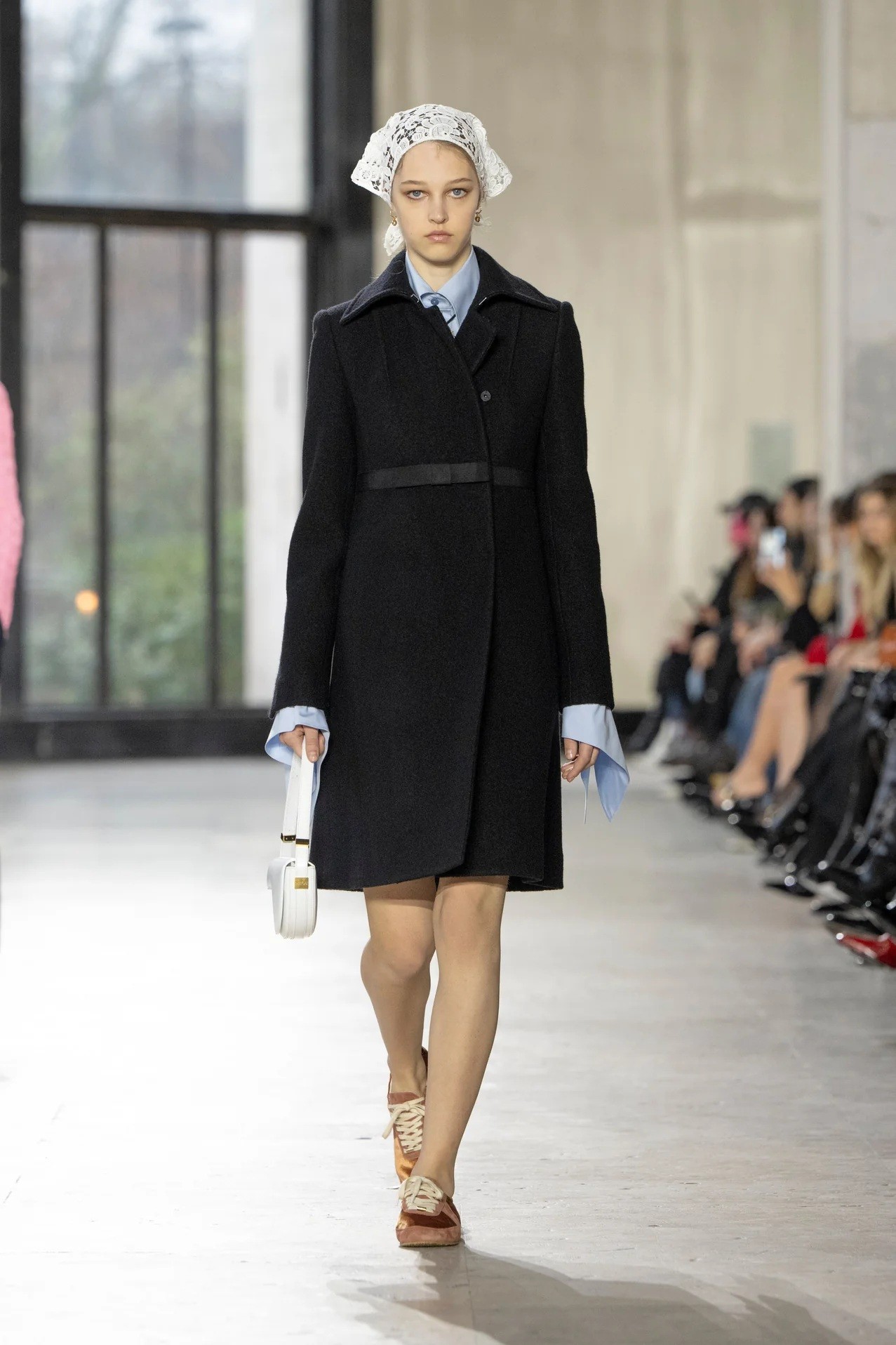
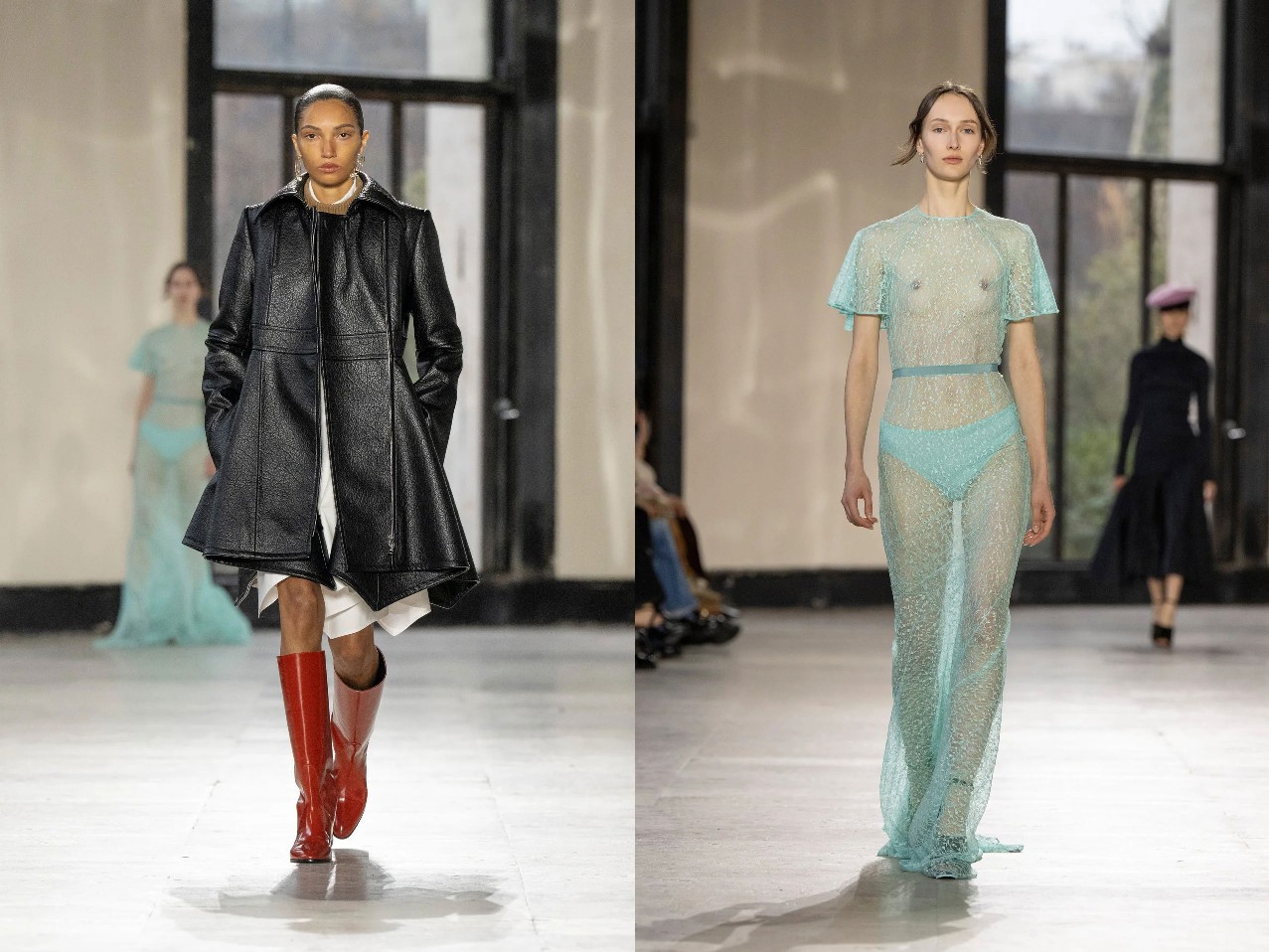
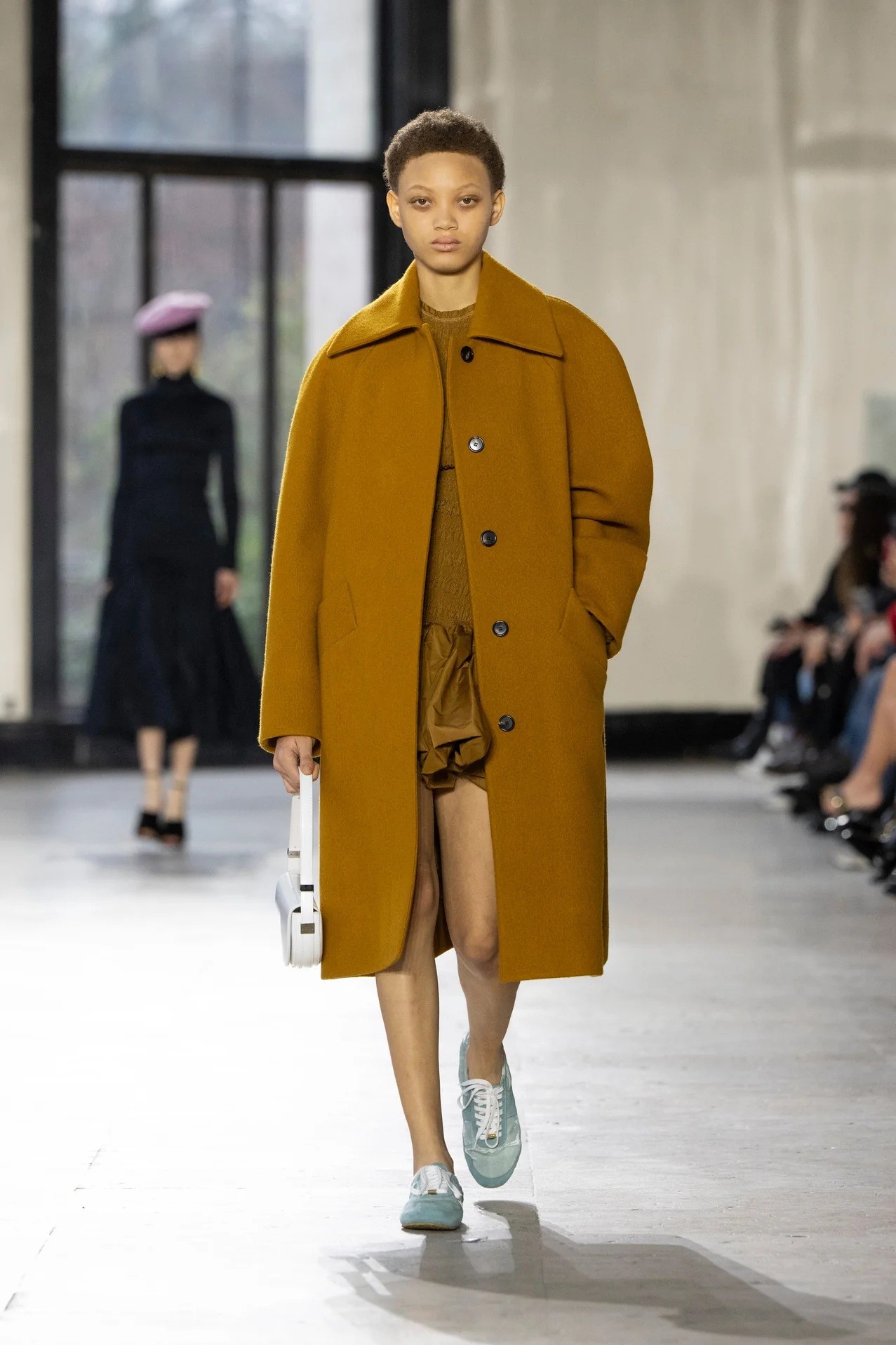
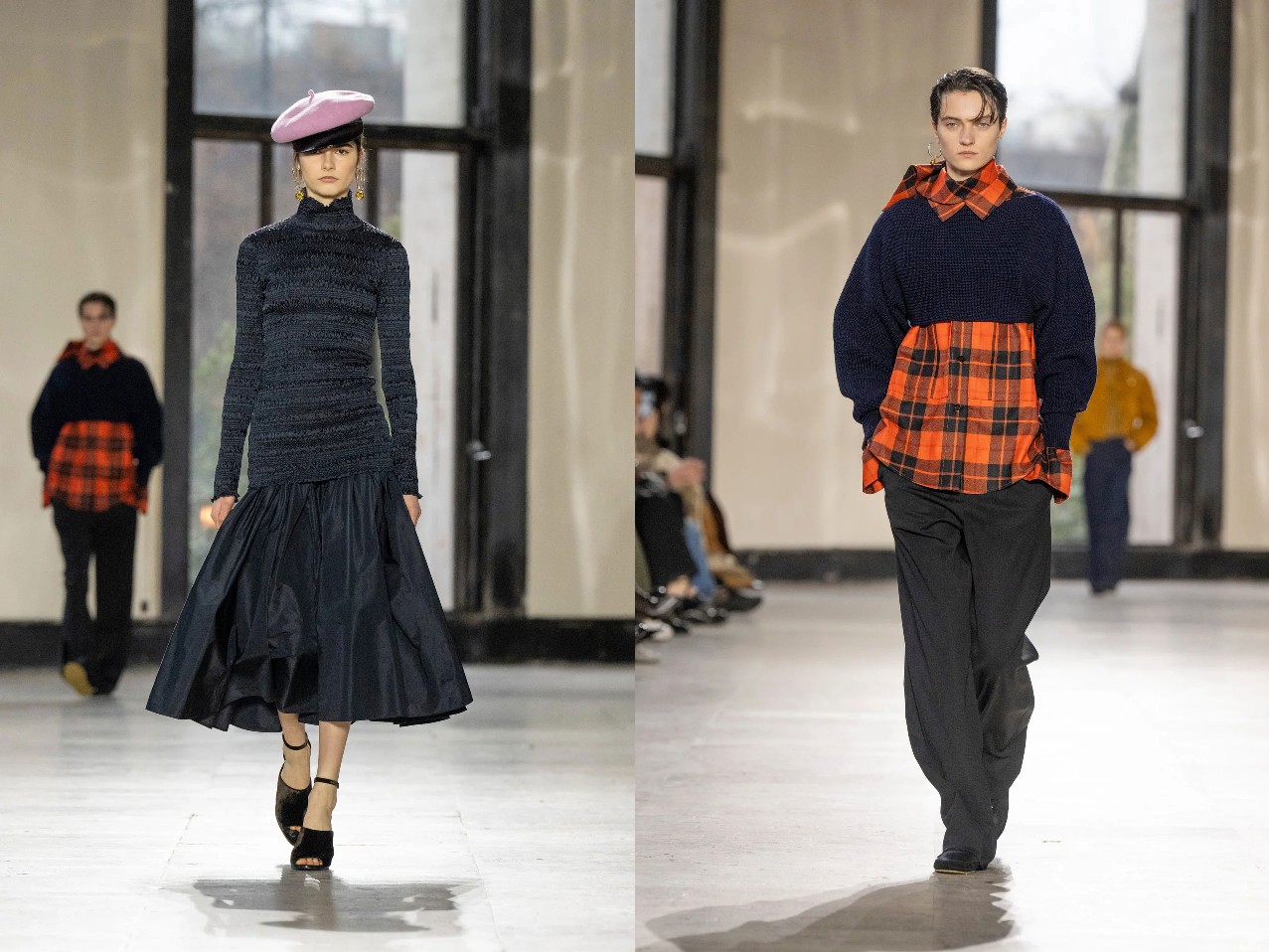
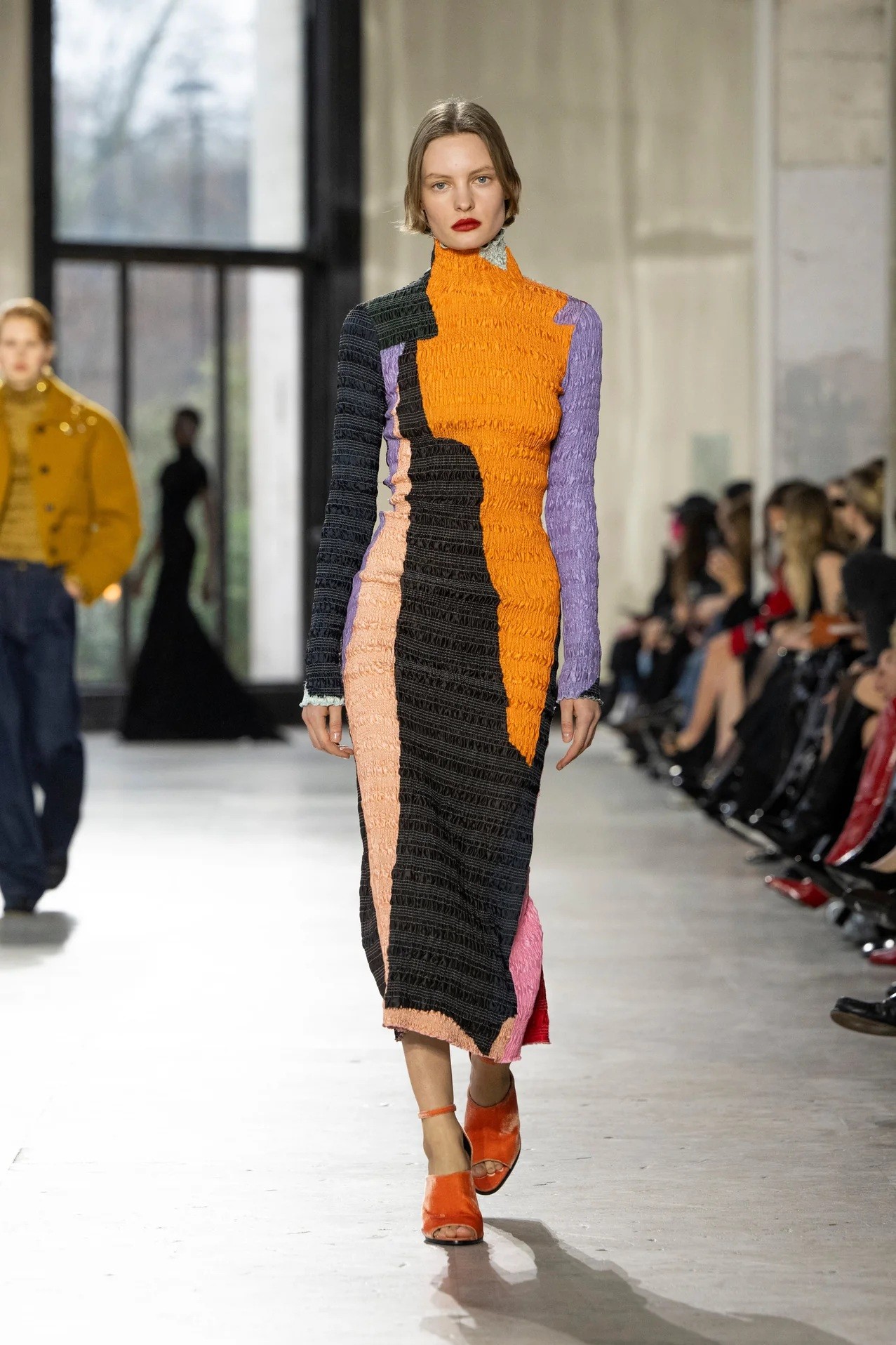
Patou Fall/Winter 2026–2027 reimagines modern femininity through adaptability and diversity. Guillaume Henry merges knitwear, denim, medieval-inspired color palettes, and versatile silhouettes to dissolve the boundary between daywear and eveningwear.
By the Editorial Staff
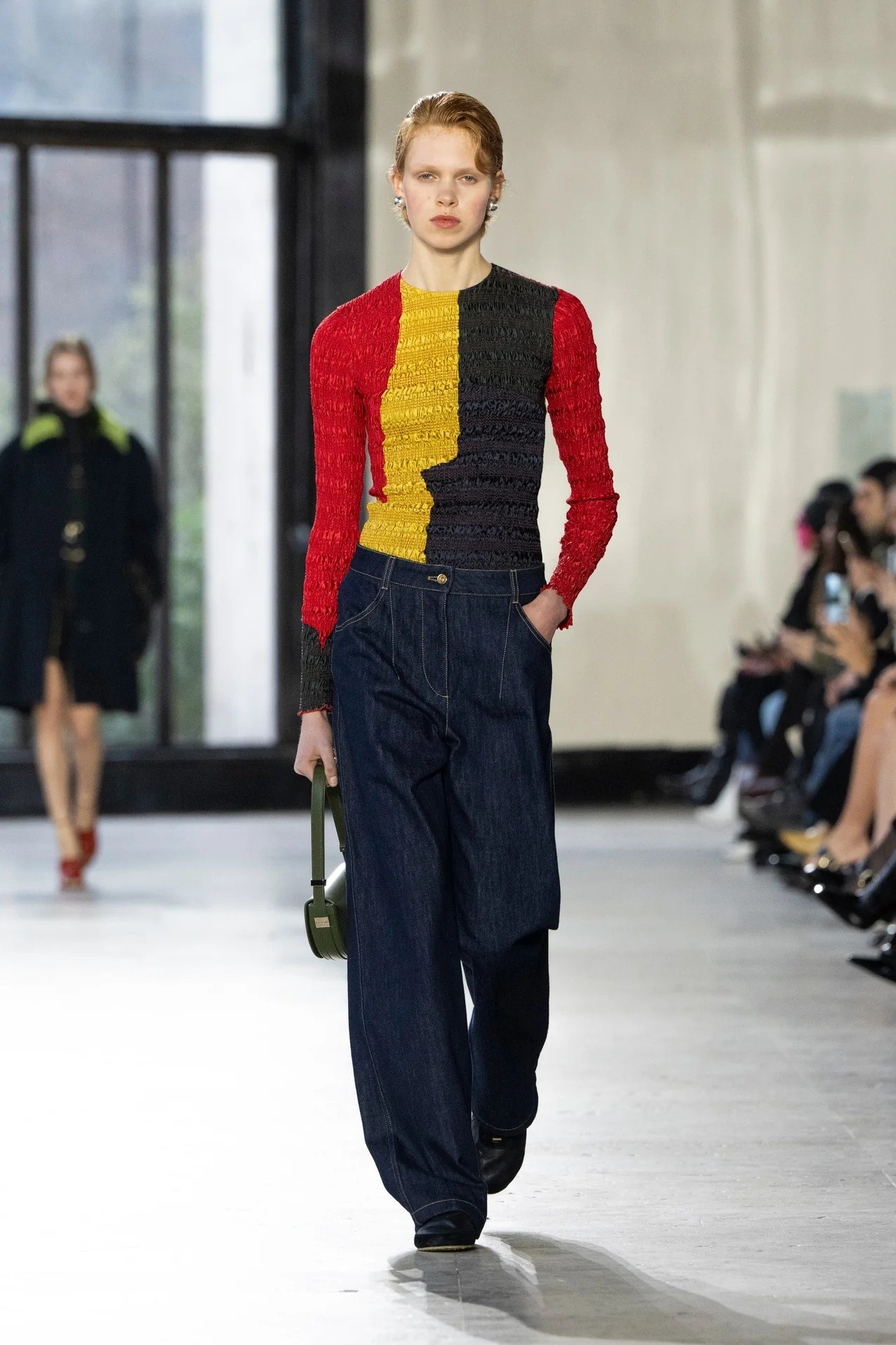
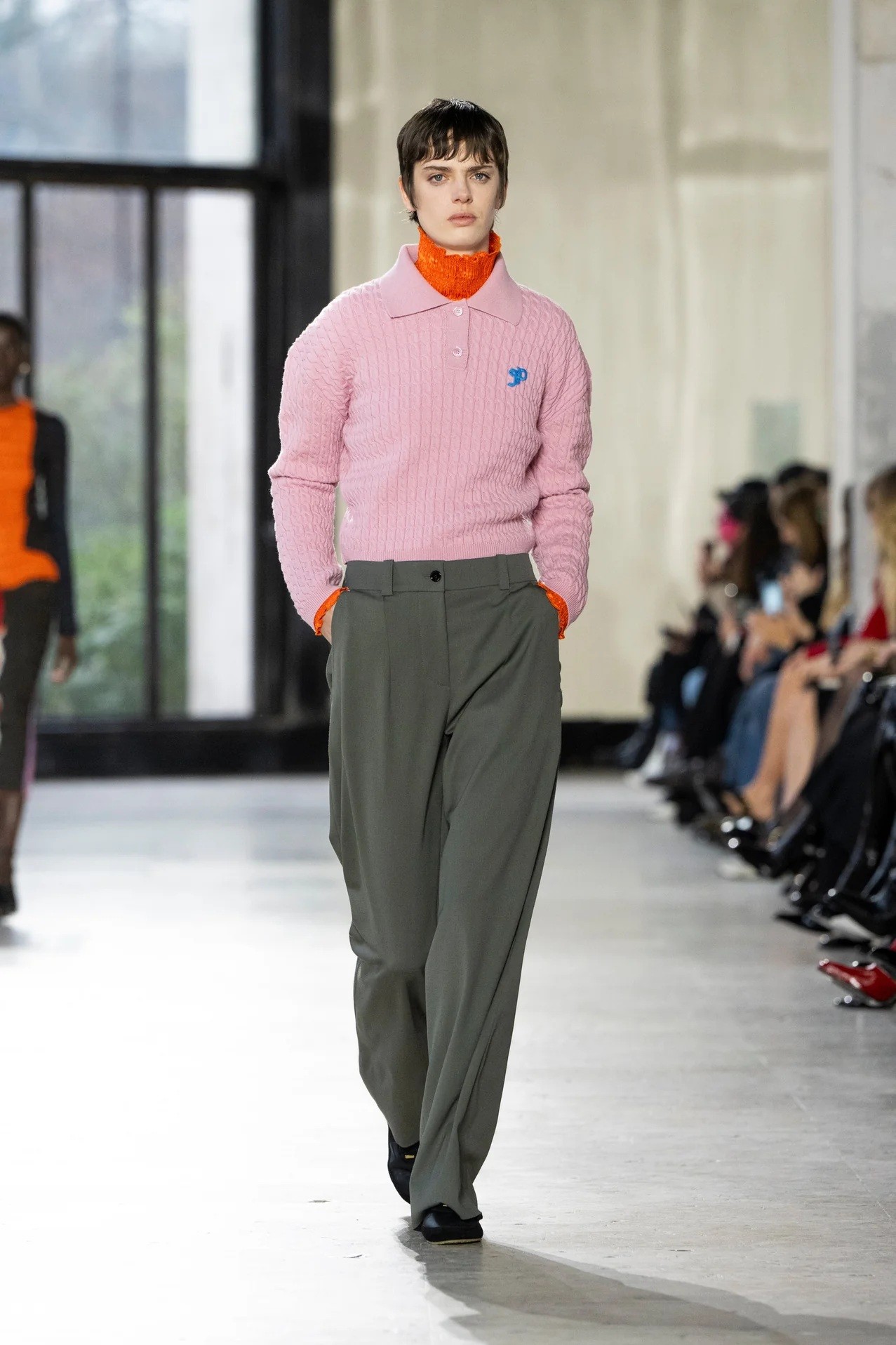
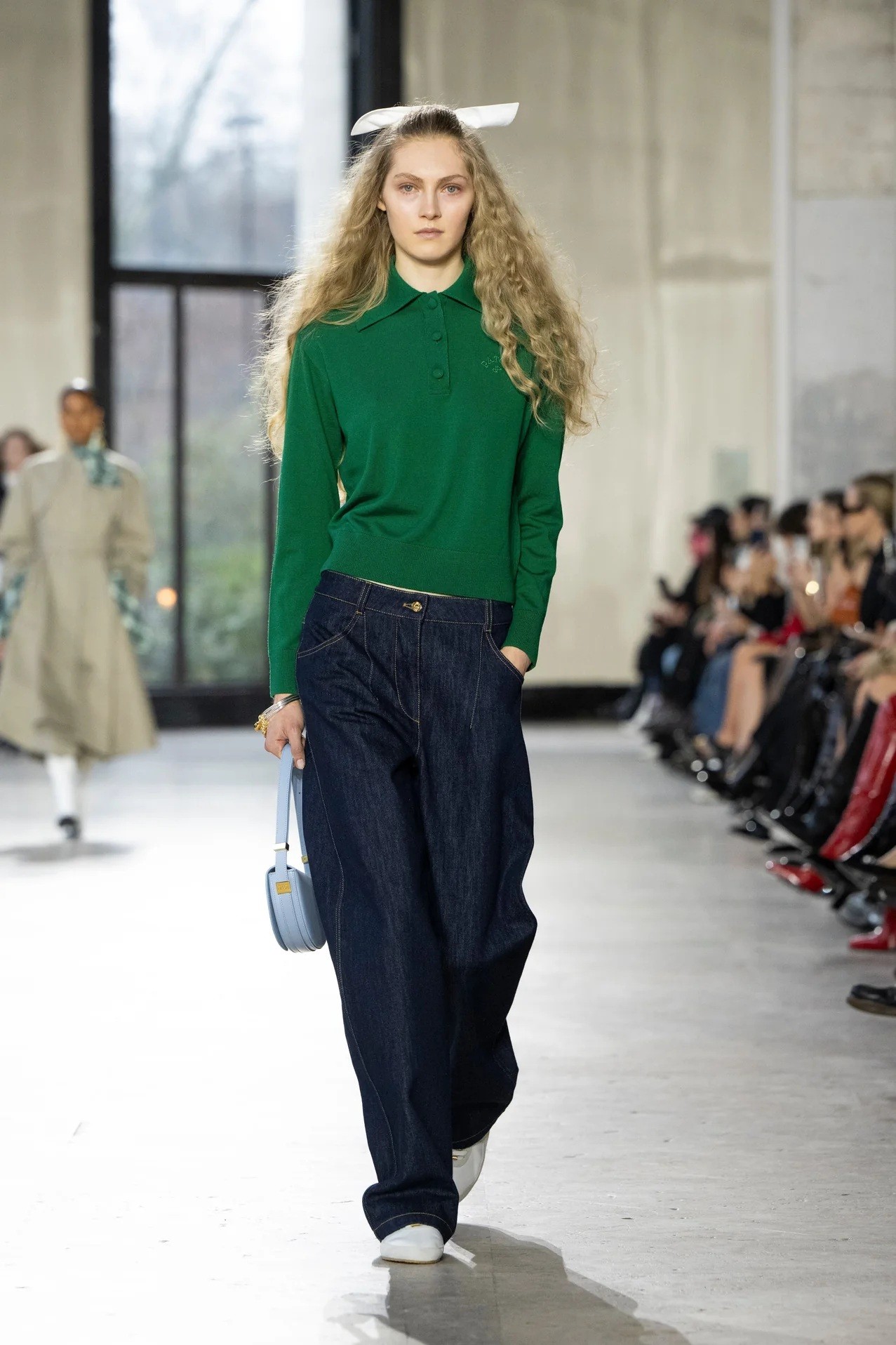
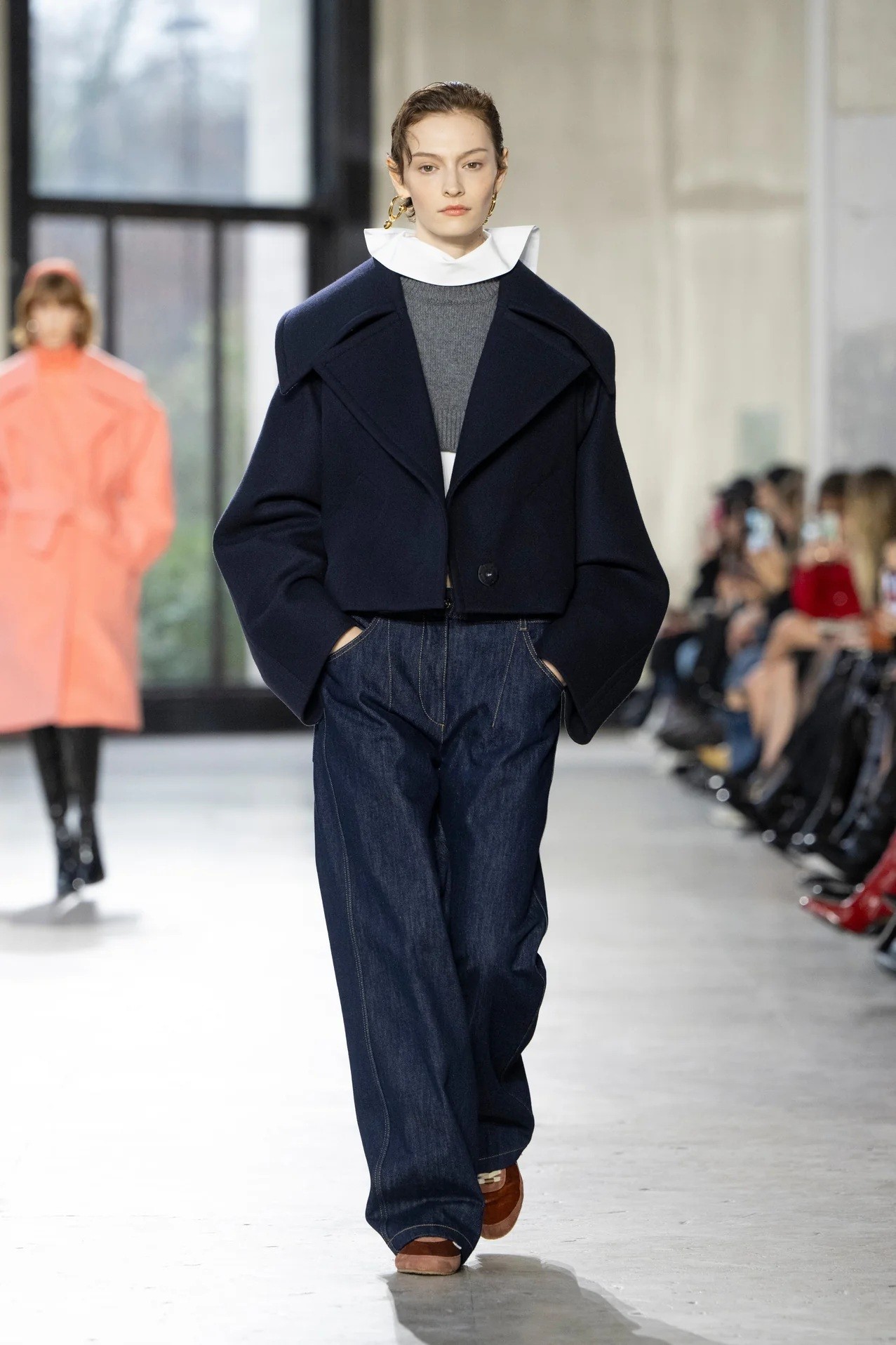
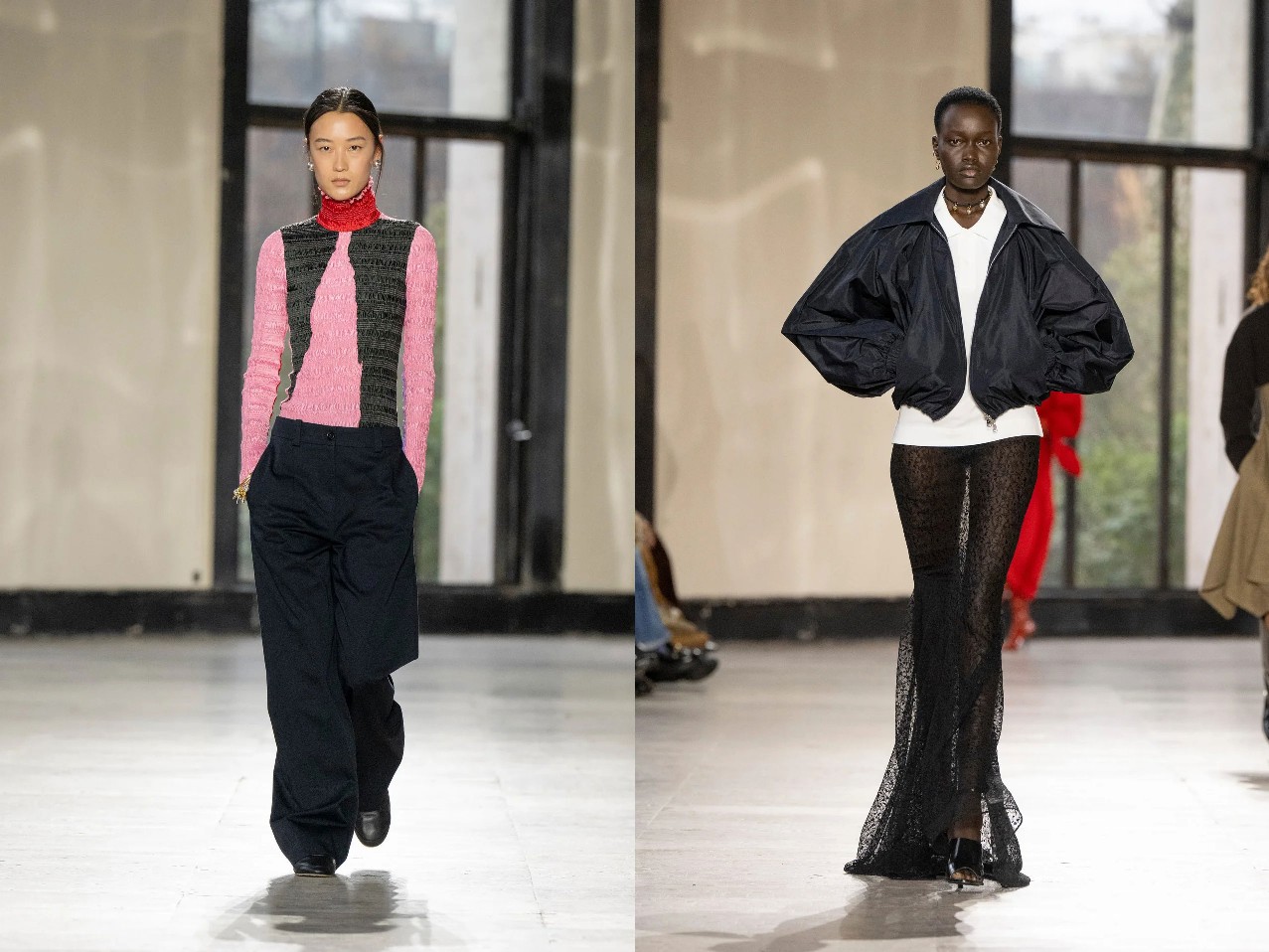
For Fall-Winter 2026–2027, presented during Paris Fashion Week, Guillaume Henry expanded the vocabulary of Patou by embracing all facets of the house at once. Instead of centering the collection around a single heroine, Henry celebrated plurality, spotlighting not only romantic evening silhouettes but also commercially strong categories such as knitwear and denim, grounding the collection in everyday reality.
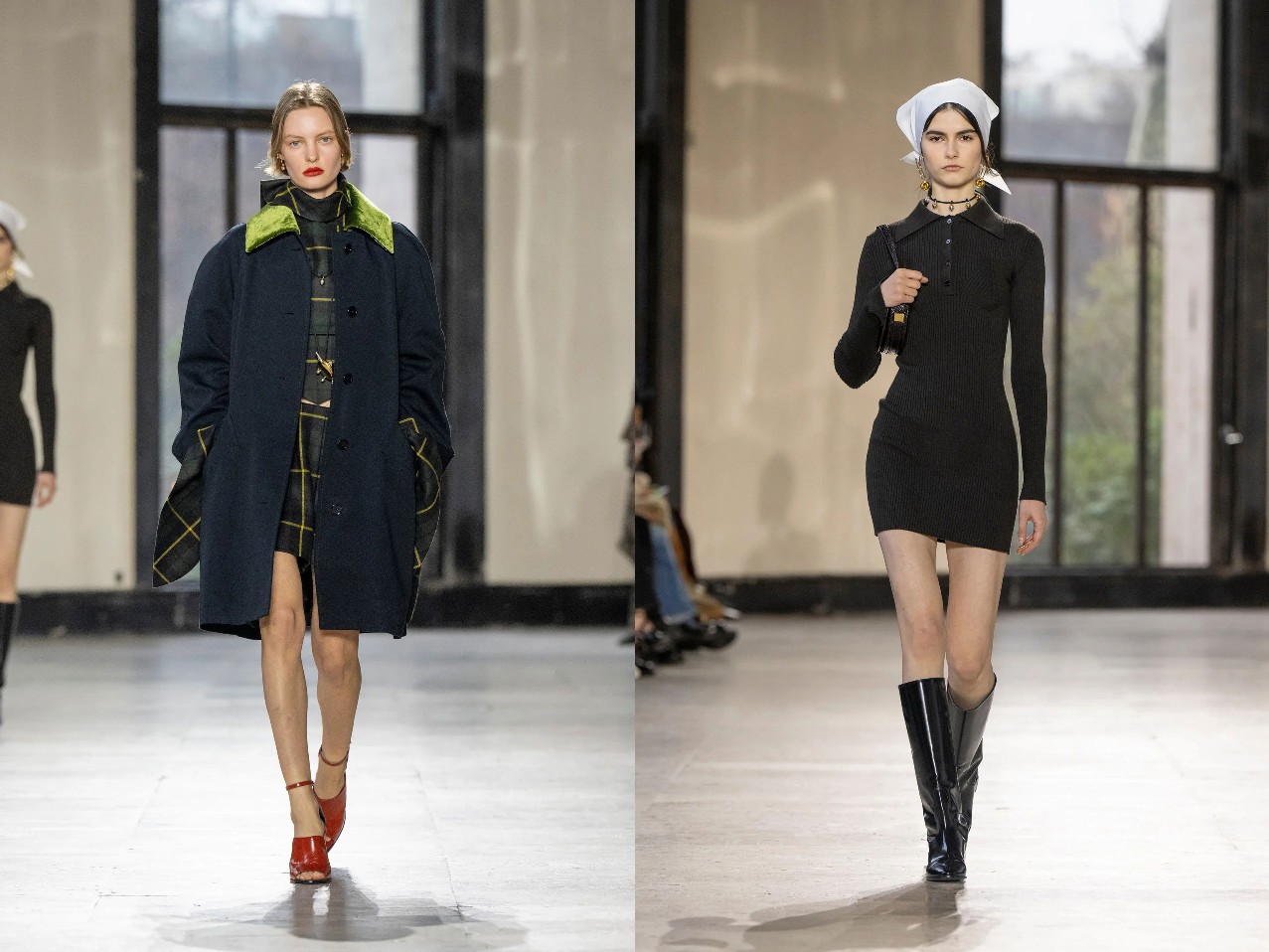
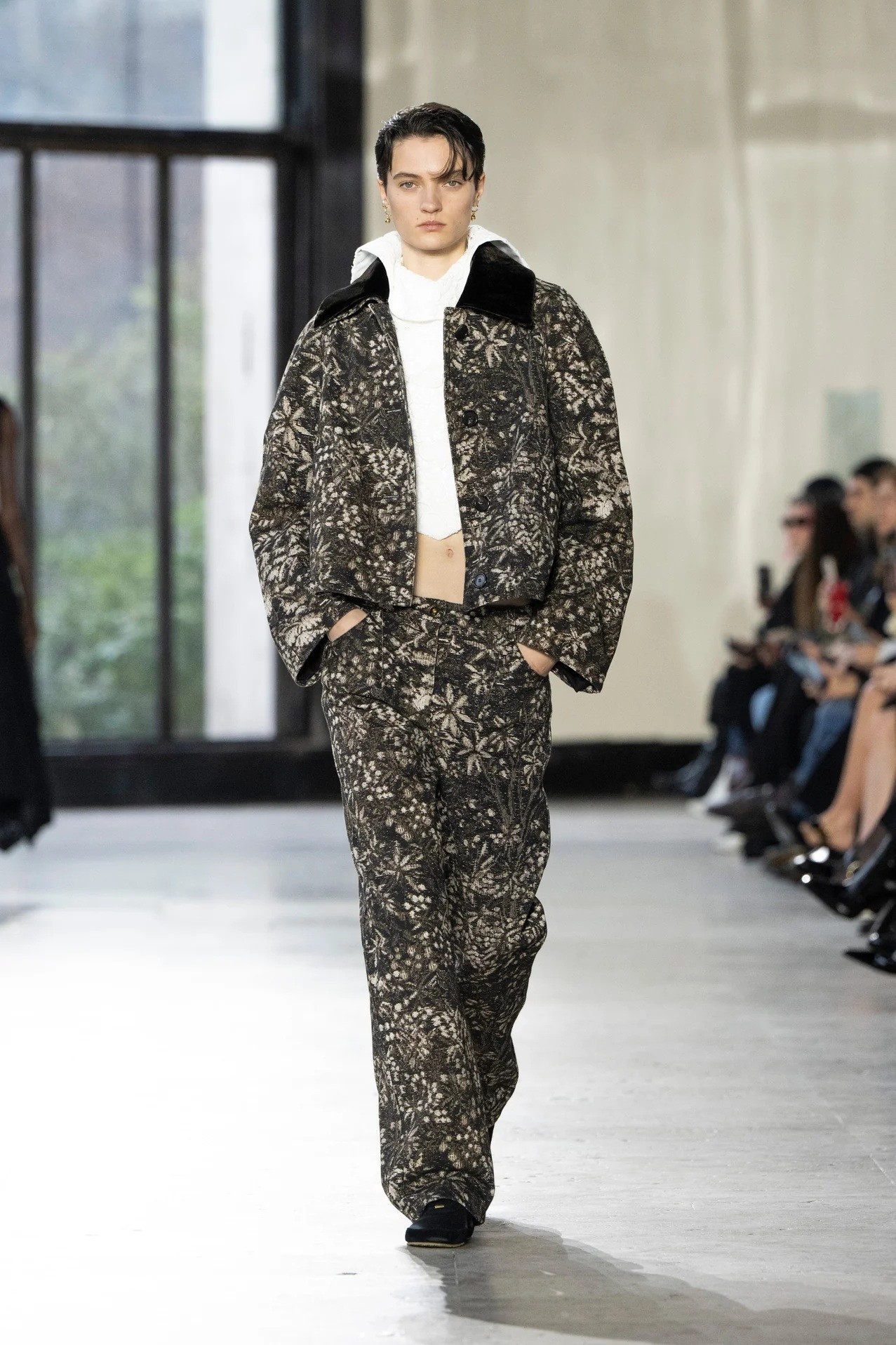
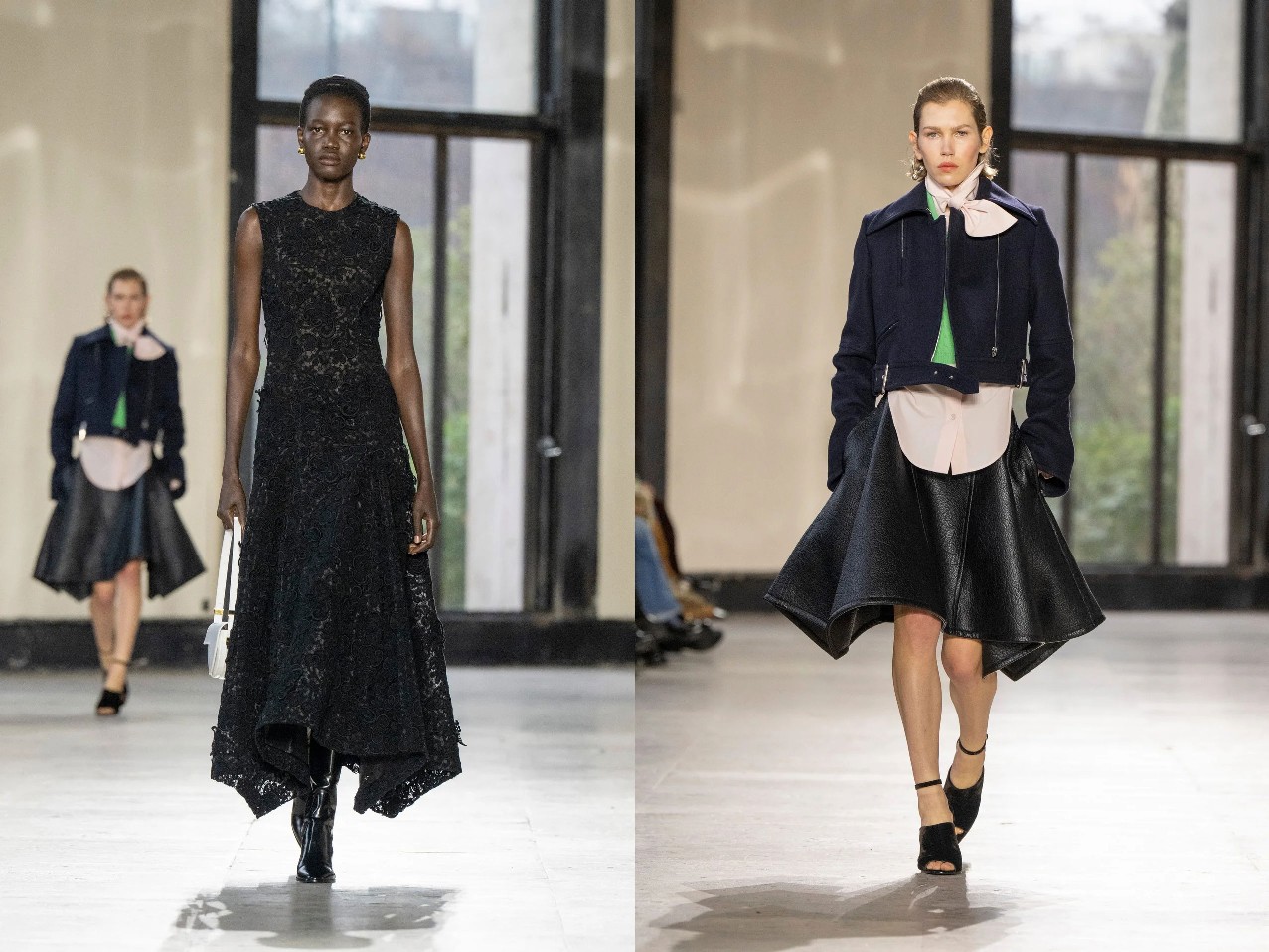
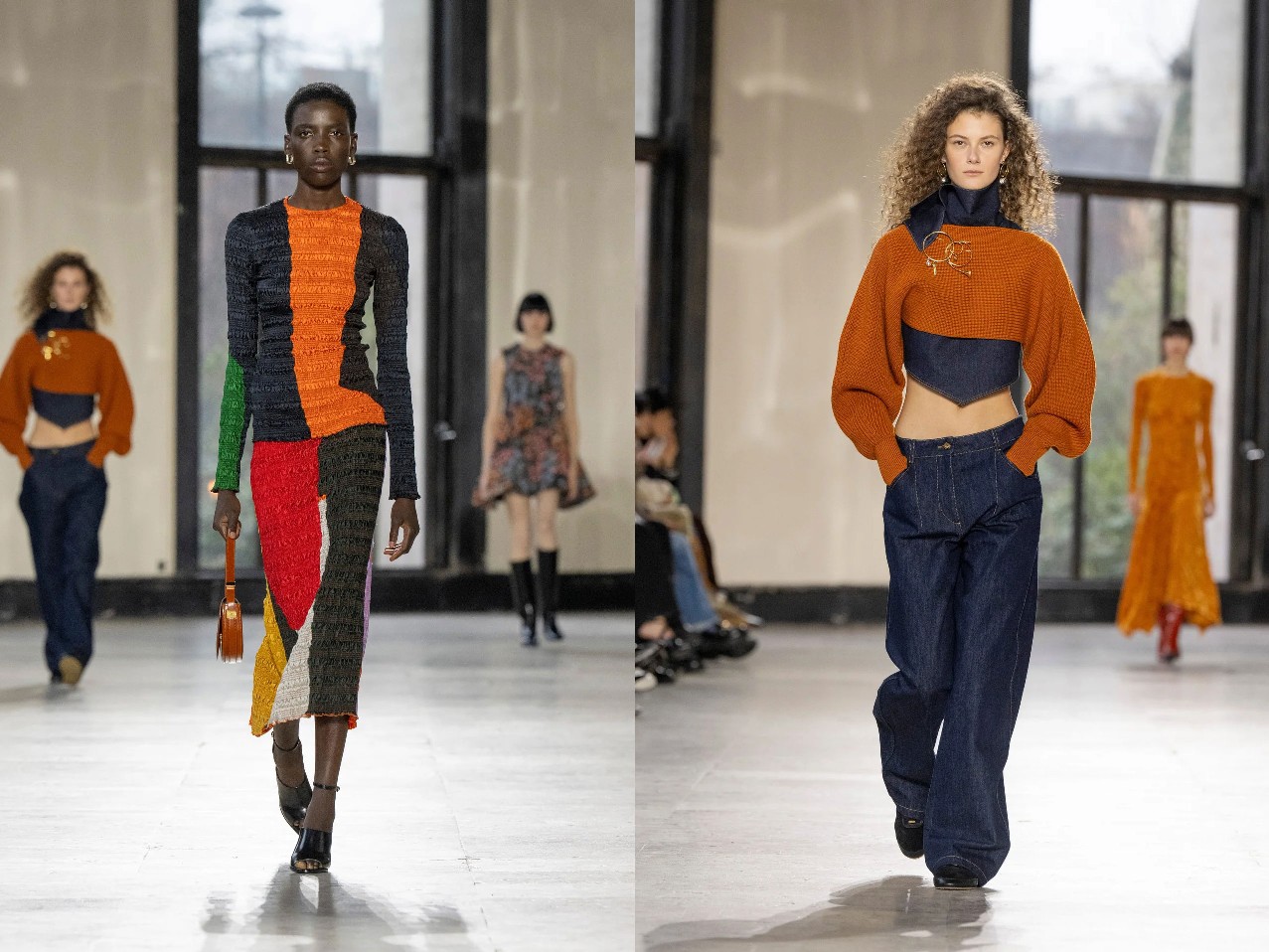
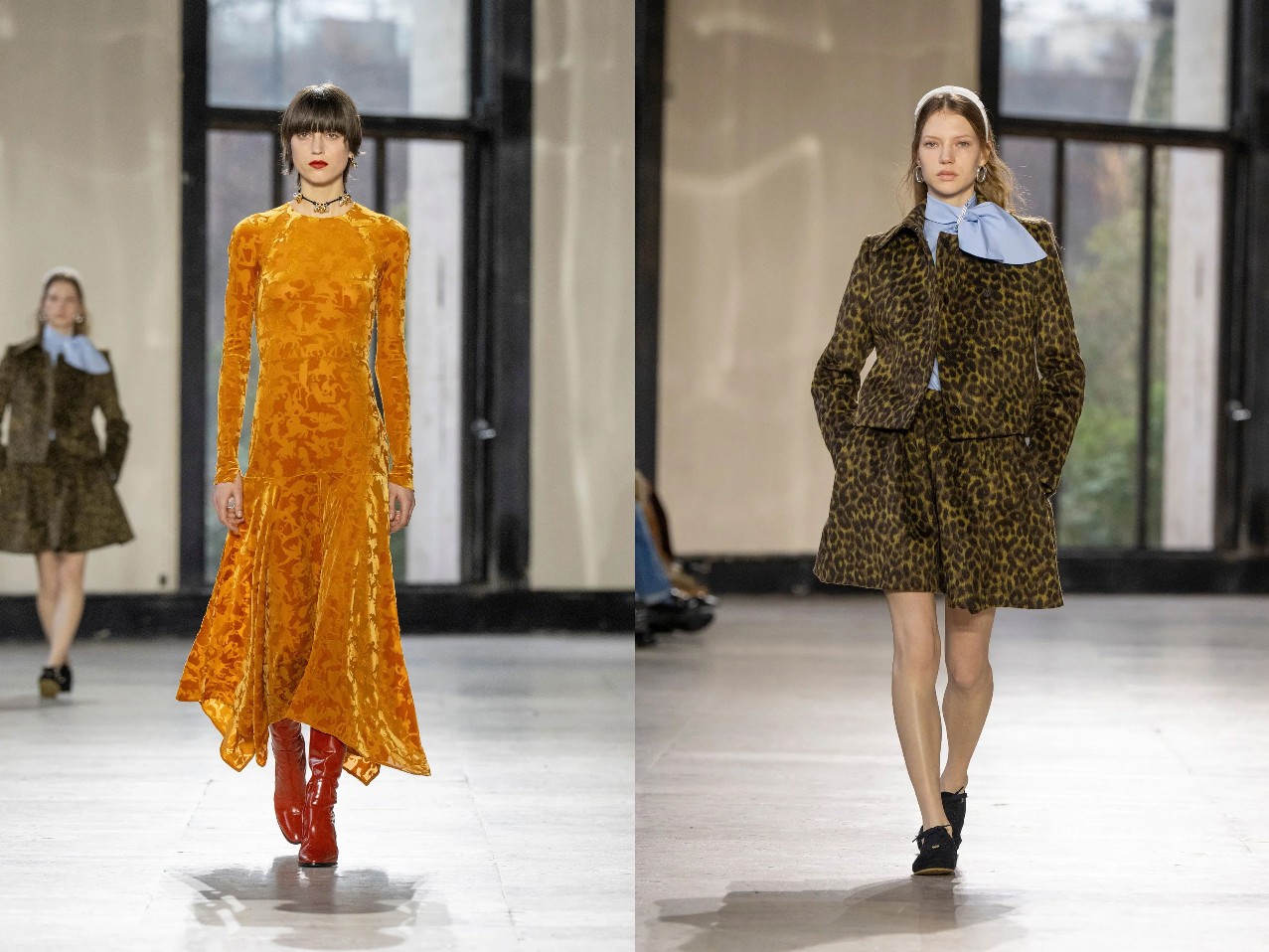
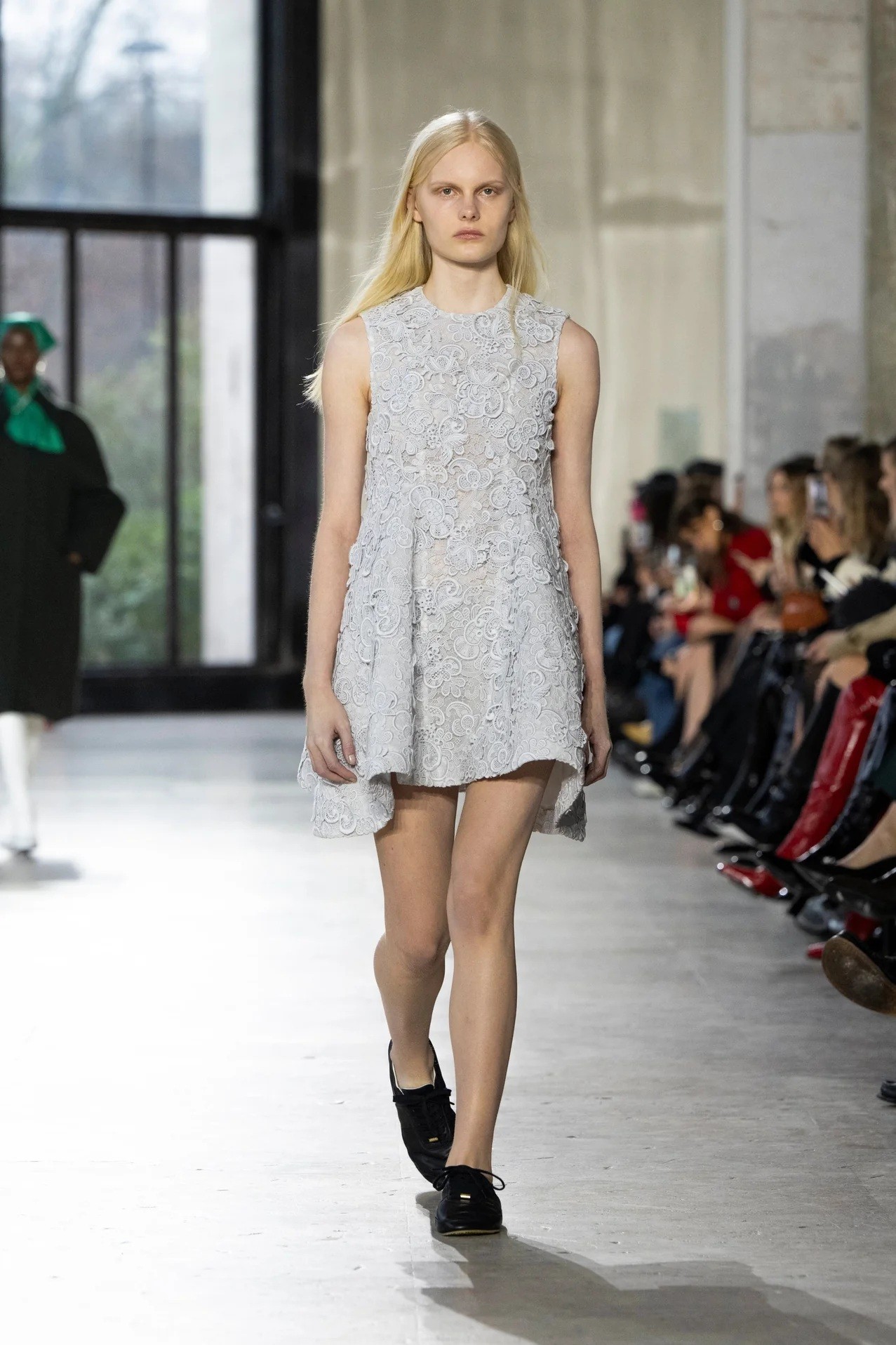
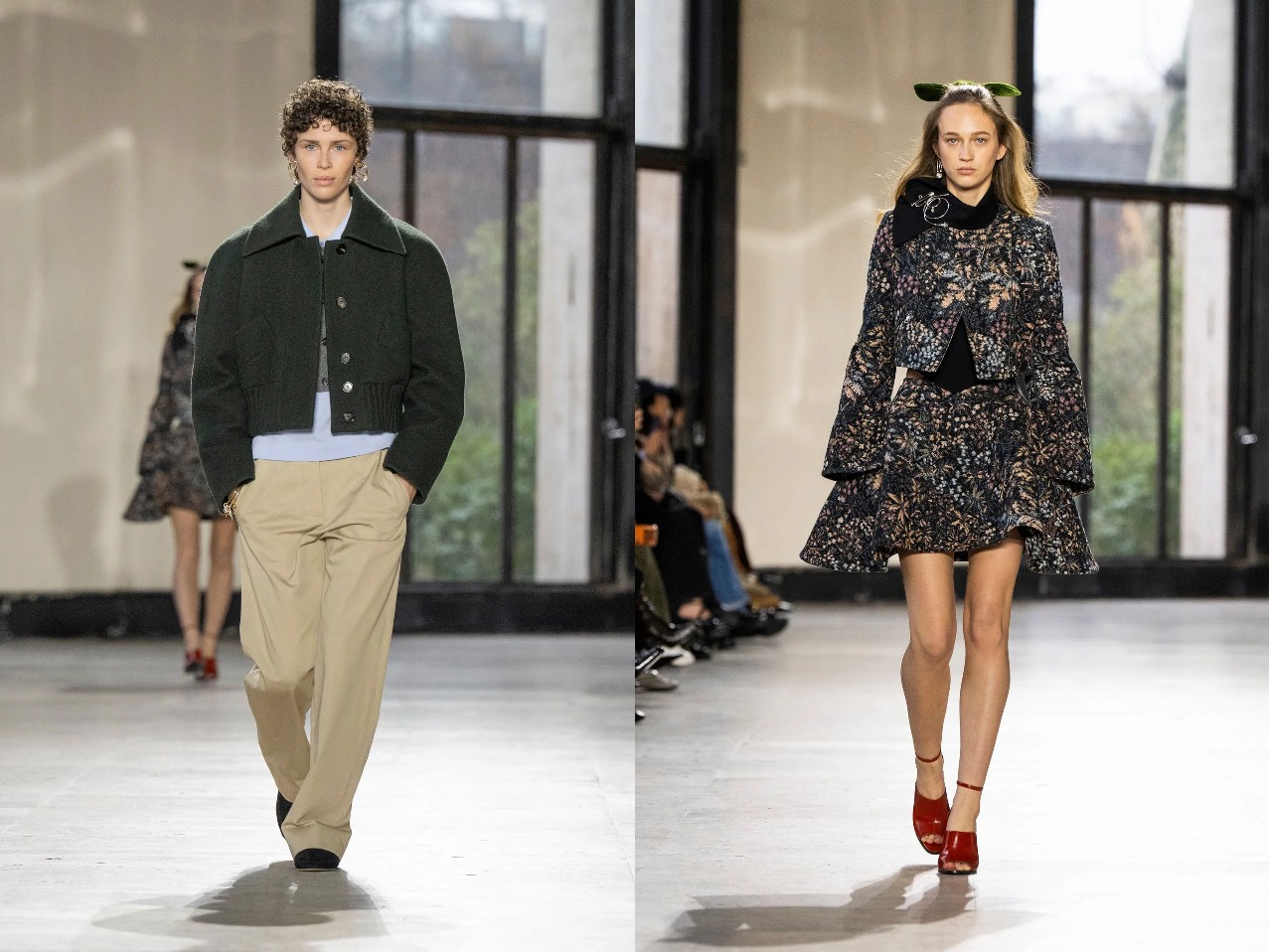
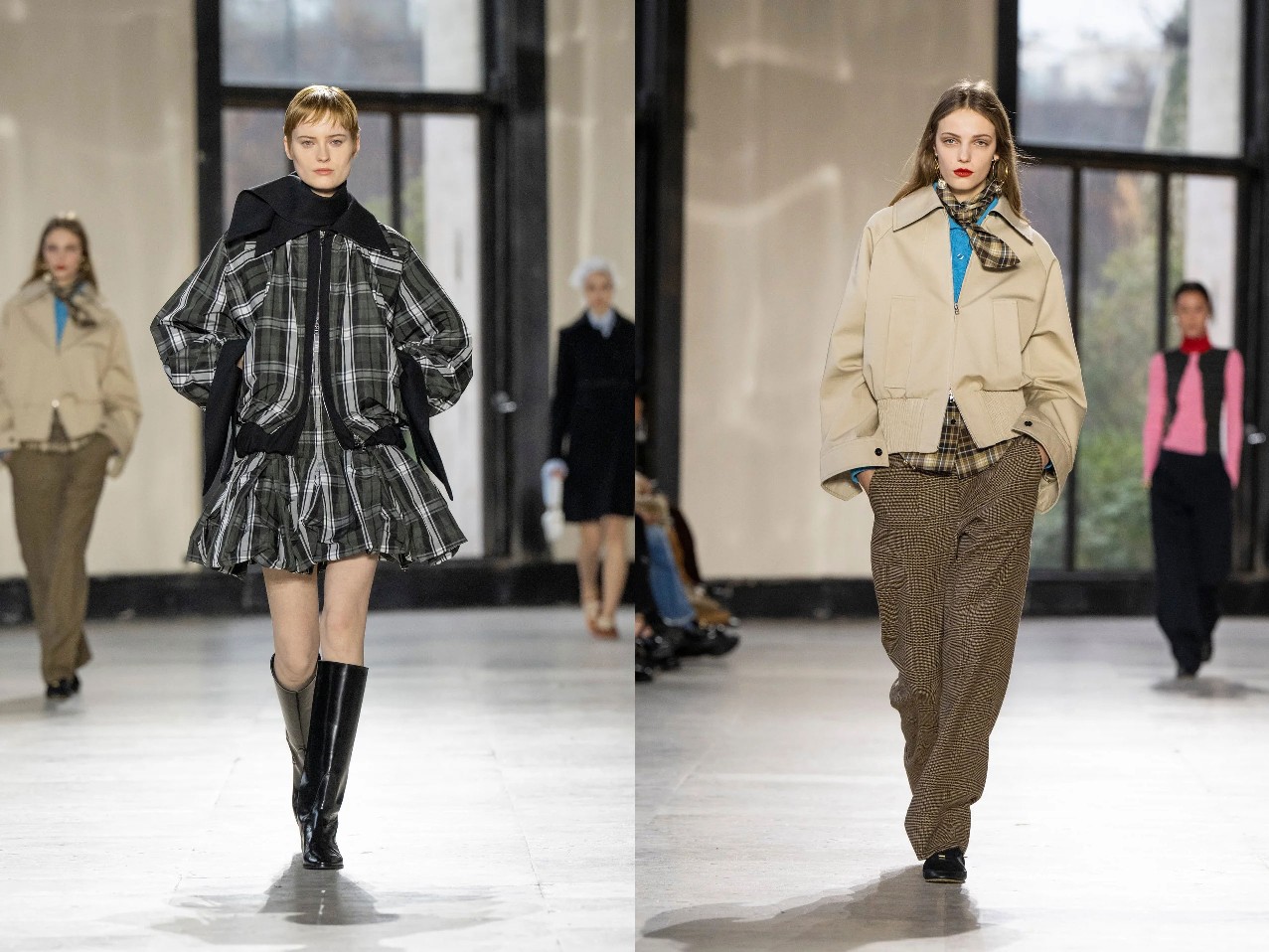
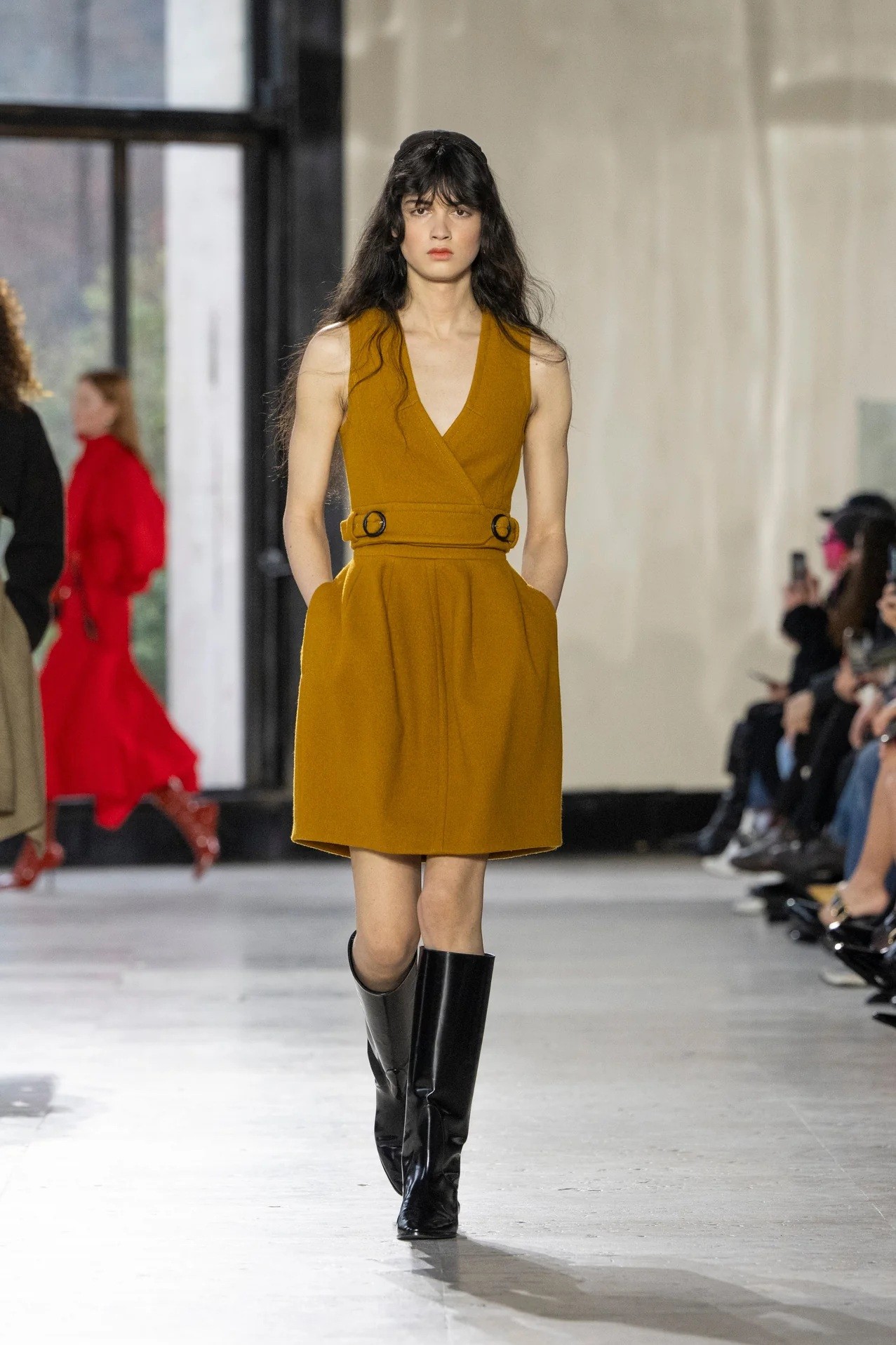
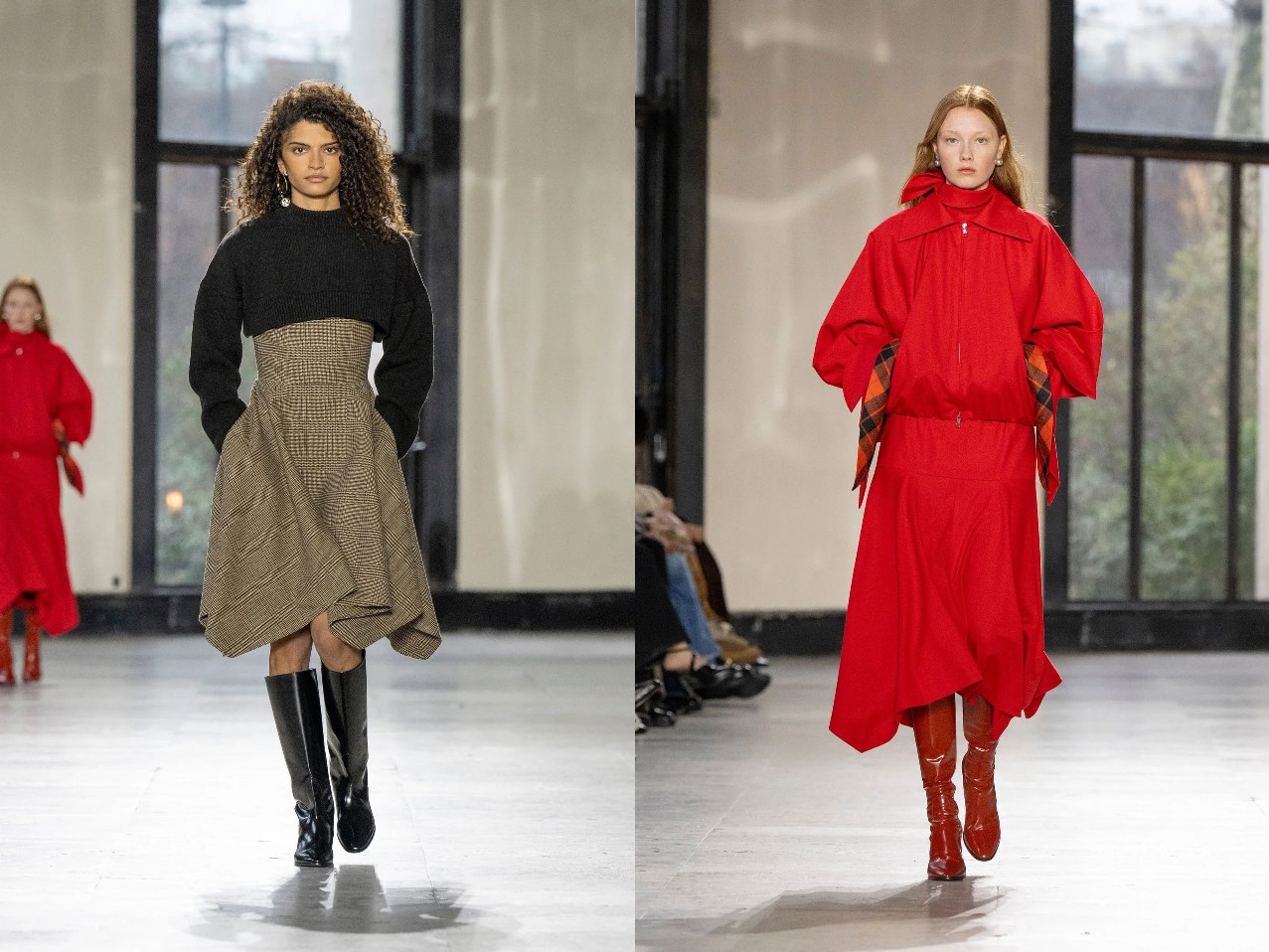
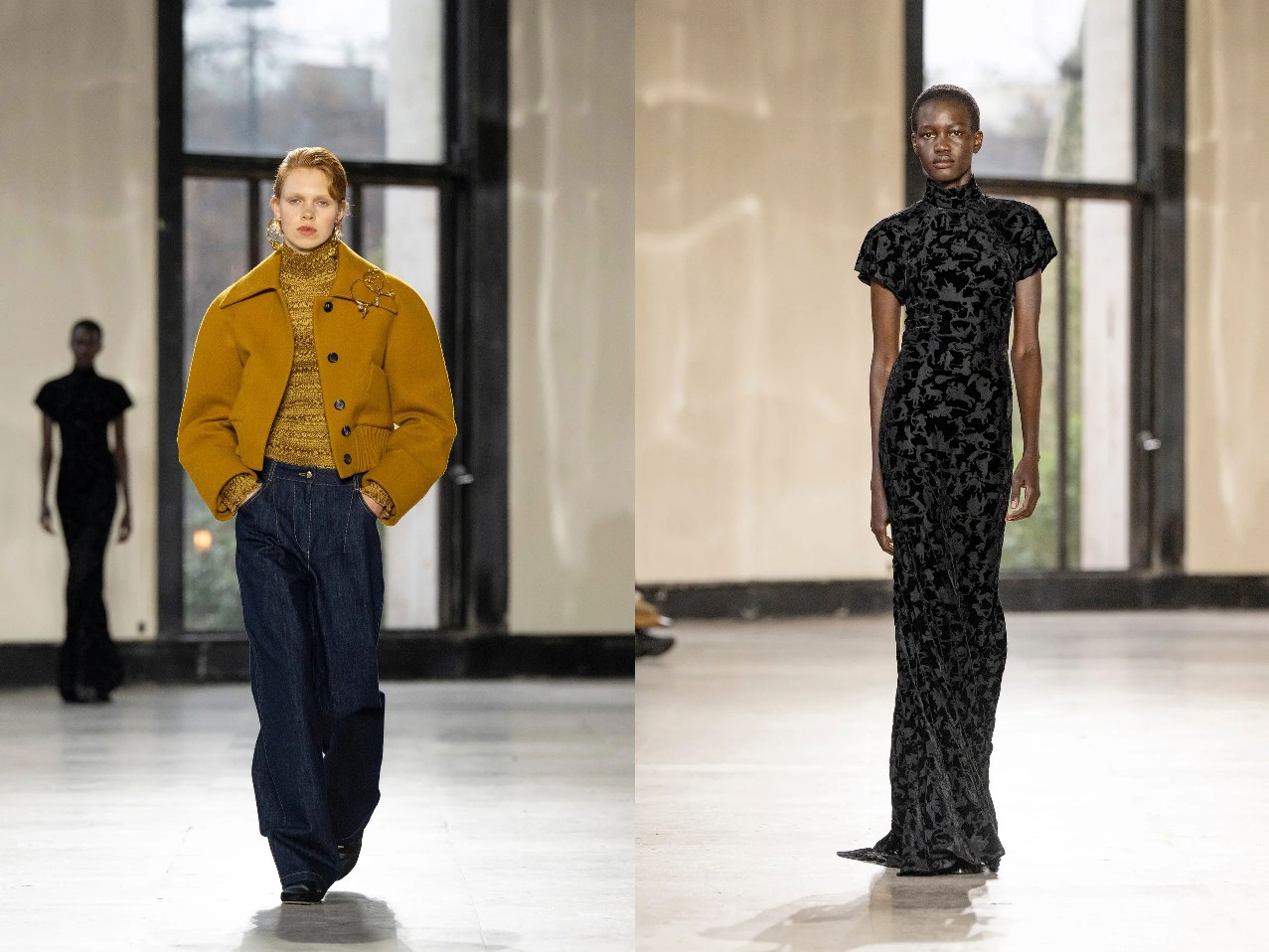
The opening look set the tone: a color-blocked ruché top paired with crisp dark jeans, an unexpected move for a brand often associated with polished femininity. From there, the wardrobe unfolded as a fluid spectrum of options: polo shirts, straight-leg slacks, cropped biker jackets, roomy blousons, handkerchief skirts, lace gowns, and devoré velvet dresses. Footwear ranged from soft sneakers to stiletto-heeled boots, reinforcing a democratic approach that blurred the hierarchy between working girl and party girl.
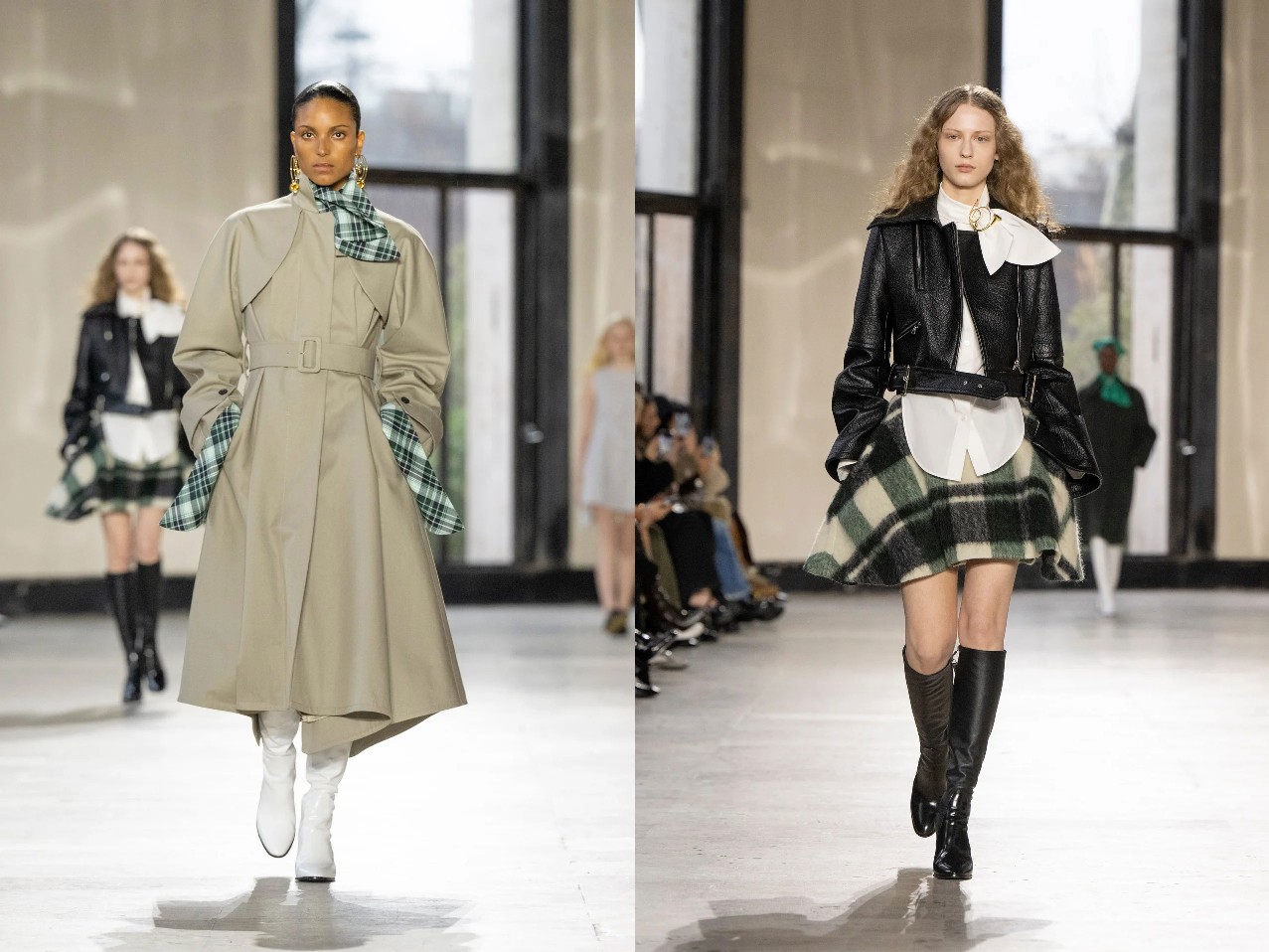
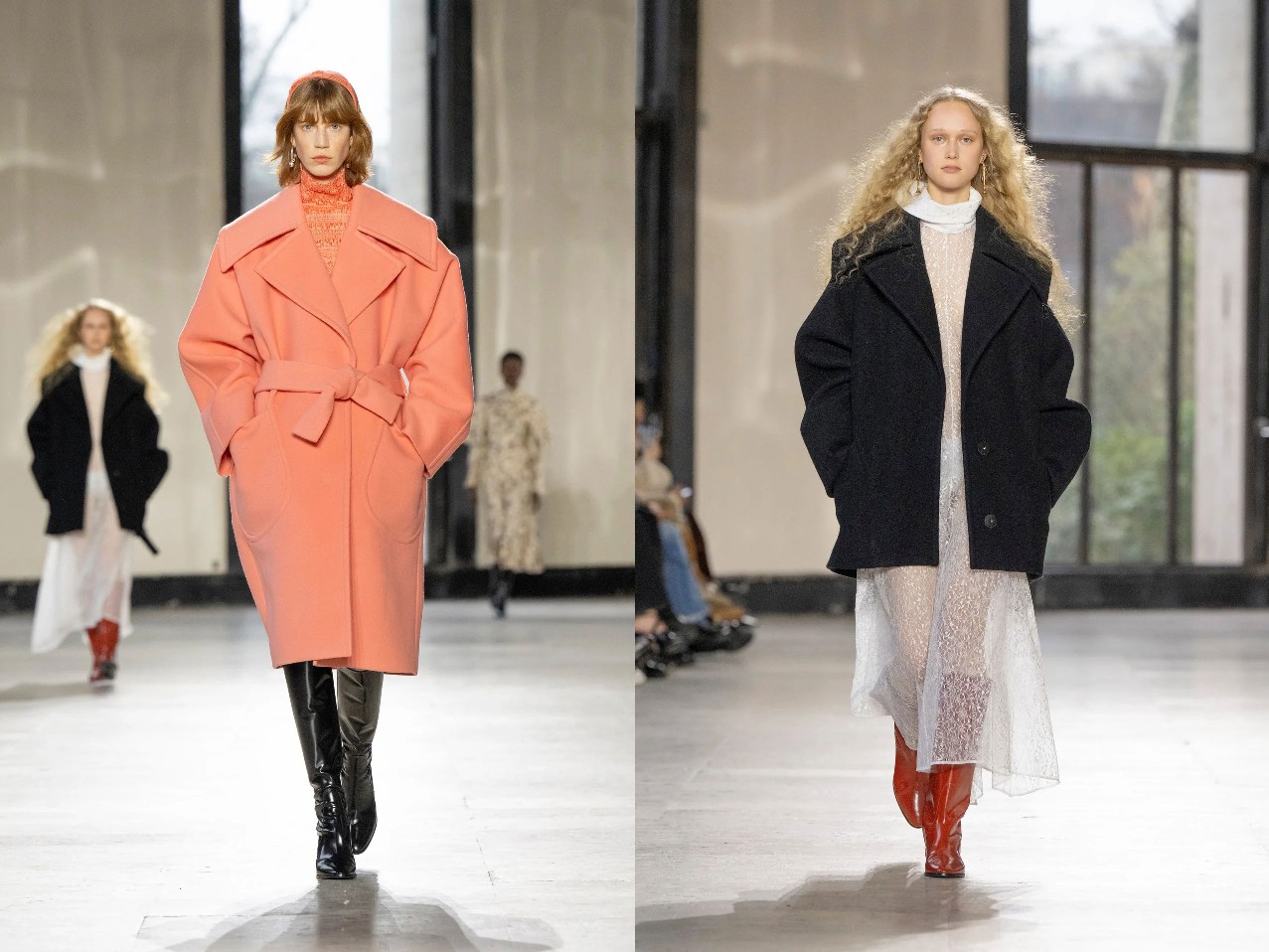
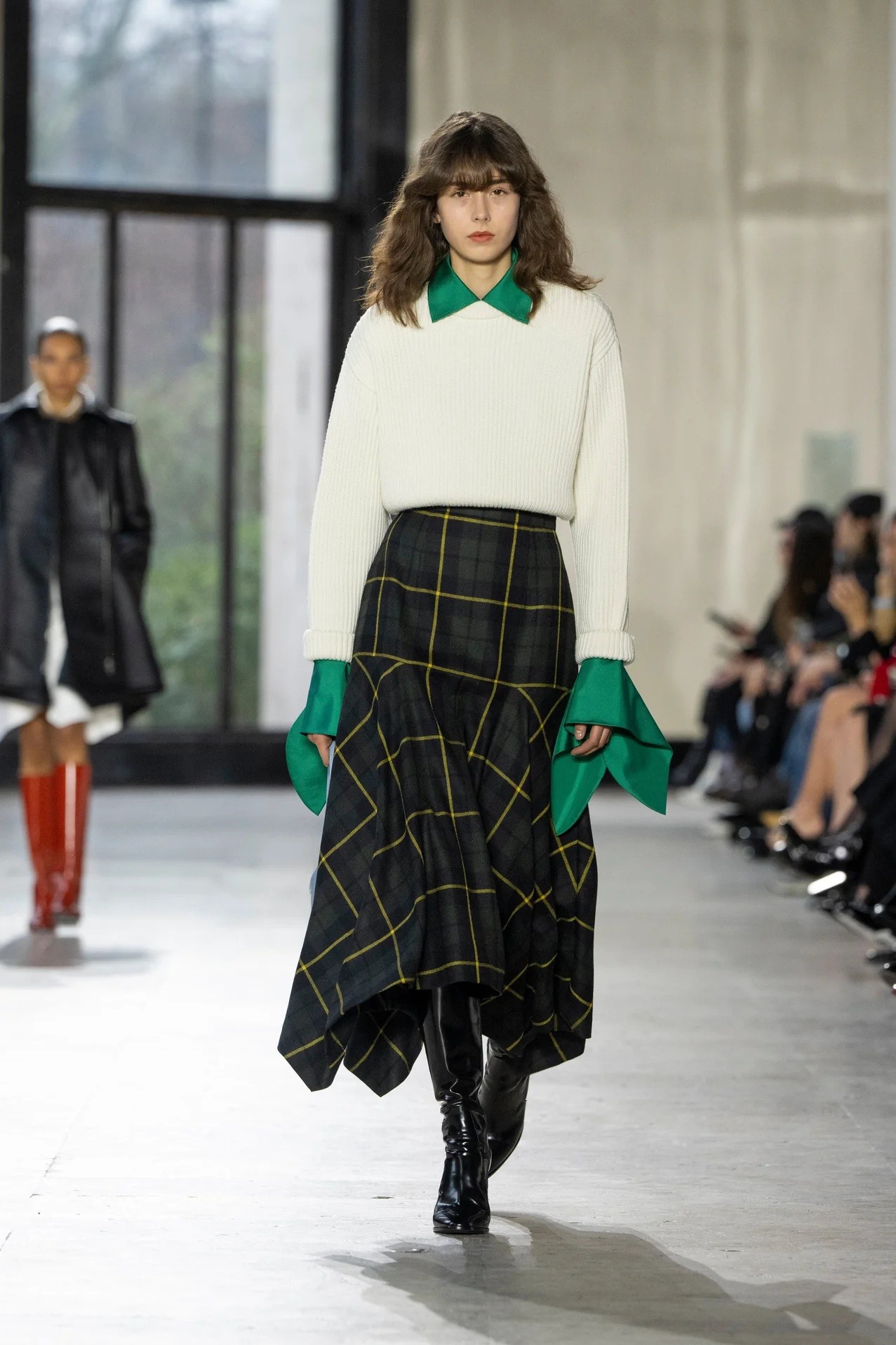
Adaptability was the season’s core message. Henry imagined the modern woman moving seamlessly from office meetings to evening gatherings without changing outfits. A long ruffled tartan skirt styled with a knit sweater and emerald satin shirt, finished with high vinyl boots, captured this duality. Elsewhere, oversized bubblegum-pink coats with a subtle 1960s inflection were layered over cozy textures, balancing warmth with boldness.
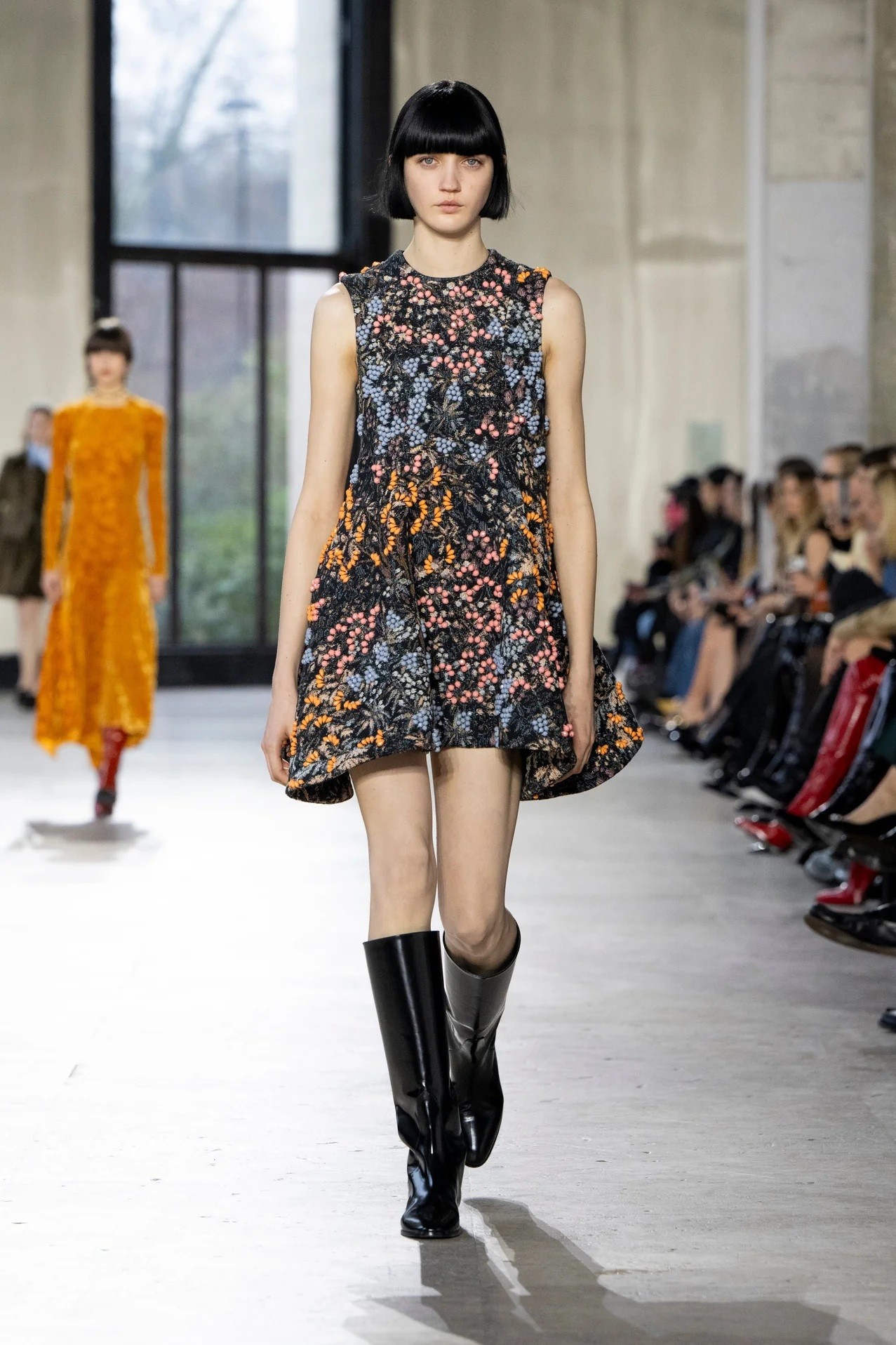
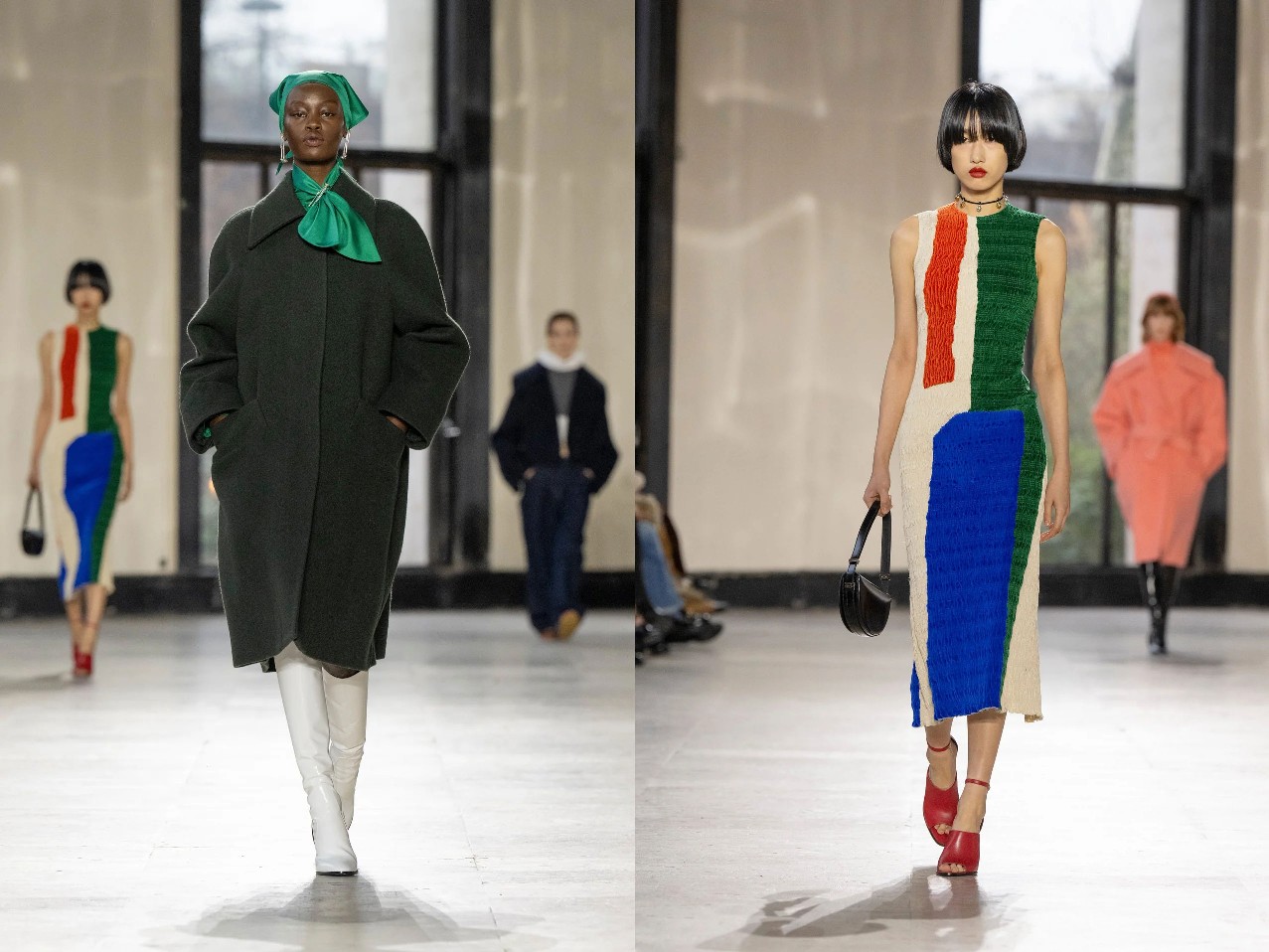
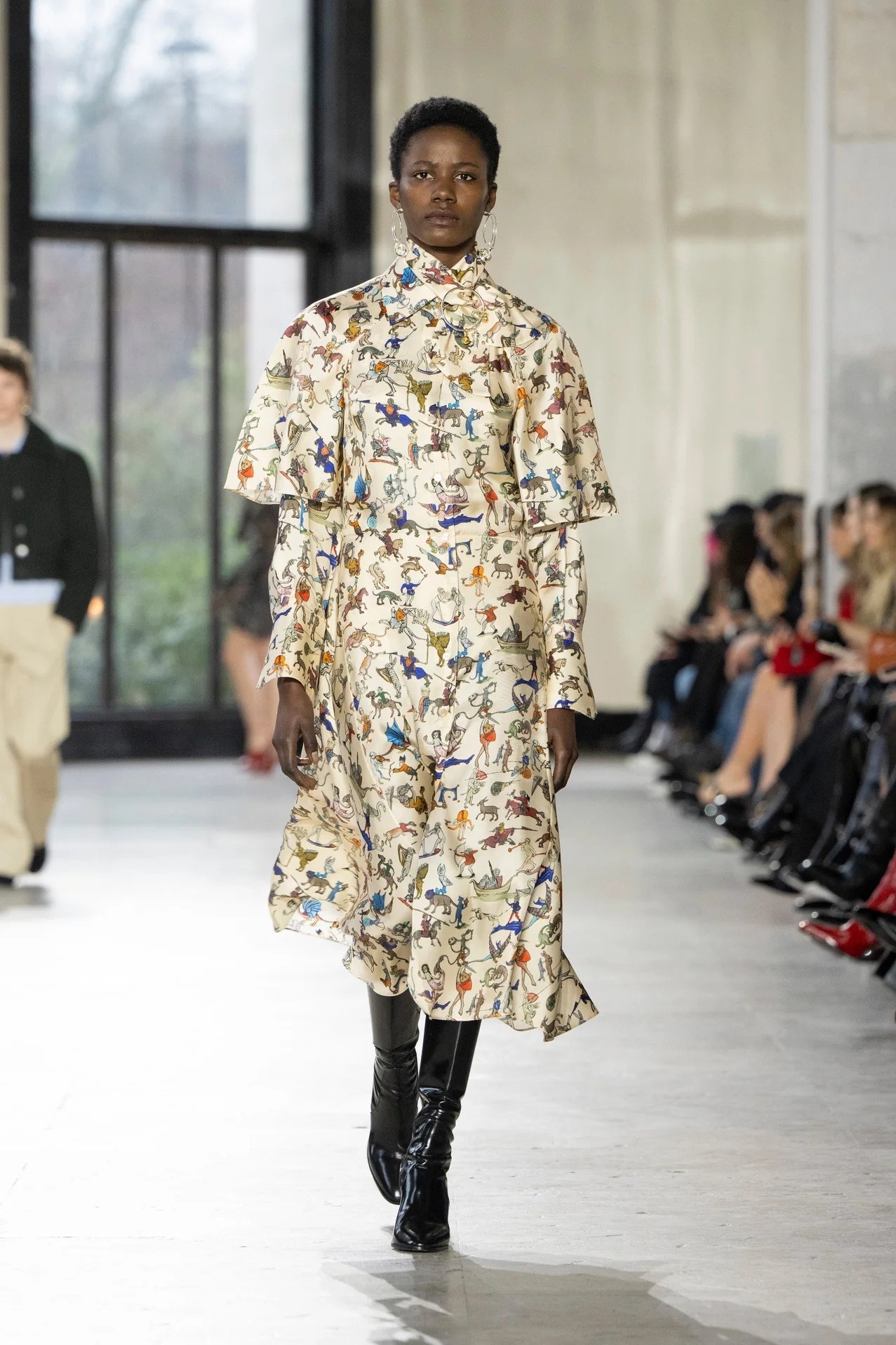
Inspiration drew from unexpected cultural references. Medieval imagery filtered into the collection through stained-glass-inspired color palettes, bubblegum pink, Klein-like blues, mossy greens, and vivid oranges, alongside tapestry fabrics and prints reminiscent of illuminated manuscripts such as Très Riches Heures du Duc de Berry. Embossed knit dresses with patchwork motifs, lace layered against velvet, embroidery, and beading added depth and craftsmanship, while subtle musical nods, trumpet-shaped earrings and whimsical brooches, infused playfulness.
Sustainability also shaped the narrative, with offcuts repurposed into color-blocked designs, reflecting Henry’s conscious material approach. Though eclectic in reference, the collection maintained cohesion through its underlying philosophy: fashion as something lived in, not categorized. With Fall-Winter 2026–2027, Patou positioned itself as a house of democratic elegance, where practicality, color, history, and modern energy coexist in a wardrobe designed for real life.
This article is an original editorial analysis produced by [DIBA magazine]
Research and references are used for contextual accuracy.